A veteran aviator does not casually report something unusual once, let alone seven times. Yet that is precisely what has happened. According to reporting from the UK, a commercial pilot reports multiple high-altitude UAP sightings across seven flights, describing objects that moved in ways inconsistent with aircraft, balloons, or satellites [1]. The claim has reignited a long-simmering debate inside aviation circles about how cockpit crews should document, and be taken seriously for, unexplained aerial encounters.
Key Takeaways
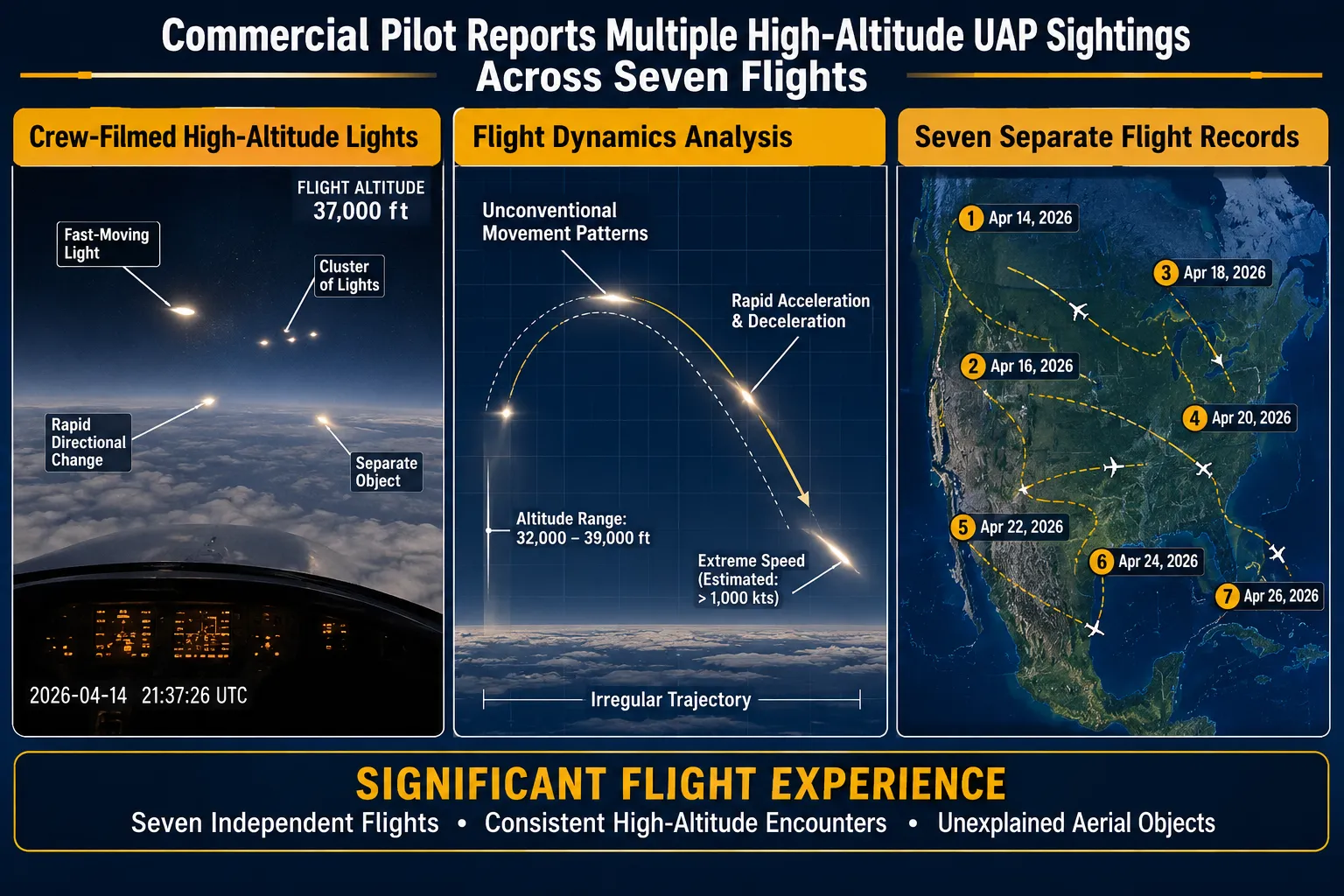
- A commercial pilot reports multiple high-altitude UAP sightings across seven flights over an unspecified period, according to UK media coverage [1].
- The objects reportedly displayed flight dynamics inconsistent with conventional air traffic, weather balloons, or orbital satellites.
- Video and time-lapse footage reportedly exist, though no independent agency has issued a case-specific explanation.
- Aviation safety organizations are using the incident to push for standardized, non-stigmatized UAP reporting channels [2].
- U.S. intelligence assessments show hundreds of annual aircrew encounters with unexplained aerial phenomena, underscoring this is not an isolated story [3].
The Pilot’s Account and What Was Observed
The pilot at the center of this story holds significant flight experience and described tracking anomalous objects during seven separate flights, according to the original UK report [1]. Additional coverage of similar airline pilot footage notes that crews have filmed bright, fast-moving lights at cruising altitude that do not match known air traffic patterns [4]. The incidents reportedly occurred at high altitude, the same airspace layer where commercial jets, military aircraft, and occasional high-altitude balloons operate, making identification especially difficult without radar correlation.
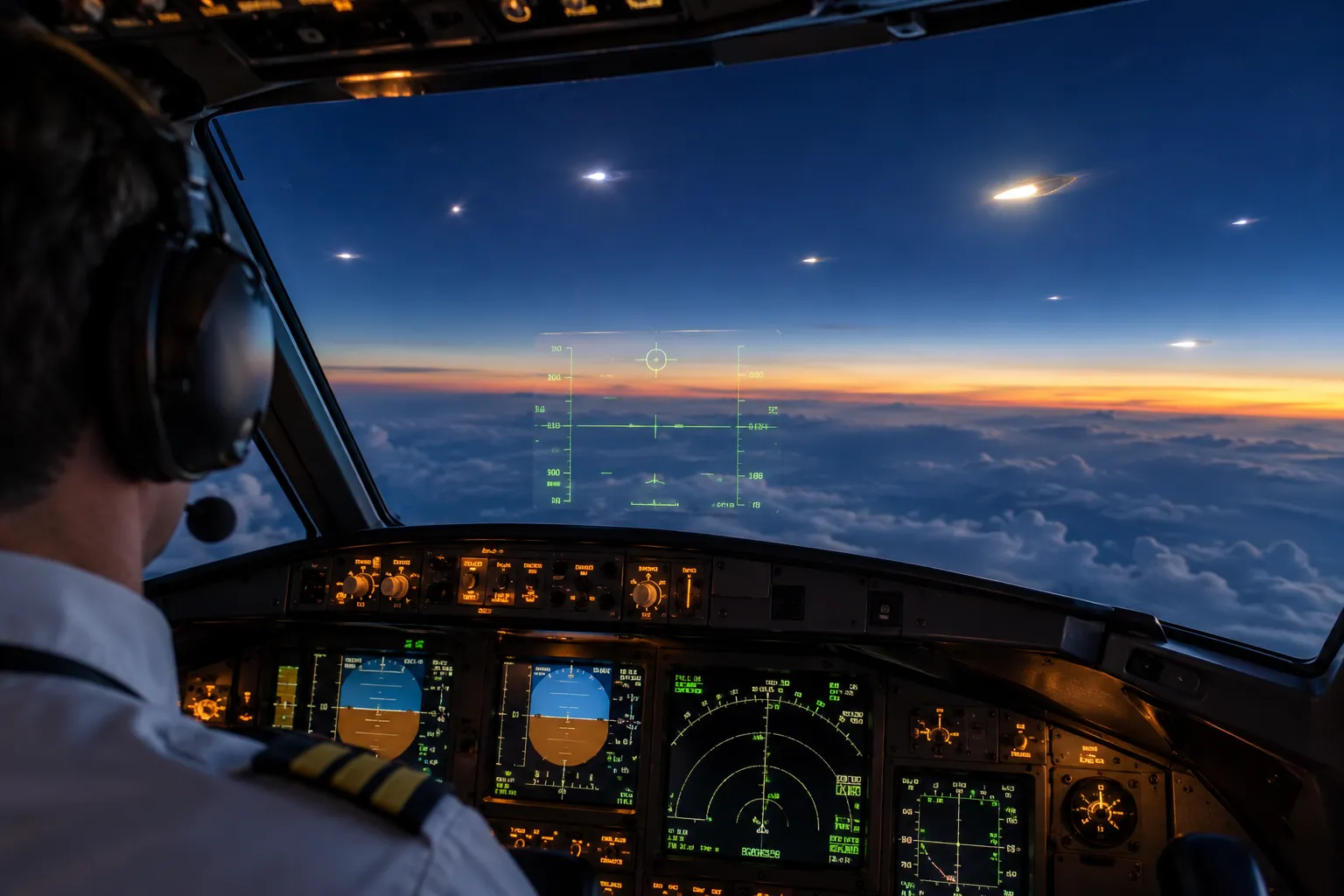
Descriptions shared publicly characterize the objects as moving erratically, changing direction or speed in ways that conventional aircraft, balloons, and satellites typically do not [1]. A podcast series covering UAP topics has also highlighted similar firsthand pilot narratives, suggesting the phenomenon is not confined to a single carrier or region [5].
No formal case-specific statement from aviation regulators or airline operators has confirmed or denied the sightings. This absence of an official explanation is common in these cases; the U.S. Federal Aviation Administration maintains general incident and accident reporting channels but does not routinely issue findings on unverified visual sightings [6].
Why Commercial Pilot Reports Multiple High-Altitude UAP Sightings Across Seven Flights Matters for Aviation Safety
When a commercial pilot reports multiple high-altitude UAP sightings across seven flights, the recurrence itself becomes the story. One sighting might be dismissed as misidentification. Seven, across different routes and dates, raises questions about airspace awareness and reporting infrastructure.
Several organizations now formally collect this kind of data:
- The Scientific Coalition for UAP Studies and similar safety-focused groups aggregate pilot reports to look for patterns across flights [2].
- NASA’s Aviation Safety Reporting System (ASRS) and the UK Civil Aviation Authority maintain confidential channels where crews can log unusual encounters without career repercussions.
- The European Commission and the European Union Aviation Safety Agency (EASA) have discussed frameworks for standardizing how member states handle pilot UAP reports [7].
“It ceases to be folklore and becomes an urgent matter of aviation safety” is how the situation might best be summarized when experienced aviators, not casual observers, are the ones filing reports.
Distinguishing UAP from Drones, Balloons, and Satellite Flares
Not every bright light in the sky is unexplained. Analysts point to several ordinary explanations that must be ruled out first:
- Starlink satellite trains, lines of reflective satellites that appear briefly after launch and move in predictable, linear paths.
- High-altitude weather or surveillance balloons, slow-moving, often stationary relative to wind currents.
- Drones, typically operate at lower altitudes than commercial cruising height, though exceptions exist.
- Lens flares or optical artifacts, common in time-lapse cockpit photography.
What separates a credible UAP report from these categories is movement that defies simple physics: rapid acceleration, sudden stops, or direction changes without visible propulsion. The Tic Tac encounter from 2004, still studied by researchers today, remains a reference point for this kind of anomalous flight behavior [8].
Official Data Backs Up the Pattern
This is not a fringe phenomenon confined to one report. The U.S. All-domain Anomaly Resolution Office (AARO) published its FY2025 consolidated annual report, documenting hundreds of UAP cases reported by military and civilian aircrews, with many remaining unresolved after analysis [3]. Earlier, the Office of the Director of National Intelligence’s 2021 preliminary assessment found that most reported incidents lacked sufficient data for identification, while a smaller subset showed flight characteristics that could not be easily explained [9].
Specialized reporting platforms have also emerged specifically to catalog pilot-submitted footage and firsthand accounts, giving researchers a growing dataset independent of government channels [10].
Expert Perspectives and Reasonable Speculation
Analysts examining pilot-submitted video caution that footage alone rarely proves anomalous propulsion; camera artifacts, distance estimation errors, and motion parallax can mimic unusual movement. That said, when multiple sightings occur across separate flights with consistent descriptions, as in this case where a commercial pilot reports multiple high-altitude UAP sightings across seven flights, the cumulative weight of testimony carries more investigative value than any single clip.
Looking ahead, it is reasonable to expect, as speculation rather than confirmed fact, that aviation regulators will face growing pressure to formalize UAP reporting the same way bird strikes or near-miss incidents are logged, reducing stigma and improving data quality over time.
Conclusion
The case of a commercial pilot reports multiple high-altitude UAP sightings across seven flights illustrates a broader shift: experienced aviators are increasingly willing to document what they cannot explain. Readers interested in this topic should follow updates from aviation safety bodies, review publicly available AARO reports, and support calls for standardized, stigma-free cockpit reporting systems. Until more structured data collection becomes routine, individual pilot testimony will remain the primary, if imperfect, window into these encounters.
References
- British Pilot Reports Multiple UFO Sightings Sparking Curiosity About the Universe. peoplenewstoday.com.
- Reports. safeaerospace.org.
- AARO FY2025 Consolidated Annual Report on UAP. aaro.mil.
- Airline Pilot Films UFOs Video Photos. brobible.com.
- UFO ExoFiles Podcast Episode. audible.de.
- Accident Incidents. faa.gov.
- EU Commission UAP 2026. uapglobe.com.
- The 2004 Tic Tac UAP. ufos-scientificresearch.blogspot.com.
- ODNI 2021 Preliminary Assessment on UAP. uap-archive.org.
- UAP Drop Case File. uapdrop.com.