
Forty-five percent of UK adults admit it takes them days to adjust after the clocks change, according to a 2025 Aviva study cited in recent UK sleep coverage.[1] That single hour lost or gained on the last Sunday of October does more than shift your alarm time. It disrupts your internal body clock, and this year, AOL UK shares science-backed tips to avoid social jet lag when the clocks go back on Sunday, 25 October 2026 at 2am, when British Summer Time ends and clocks fall back to 1am GMT.[2][3][4]
The term “social jet lag” describes the mismatch between your body’s natural rhythm and the social schedule imposed by clock changes. AOL UK shares science-backed tips to avoid social jet lag when the clocks go back, drawing on sleep science to help readers minimise grogginess, mood dips, and disrupted sleep during this seasonal transition.
Key Takeaways
- The clocks go back on 25 October 2026, shifting from 2am BST to 1am GMT, a change that can trigger “social jet lag.”[2][3][4]
- Gradually shifting bedtime by 15 minutes earlier for four days before the change helps ease circadian disruption.[2]
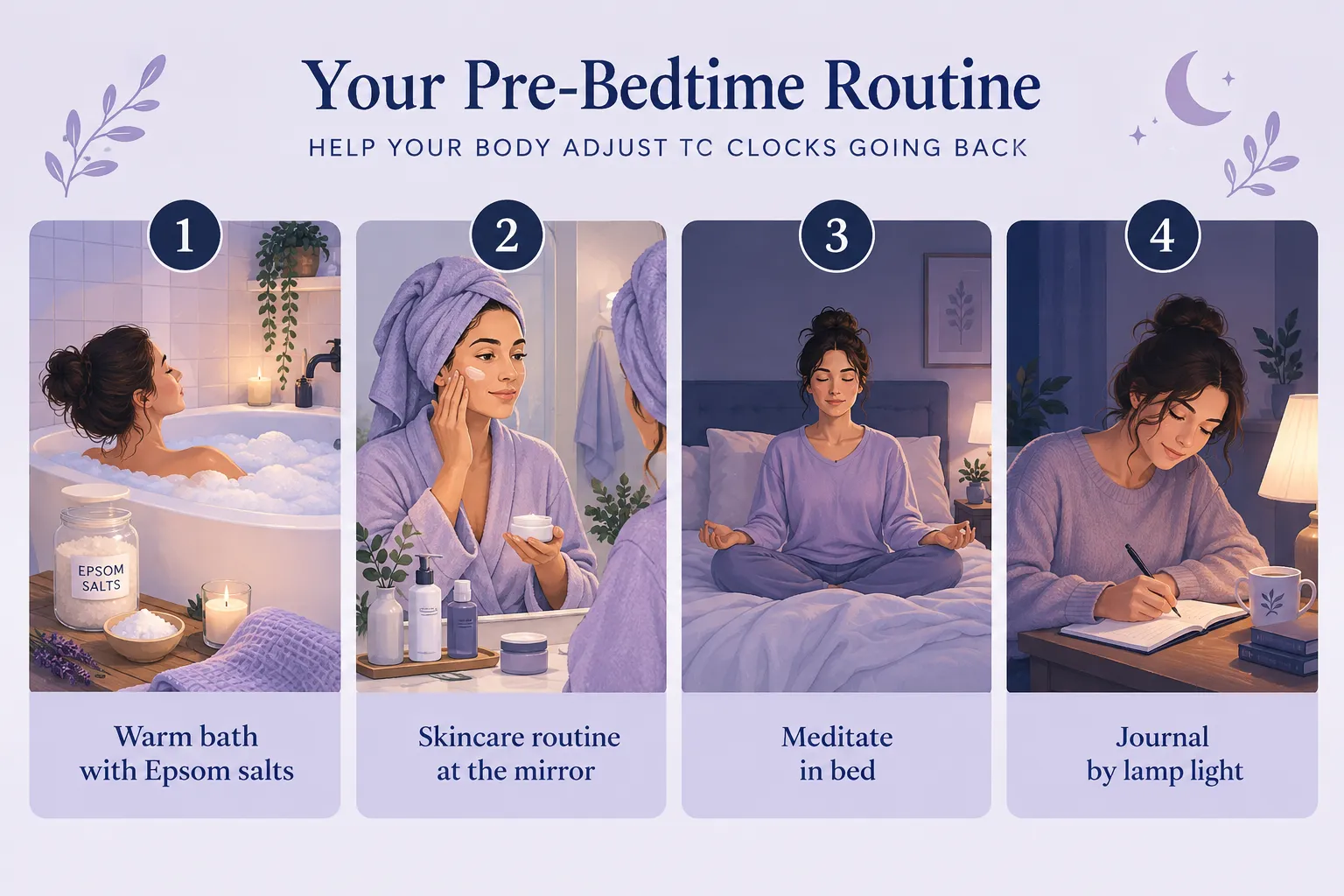
- A calming pre-bed routine, such as a warm bath, skincare, meditation, or journalling, strengthens sleep cues.[2]
- Magnesium glycinate taken 30 minutes before bed may support relaxation and serotonin production.[2]
- Morning light exposure and a cold-finish shower can reset the sleep-wake cycle after the clocks change.[2]
Why the Clock Change Causes Social Jet Lag
Daylight Saving Time ends on the last Sunday of October every year, and although society adjusts instantly, the body’s internal clock does not. It still follows the sun, not the calendar.[3][5] This is why even a single-hour shift can leave people feeling off balance.
A separate AOL UK explainer on the UK’s clock change notes that chronic circadian misalignment has been linked in research to higher risks of obesity, metabolic syndrome, and mood disorders.[5] A 2025 study from Liverpool John Moores University and the University of Oxford, reported in European media, found that women were more likely than men to report increased worry, confusion, and stress in the days following the October change.[6] A UK sleep expert quoted in national media describes this as feeling tired early in the evening, waking before the alarm, or feeling sluggish despite extra time in bed.[6][7]
This is the backdrop against which AOL UK shares science-backed tips to avoid social jet lag when the clocks go back, offering a structured, preventive approach rather than simply waiting out the discomfort.
How AOL UK Shares Science-Backed Tips to Avoid Social Jet Lag When the Clocks Go Back
The practical advice centres on four areas: gradual adjustment, evening routine, diet timing, and morning reset.
Gradual bedtime shift. Rather than letting the hour change hit all at once, AOL UK recommends moving bedtime 15 minutes earlier each day for four days before the change. This slow taper gives the circadian system time to adapt instead of being forced into a sudden shift.[2]
Consistent pre-bed ritual. A repeated wind-down routine signals to the brain that sleep is coming. Suggested options include:
- A warm bath with Epsom salts
- A simple skincare routine
- Lying in bed and meditating
- Journalling before lights out
Doing the same activity nightly strengthens the body’s association between that routine and sleep.[2]
Magnesium support. AOL UK highlights magnesium glycinate, taken around 30 minutes before bed, as a supplement that may promote relaxation and support serotonin production, potentially easing the transition.[2] Choosing a product without added bulkers or sugars is recommended for best results.
The 3-2-1 rule. To reduce sleep-disrupting habits, the advice suggests:
- No food within three hours of bedtime
- No drinks within two hours of bedtime
- No screens or tech close to bedtime[2]
This mirrors general NHS-aligned jet lag advice, which also recommends staying hydrated, stretching, and avoiding caffeine and alcohol near bedtime.[5][8]
Morning Strategies After the Clocks Go Back
The morning after the change matters just as much as the night before. AOL UK recommends finishing a warm shower with a short blast of cold water to boost alertness.[2]

Getting outside within an hour of waking is equally important. Natural morning light helps reset the sleep-wake cycle by signalling to the brain that the day has begun, which can lessen lingering social jet lag symptoms.[2] This aligns with broader research suggesting that light exposure is one of the strongest tools for correcting circadian misalignment.[3][5]
Who Benefits Most From These Tips
Not everyone experiences the clock change the same way. Coverage from Ladbible and other UK outlets has flagged sleep disruption as a common complaint following the October shift.[9] Given that over a third of UK adults say they dread the impact on their sleep, according to the Aviva data, these structured strategies are relevant to a large share of the population.[1] Women, per the Liverpool John Moores and Oxford research, may want to pay particular attention to mood and stress symptoms in the days following the change.[6]
Conclusion
The clock change is unavoidable, but the fatigue, mood dips, and disrupted sleep that often follow are not. AOL UK shares science-backed tips to avoid social jet lag when the clocks go back, and the core message is simple: prepare gradually, build a calming evening routine, mind what you eat and drink before bed, and get outside for morning light. Start the 15-minute bedtime shift four days before 25 October 2026, set up a consistent wind-down ritual tonight, and plan a morning walk for the Monday after the change. Small, deliberate adjustments now can prevent a week of grogginess later.
References
- UK Scrap Daylight Saving Poll 071141000. aol.co.uk.
- Avoid Jet Lag Clocks Back 062346000. aol.co.uk.
- UK Clocks Back October Exact 085045000. aol.co.uk.
- UK Clocks Back Earlier Date 123200000. aol.co.uk.
- Uks Controversial Clock Change Bizarre 081102000. aol.co.uk.
- Does the Clock Going Back an Hour Really Affect Your Health Heres What Experts Say. euronews.com.
- Clocks Going Back Exhausted. express.co.uk.
- One Hack Beat Jet Lag 144408694. aol.com.
- Clocks Go Back Hour Sleep Warning 950898 20251025. ladbible.com.