Stepping into sub-15°C water sounds daunting, but cold immersion doesn’t require plunging into an ice bath on day one. With a graduated approach, you can reap the mental clarity and circulation perks without shocking your nervous system. This guide on how to ease into cold plunges lays out a beginner-friendly, mindful roadmap built on current 2026 safety consensus, not extreme hype.
Key Takeaways
- Beginners should start in water between 10°C and 15°C (50°F to 59°F), not near-freezing temperatures [7][9].
- Limit early sessions to 1 to 2 minutes, gradually building toward 3 to 5 minutes as tolerance improves [2][3].
- Use box breathing (4 seconds in, hold 4, out 4, hold 4) before entry to manage the cold shock response [5][9].
- Rewarm gradually with movement and a horse stance, not an immediate hot shower, to avoid vasodilation-related fainting [1][10].
- Aim for 2 to 4 sessions per week with rest days for recovery, especially as autumn temperatures drop [2][7].
Why Autumn 2026 Calls for a Careful Start
Cooler ambient air changes the equation. Outdoor water sources drop faster in autumn, and skin loses heat more quickly once you exit, which raises the risk of overcooling during rewarming [6]. Facilities offering cold plunge services are now expected to follow structured public-health guidance covering water quality, supervision, and emergency protocols, a shift that reflects growing recognition that cold immersion is a physiological stressor, not just a trend [4]. For home users, this season is a reminder to shorten exposure times and pay closer attention to how the body responds after getting out, rather than only focusing on the plunge itself.
The Science Behind How to Ease into Cold Plunges: A Beginner’s Guide for Autumn 2026
Cold exposure triggers an initial sympathetic “fight or flight” surge: heart rate spikes, breathing quickens, and blood vessels constrict [5]. This is the cold shock response, and it is the main reason sudden, unprepared immersion feels overwhelming. With practice, the body shifts toward parasympathetic recovery, partly through vagus nerve stimulation, which slows the heart and promotes calm [5][9].
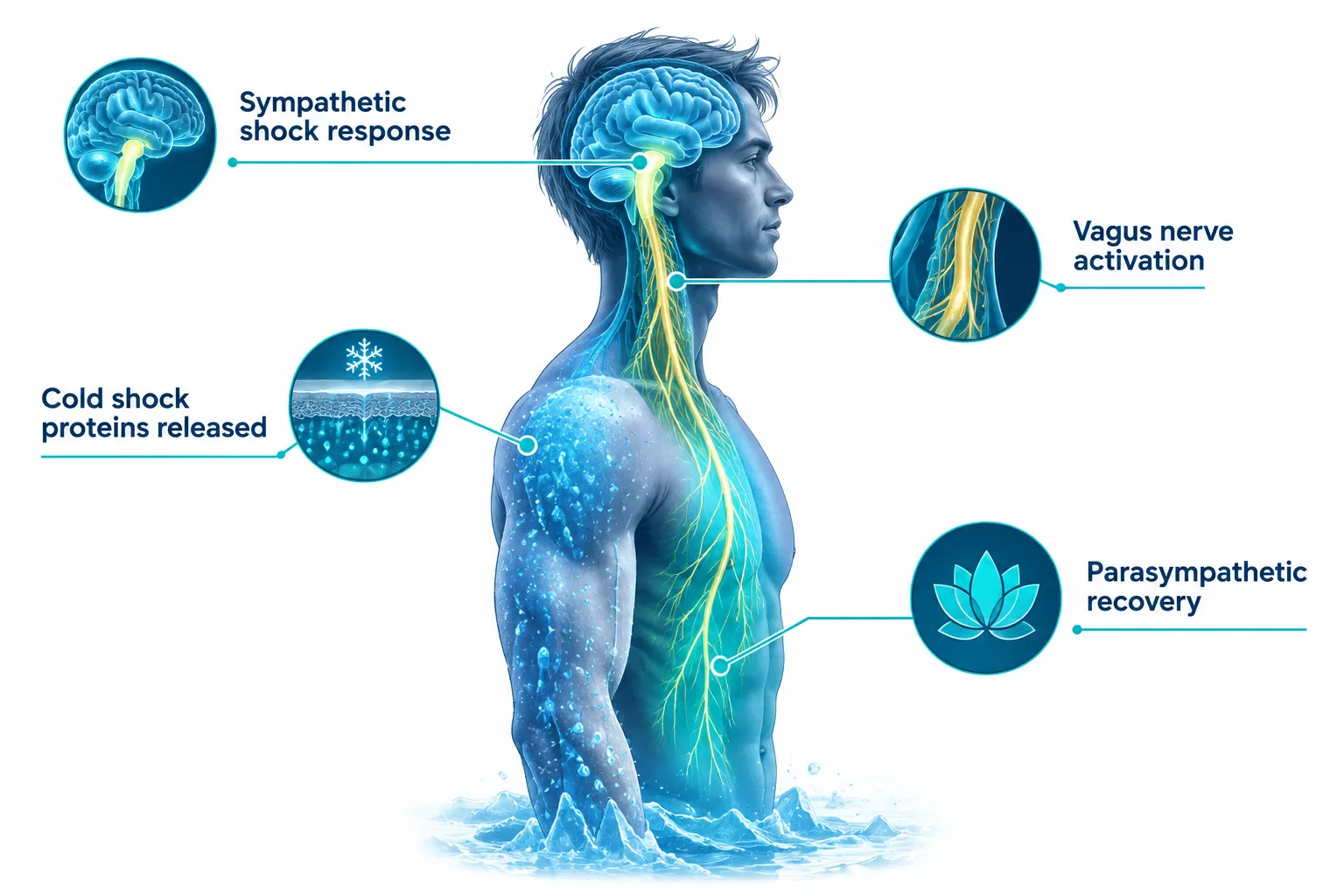
Notably, this shift does not require freezing water. Research cited in beginner guides shows that cold shock proteins, molecules linked to cellular repair and resilience, activate at moderate cold temperatures well above 0°C [7][8]. That means the 10°C to 15°C range is enough to start building tolerance and capturing benefits without unnecessary risk.
A Step-by-Step On-Ramp From Showers to Plunges
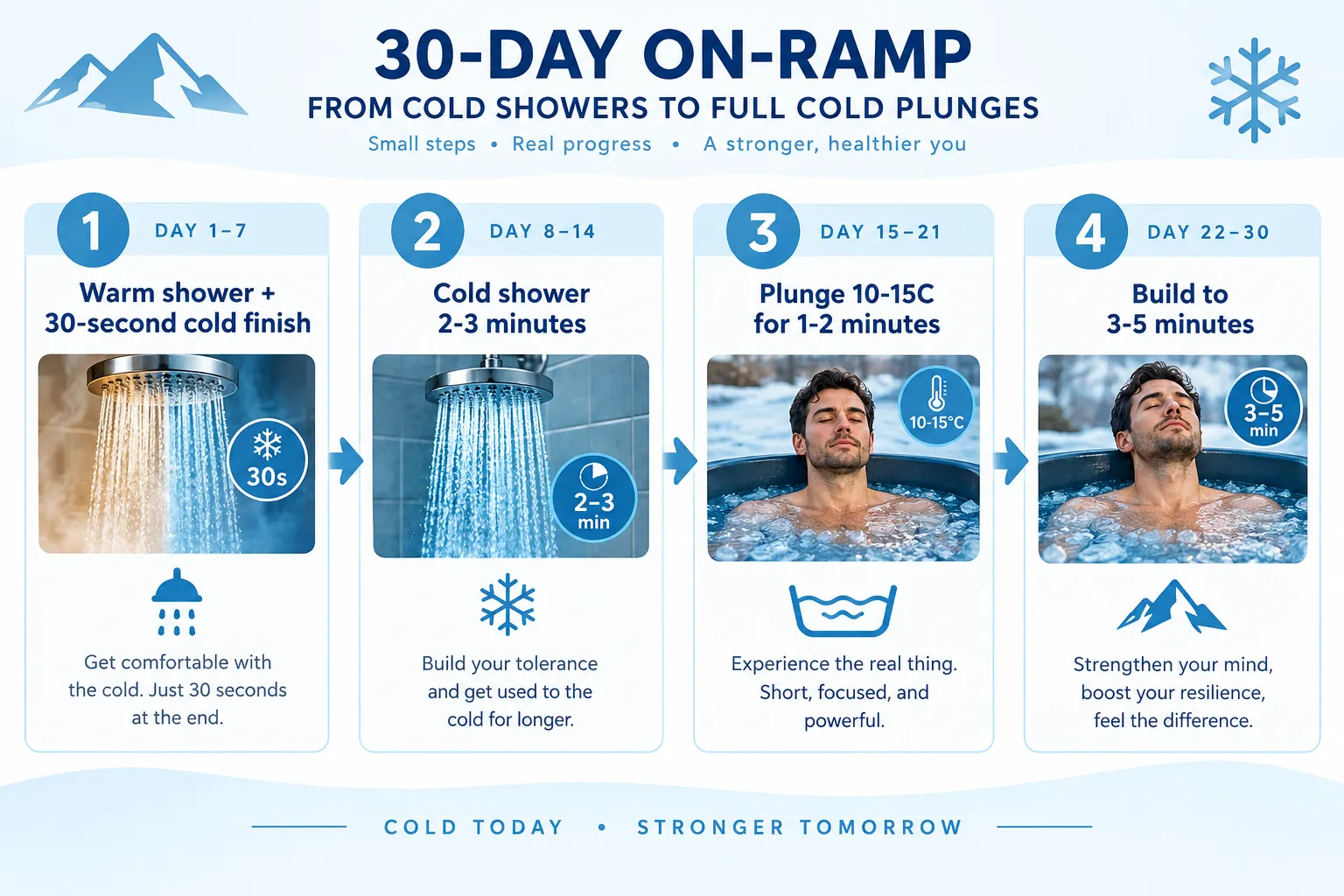
Most current beginner programs, including 30-day style plans, recommend building tolerance gradually rather than jumping straight into a tub [1][3]. A typical progression looks like this:
- Week 1: End regular warm showers with 20 to 30 seconds of cold water.
- Week 2: Take fully cold showers for 2 to 3 minutes.
- Week 3: Try a plunge at 10°C to 15°C for 1 to 2 minutes.
- Week 4 and beyond: Extend sessions toward 3 to 5 minutes as comfort grows [2][9].
Structured tracking tools and apps have become popular in 2026 for logging water temperature, duration, and how sessions feel afterward, which helps beginners spot patterns without guessing [3][10].
Mastering Breath Control Before You Plunge
The fastest way to derail a first plunge is uncontrolled gasping, which can lead to hyperventilation. Before entering the water, practice box breathing: inhale for 4 seconds, hold for 4, exhale for 4, hold for 4 [5][9]. Repeating this cycle several times calms the nervous system in advance, so the initial gasp reflex on entry is shorter and easier to manage. Once submerged, slow exhales through pursed lips help regulate the urge to breathe rapidly.
Immersion Technique: Entry, Posture, and Exit
“The goal isn’t to endure the cold. It’s to teach the body it can stay calm inside it.”
Enter slowly rather than jumping in. A gradual entry lets the body register temperature change in stages instead of all at once [1][10]. Keep the head and neck upright and out of extreme cold water where possible, since sudden immersion of the head and neck can intensify the shock response and is a specific caution noted in safety guidance [4][6]. Sit or stand with relaxed shoulders, breathe steadily, and avoid clenching muscles, which wastes energy and heightens discomfort.
Exit slowly as well. Do not rush to a hot shower immediately. Instead, move naturally, walk a few steps, or hold a horse stance (a wide-legged, bent-knee position) to encourage gentle blood flow back to the limbs. Jumping straight into heat can cause rapid vasodilation and a drop in blood pressure, sometimes leading to fainting [1][9].
Safety First: Screening and Contraindications
Cold plunging is not appropriate for everyone. Position statements from active-industry and aquatic-safety bodies recommend screening for cardiovascular conditions, uncontrolled high blood pressure, Raynaud’s syndrome, and pregnancy before starting [4]. People with a history of fainting or breathing disorders should consult a doctor first. It is also worth distinguishing wellness plunges from emergency cold-water immersion protocols used in survival situations; the goals, durations, and rewarming methods differ substantially, and mixing the two can create confusion about safe practice [6].
Frequency and Recovery for Beginners
Current consensus across beginner resources points to 2 to 4 sessions per week as a sustainable starting frequency, with rest days between sessions to let the nervous system adapt [2][7]. Overdoing frequency early on can lead to fatigue rather than the alertness most people seek. As comfort builds over several weeks, some choose to increase session length before increasing frequency.
What Comes Next: Predictions Beyond 2026
Looking ahead, wider adoption of home plunge tubs with built-in temperature control and app-based tracking is likely to continue, alongside more formalized facility guidance for spas and gyms offering cold immersion services [3][4]. These trends remain speculative, but they suggest cold plunging is moving from a niche extreme practice toward a more standardized, safety-conscious wellness routine.
Conclusion
Cold plunging does not demand ice water or willpower alone. The safest, most sustainable path starts around 10°C to 15°C, limits early sessions to 1 to 2 minutes, and leans on box breathing and gradual entry to manage the body’s shock response. Rewarm slowly, track progress, and build frequency to 2 to 4 sessions a week before pushing duration further. This measured approach turns cold exposure into a manageable habit rather than a test of endurance. Start small this autumn, listen to how the body responds, and adjust the plan as tolerance grows.
References
[1] How To Cold Plunge At Home – https://coldrecoveryhub.com/blog/how-to-cold-plunge-at-home/ [2] How To Cold Plunge A Beginners Guide To Building A Cold Therapy Routine – https://www.calderaspas.com/wellness-blog/how-to-cold-plunge-a-beginners-guide-to-building-a-cold-therapy-routine [3] How To Start – https://thewellvetted.com/cold-plunge/guides/how-to-start [4] Rls Ausactive Spasa Position Statement Cold Water Immersion Final – https://ausactive.org.au/wp-content/uploads/2024/02/RLS_AUSActive_SPASA_Position-Statement_Cold-Water-Immersion_Final.pdf [5] Cold – https://www.josephanew.com/articles/cold [6] Coldwaterimmersionguide Resourceupdate 8 – https://koreystringer-institute.media.uconn.edu/wp-content/uploads/sites/3814/2024/08/ColdWaterImmersionGuide_ResourceUpdate_8.pdf [7] Beginners Guide To Cold Plunges Benefits Duration And Preparation – https://salutaris.com.au/2025/02/27/beginners-guide-to-cold-plunges-benefits-duration-and-preparation/ [8] Ice Bathing At Home – https://books.google.com/books/about/Ice_Bathing_At_Home.html?id=NvGr0QEACAAJ [9] How To Start Cold Plunging – https://saunaorplunge.com/how-to-start-cold-plunging/ [10] Cold Plunge For Beginners – https://coldandcedar.com/cold-plunge/cold-plunge-for-beginners/


