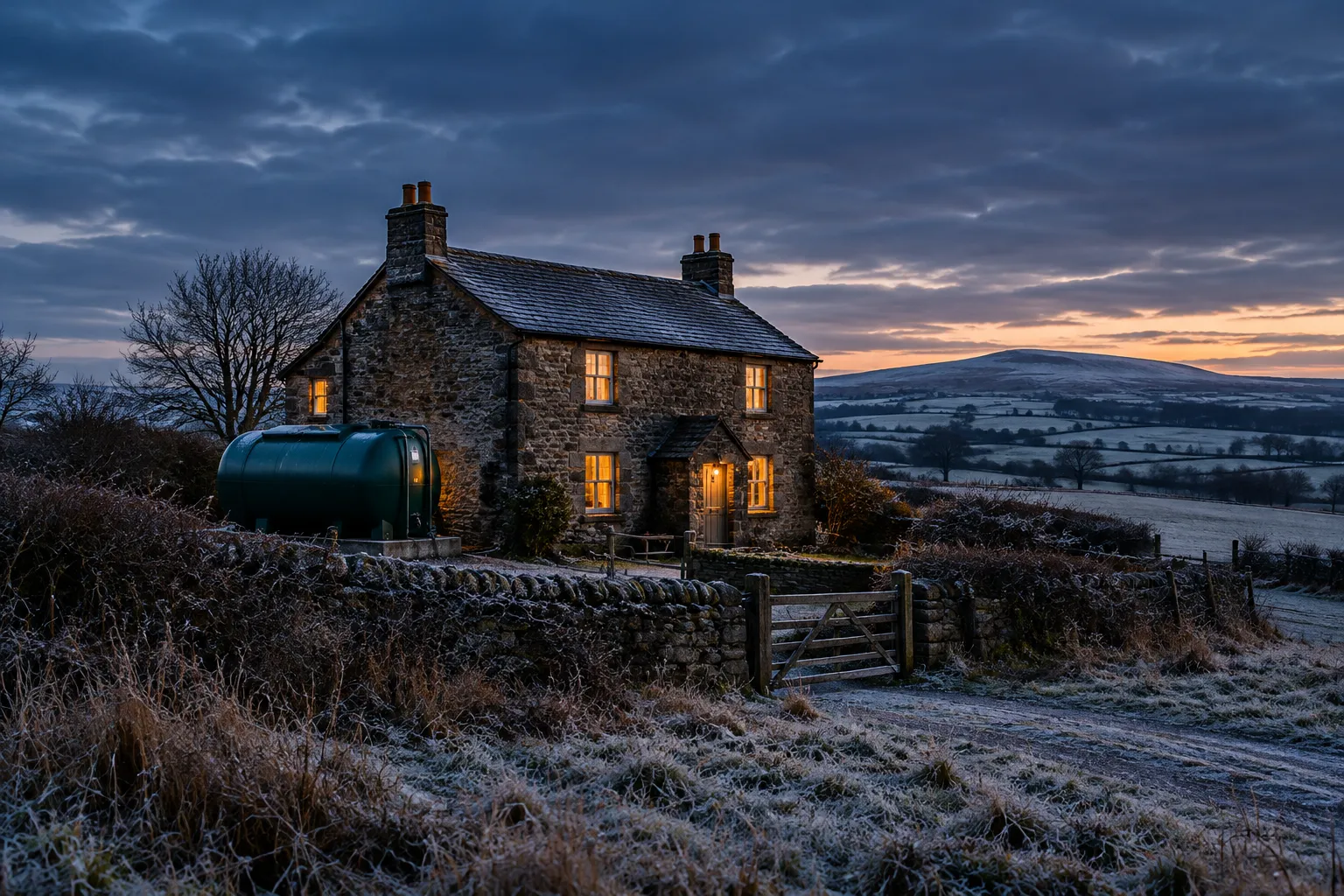
For millions living beyond the mains gas grid, staying warm in winter isn’t as simple as turning a thermostat. As calls mount for emergency government support across 23,000 heating-oil-dependent homes in rural Britain, off-grid dwellers face a stark reminder of the perils of unregulated fuel markets. The situation unfolding across Northumberland has become a case study in what happens when fuel prices spike and consumer protections lag behind.
Campaigners, local councils, and energy charities are now pressing Westminster to treat rural fuel poverty with the same urgency as mains gas and electricity shortages [8].
Key Takeaways
- More than 23,000 rural households in Northumberland alone depend on kerosene heating oil instead of mains gas [8].
- Heating oil sits outside Ofgem’s domestic price cap, leaving off-grid families exposed to volatile bulk-delivery pricing swings heading into winter 2026 [1].
- The Competition and Markets Authority has found that heating oil customers lack protections comparable to mains energy users and has urged government action [1][2].
- New rules announced in October 2026 mark the first attempt to regulate heating oil suppliers, though critics say the measures arrive too slowly for this winter [9].
- Rural households are increasingly exploring biomass, log gasification, and heat pumps under the Boiler Upgrade Scheme as long-term alternatives to tank refills [2].
The Scale of the Off the Mains Grid Heating Oil Problem
Roughly 1 million homes across the UK rely on heating oil because they sit too far from gas pipelines to connect affordably [2]. Northumberland alone accounts for more than 23,000 of these households, a concentration that reflects the county’s sparse population and challenging terrain [8]. For these residents, warmth depends entirely on scheduled tanker deliveries rather than a continuous pipeline supply.
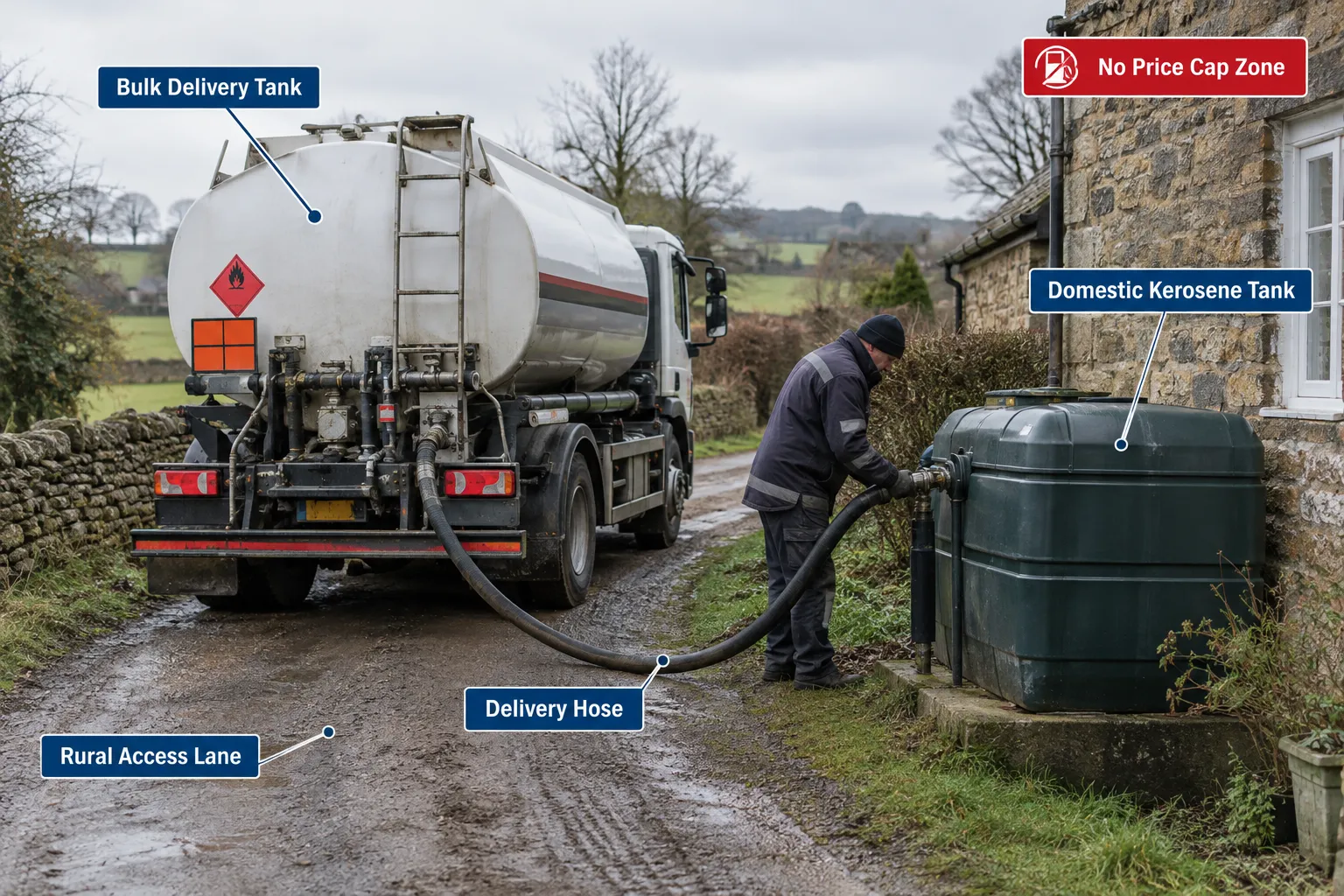
Unlike gas or electricity customers, oil-dependent households must plan ahead, pay upfront, and absorb whatever price the market demands on delivery day. This arrangement works reasonably well when prices are stable. It becomes a serious hardship when markets swing sharply, which is exactly what has happened heading into the 2026-27 heating season.
Price Surges and Volatility Behind the Heating Oil Crunch
Heating oil prices climbed back above their spring 2026 peak just as winter began, according to reporting on the sector [9]. Families who topped up tanks earlier in the year have watched costs for a fresh fill nearly double in some regions, turning routine refuelling into what one report called a genuine winter gamble [7].
Several forces are driving this volatility:
- Global conflict-related supply shocks that ripple through crude oil and refined fuel markets [7][9].
- Thin seasonal supply margins, as demand concentrates sharply in cold months.
- Bulk-purchase pricing structures that leave individual households with little negotiating power compared with large commercial buyers.
The result is a pattern of extreme swings rather than steady seasonal increases, making budgeting almost impossible for fixed-income rural residents.
Why Mains Protections Do Not Reach Off Grid Households
The core issue, according to the Competition and Markets Authority, is a protection gap. Ofgem’s price cap shields mains gas and electricity customers from the worst volatility, but heating oil has never been covered by equivalent rules [1]. The CMA’s market study, running through much of 2026, concluded that heating oil households need materially stronger safeguards than currently exist [1].
This regulatory blind spot means a household in a city with mains gas has formal price protection, while a neighbouring rural household just a few miles away, using oil because no pipeline reaches their property, has none. The CMA’s findings have added weight to long-standing complaints from rural advocacy groups about this inconsistency [2].
Government Response and Emerging Regulation
In October 2026, the government published its formal response to the CMA’s heating oil market study, setting out plans to introduce oversight for the sector for the first time [5]. A parliamentary written statement confirmed the direction of travel toward regulating suppliers more closely [4]. Reporting also indicates heating oil suppliers will face new regulatory requirements as winter sets in [9].
Supporters of the move welcome the principle but question the timeline. Many argue that regulation arriving as winter begins offers little practical relief for households who must fill tanks now, before any new rules take effect.
Lived Realities for Rural Heating Oil Users This Winter
Behind the statistics are everyday decisions rural families face each year. Rationing oil use, delaying top-ups, and shivering through cold snaps are common coping strategies described in regional reporting [3][6]. Some households split deliveries between neighbours to spread cost and risk, an informal safety net that only partially offsets the lack of formal protection.
Energy analysts note there is no single quick fix for the roughly 1 million oil-reliant homes nationwide, since geography prevents mains connection and retrofit costs vary widely by property type [2].
Calls for Targeted Support and Fuel Parity
Charities, local MPs, and community groups have urged Westminster to introduce targeted grants matching the scale of rural need, specifically naming the 23,000 Northumberland households as a priority group [8]. Their core argument is one of fairness: rural residents should not face systematically higher winter risk simply because of where they live.
Policy suggestions circulating among advocates include:
- Emergency bill support schemes mirroring those available to mains gas customers.
- Expanded eligibility for the Boiler Upgrade Scheme, helping cover heat pump installation costs.
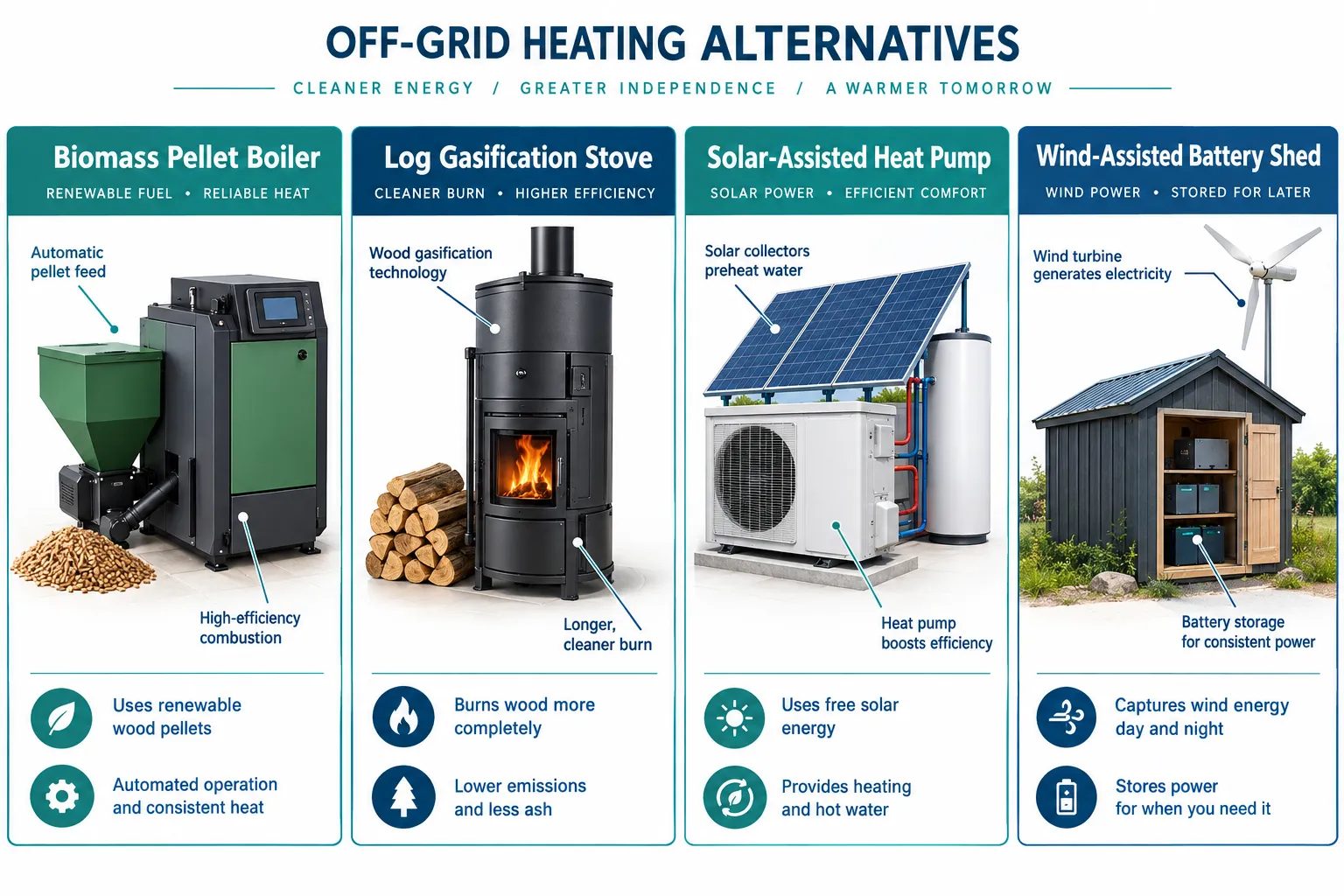
- Incentives for biomass boilers and log gasification systems as locally sourced alternatives.
- Clearer price transparency requirements for bulk oil suppliers.
Building Fuel Resilience Off the Mains Grid
Beyond policy debate, many rural homesteaders are taking matters into their own hands. Diversifying heat sources reduces dependence on any single volatile fuel market. Options gaining traction include solar-assisted heat pumps, wood pellet biomass systems, and smaller-scale log gasification stoves that burn fuel more efficiently than open fires [2].
Localized storage strategies also matter. Households increasingly stagger oil purchases across multiple smaller fills rather than one large seasonal order, spreading exposure to price spikes. Combining this with insulation upgrades and smart thermostat controls can meaningfully cut overall oil consumption, easing the financial sting of any single delivery.
Outlook for Winter 2026-27
Expect continued price sensitivity through the coming months. With regulation only just emerging and global supply pressures unresolved, heating oil costs are likely to remain unpredictable [7][9]. Rural advocacy groups are expected to keep pressing for faster, more generous support ahead of the coldest weeks of the season [8].
The heating oil crunch facing rural Britain is more than a pricing story. It exposes a structural gap in how the UK protects energy consumers, one that leaves roughly 1 million off-grid households, including over 23,000 in Northumberland alone, more exposed than their mains-connected neighbours. Regulatory change is finally arriving, but rural families cannot wait for policy to catch up with practical need.
Households currently relying on heating oil should consider spreading deliveries across smaller top-ups, investigating Boiler Upgrade Scheme eligibility, and exploring biomass or heat pump alternatives where feasible. Community groups and local councils remain useful resources for emergency support and collective purchasing power. Building genuine fuel resilience, rather than hoping for price stability, offers the most realistic path through this and future winters off the mains grid.
References
[1] Uks Heating Oil Households Need Stronger Protections Says Cma – https://www.gov.uk/government/news/uks-heating-oil-households-need-stronger-protections-says-cma [2] No Silver Bullet For 1m Rural Homes Using Oil Burners – https://www.energyvoice.com/renewables-energy-transition/600559/no-silver-bullet-for-1m-rural-homes-using-oil-burners/ [3] Cqgm09xvlvjeo – https://www.bbc.co.uk/news/articles/cqgm09xvlvjeo?at_medium=RSS&at_campaign=rss [4] Hlws376 – https://questions-statements.parliament.uk/written-statements/detail/2026-10-13/hlws376 [5] Government Response To The Cma Heating Oil Market Study – https://www.gov.uk/government/publications/heating-oil-government-response-to-cma-market-study/government-response-to-the-cma-heating-oil-market-study [6] Cv4g18we232ro – https://www.bbc.co.uk/news/articles/cv4g18we232ro [7] Heating Oil Doubled Families Winter Gamble – https://www.martincid.com/business/heating-oil-doubled-families-winter-gamble/ [8] 26637573.government Urged Support 23 000 Heating Oil Homes – https://www.hexham-courant.co.uk/news/26637573.government-urged-support-23-000-heating-oil-homes/ [9] Heating Oil Prices Are Back Above The Spring Peak As Winter Starts And Suppliers Are To Be Regulated For The First Time – https://swanseabaynews.com/heating-oil-prices-are-back-above-the-spring-peak-as-winter-starts-and-suppliers-are-to-be-regulated-for-the-first-time/ [10] Crk36z3rmnzo – https://www.bbc.co.uk/news/articles/crk36z3rmnzo