
A single phone call from a neighbor is often all it takes to trigger a code enforcement investigation, a legal process, and possibly a forced move. That is exactly what happened in Maine in late September 2026, when an off-grid RV owner caught violating local code enforcement after neighbor reports them became a cautionary story shared across vanlife communities nationwide [3][7]. The case highlights a growing tension between the appeal of off-grid living and the patchwork of local rules that govern where an RV can legally park, live, or discharge waste.
Key Takeaways
- A Maine off-grid RV owner faced code enforcement action in September 2026 after a neighbor filed a complaint, largely tied to gray water handling [3].
- Most RV code violations nationwide are complaint-driven, not proactively discovered by inspectors [6][9].
- Cities including Albuquerque, Grand Rapids, and Oakland treat RV living or storage violations as zoning or vehicle abandonment issues [6][9].
- Local rules vary widely and change quickly, from Cooper City’s temporary enforcement pause to Seattle’s upcoming parking restrictions [1][5].
- Verifying local ordinances in writing before setting up off-grid is the single best protection against surprise enforcement.
What Happened in the Maine Off-Grid RV Case
According to coverage from The Cool Down, the Maine incident began when a neighbor reported concerns about how an off-grid RV owner was managing gray water disposal on private property [3]. Code enforcement officers followed up on the complaint, and the situation quickly escalated into a broader review of whether the RV setup complied with local sanitation and land-use rules.
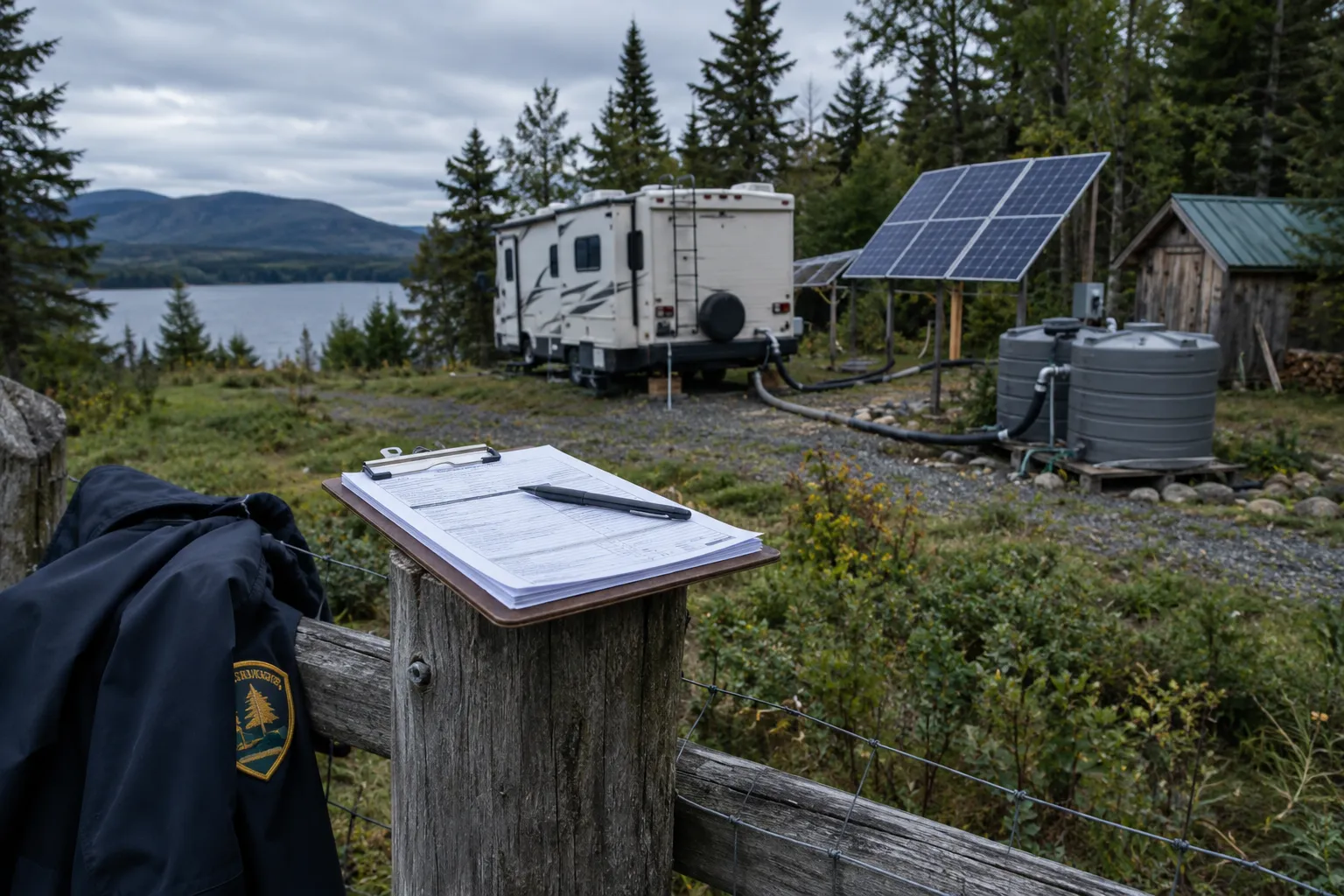
Vanlife outlets picked up the story within a day, framing it as a warning sign for the broader off-grid community [7]. The core lesson repeated across that coverage was simple: an off-grid RV owner caught violating local code enforcement after neighbor reports them usually did not intend to break the law. Many assume that owning the land gives them full freedom to live however they choose. That assumption is frequently wrong.
Why Neighbor Complaints Drive Most Code Enforcement Cases
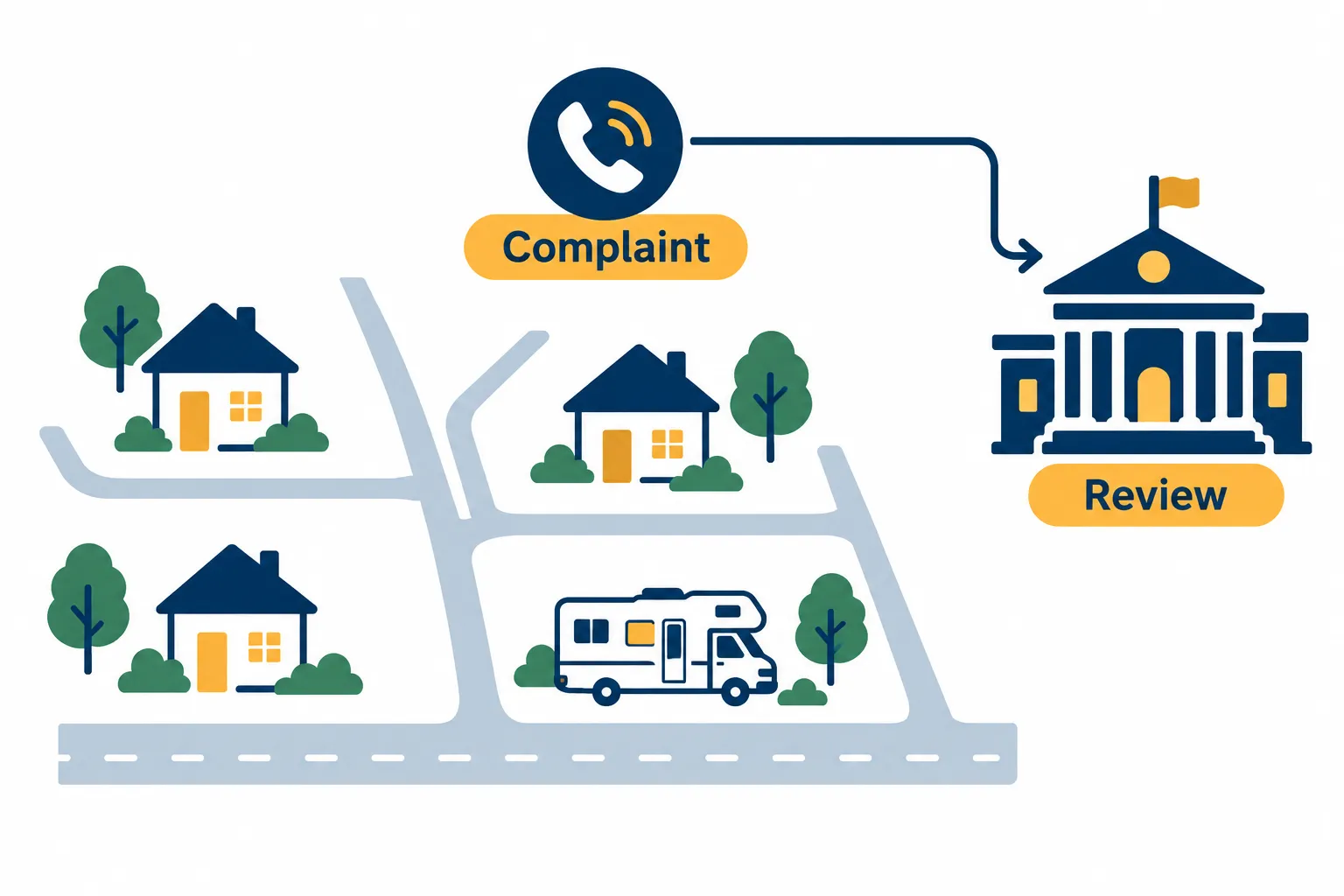
Legal experts note that RV living on private property is often restricted, and enforcement is almost always triggered by someone else’s report rather than routine inspection. Albuquerque’s code enforcement guidance confirms that complaints, including anonymous ones, can open a formal case against a property owner using an RV as a dwelling [6]. Grand Rapids similarly classifies improper RV storage as a zoning violation, meaning a parked camper can draw scrutiny even without anyone living in it full time [9].
This complaint-driven model means visibility matters more than intent. An RV parked quietly for years might never attract attention, while a similar setup noticed by an unhappy neighbor can trigger action within days. That pattern repeats across nearly every jurisdiction reviewed here, reinforcing why an off-grid RV owner caught violating local code enforcement after neighbor reports them is such a common storyline rather than an isolated event.
How Local Rules Keep Shifting Under RV Owners
Municipal policy on RVs is not static, and that inconsistency creates real risk. In Texas, Clarendon’s city council denied an RV variance request in a residential zone in August 2026, reinforcing strict local limits [2]. Cooper City, Florida, moved the opposite direction, temporarily pausing RV registration enforcement around the same time, giving owners short-term breathing room [1].
Larger cities are tightening rules further. Palo Alto proposed a targeted ban on oversized vehicle and RV parking in August 2026 [4]. Seattle’s city council unveiled a broader legislative package including a citywide midnight RV parking ban and a two-hour daytime limit, set to take effect in April 2027 [5]. Oakland shifted its approach in September 2026 to treat occupied RVs more like abandoned vehicles, allowing faster towing [9]. California regulators have also flagged that many RV and mobile-home parks statewide risk losing their operating permits, adding another layer of uncertainty for owners who rely on formal parks rather than private land [8].
Protecting Yourself Before You Go Off-Grid
The clearest lesson from the Maine case and its ripple effects is procedural, not philosophical. Before setting up any off-grid RV arrangement, owners should confirm zoning and sanitation rules in writing with the local planning or code enforcement office [6]. Waste disposal systems, especially gray water handling, deserve particular attention, since that detail was central to the Maine complaint [3].
A short pre-move checklist can prevent most disputes:
- Request written confirmation of RV dwelling rules from the local code enforcement department.
- Ask specifically about gray water and sewage disposal requirements.
- Check whether the property is zoned for residential RV use or storage only.
- Review recent local news for pending ordinance changes, since rules can shift within months.
- Keep a paper trail of all communications with local officials.
Conclusion
The Maine case is not unique. It reflects a national pattern in which an off-grid RV owner caught violating local code enforcement after neighbor reports them becomes the trigger for enforcement, not proactive government inspection. As cities from Seattle to Oakland tighten rules while others like Cooper City temporarily ease them, the regulatory landscape for off-grid living remains unpredictable. The most practical next step for any current or prospective off-grid RV owner is direct, written contact with local code enforcement before moving in, not after a neighbor calls.
References
[1] coopercity.gov – https://www.coopercity.gov/article/3074351 [2] City Council Turns Down Rv Variance Request – https://www.clarendonlive.com/2026/08/city-council-turns-down-rv-variance-request/ [3] Maine Off Grid Rv Gray Water Plan – https://www.thecooldown.com/green-home/maine-off-grid-rv-gray-water-plan/ [4] Palo Alto Oversized Vehicle Rv Parking Ban Proposal – https://www.cbsnews.com/sanfrancisco/news/palo-alto-oversized-vehicle-rv-parking-ban-proposal/ [5] Seattle City Council Unveils Comprehensive Six Piece Legislative – https://www.westsideseattle.com/ballard-news-tribune/2026/08/11/seattle-city-council-unveils-comprehensive-six-piece-legislative [6] Code Enforcement Faqs – https://www.cabq.gov/planning/planning-faqs/code-enforcement-faqs [7] openvan.camp – https://openvan.camp/en [8] Deadline Passed 2389 California Parks Risk Losing Their Permit To Operate – https://www.desmoinesregister.com/press-release/story/114098/deadline-passed-2389-california-parks-risk-losing-their-permit-to-operate/ [9] Oakland Ramps Up Enforcement Of Rv Dwellers With New Policy In Effect – https://www.mercurynews.com/2026/09/14/oakland-ramps-up-enforcement-of-rv-dwellers-with-new-policy-in-effect/


