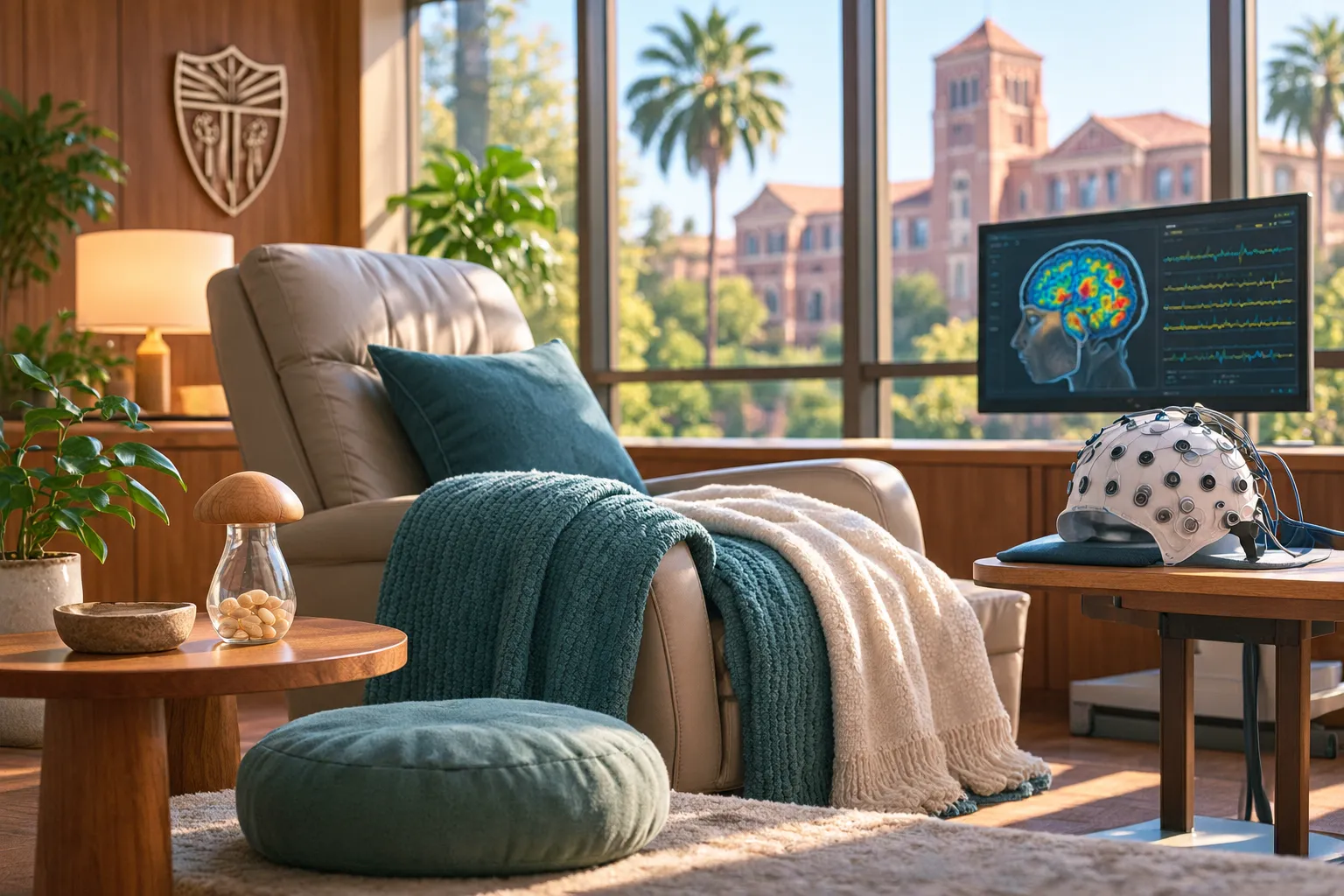
Nearly one in three people with major depressive disorder does not respond to standard antidepressants. That statistic alone explains why a new study drawing national attention matters so much. Can combining mindfulness meditation with psychedelic therapy create deeper, more lasting emotional healing than either practice alone? A new USC trial pairs psilocybin and mindfulness meditation for depression to find out, testing whether the two approaches together outperform existing treatments for people who have run out of options [1].
Announced in October 2026, the study reflects growing scientific interest in how altered states of consciousness, carefully guided by trained practice, might produce durable psychological change rather than temporary relief [1][4].
Key Takeaways
- USC researchers launched a clinical trial examining psilocybin-assisted therapy combined with structured mindfulness meditation for major depressive disorder [1].
- The project has received up to $4 million in funding from ARPA-H, the federal agency focused on breakthrough health innovations [2].
- The design builds directly on an earlier USC study that paired psilocybin with mindfulness in healthy adults [1][5].
- Researchers are tracking outcomes using digital monitoring and biomarker data alongside standard depression rating scales [3][9].
- Industry partners, including Filament and Rhelion Life Sciences, are supporting the trial’s clinical and logistical infrastructure [4][6].
Inside the Trial: How USC Trial Pairs Psilocybin and Mindfulness Meditation for Depression Design Works
The study enrolls adults diagnosed with major depressive disorder, following a structured protocol registered with federal oversight bodies [3]. Participants receive psilocybin in a controlled clinical setting under supervision, paired with a formal mindfulness curriculum delivered before and after dosing sessions [1][3].
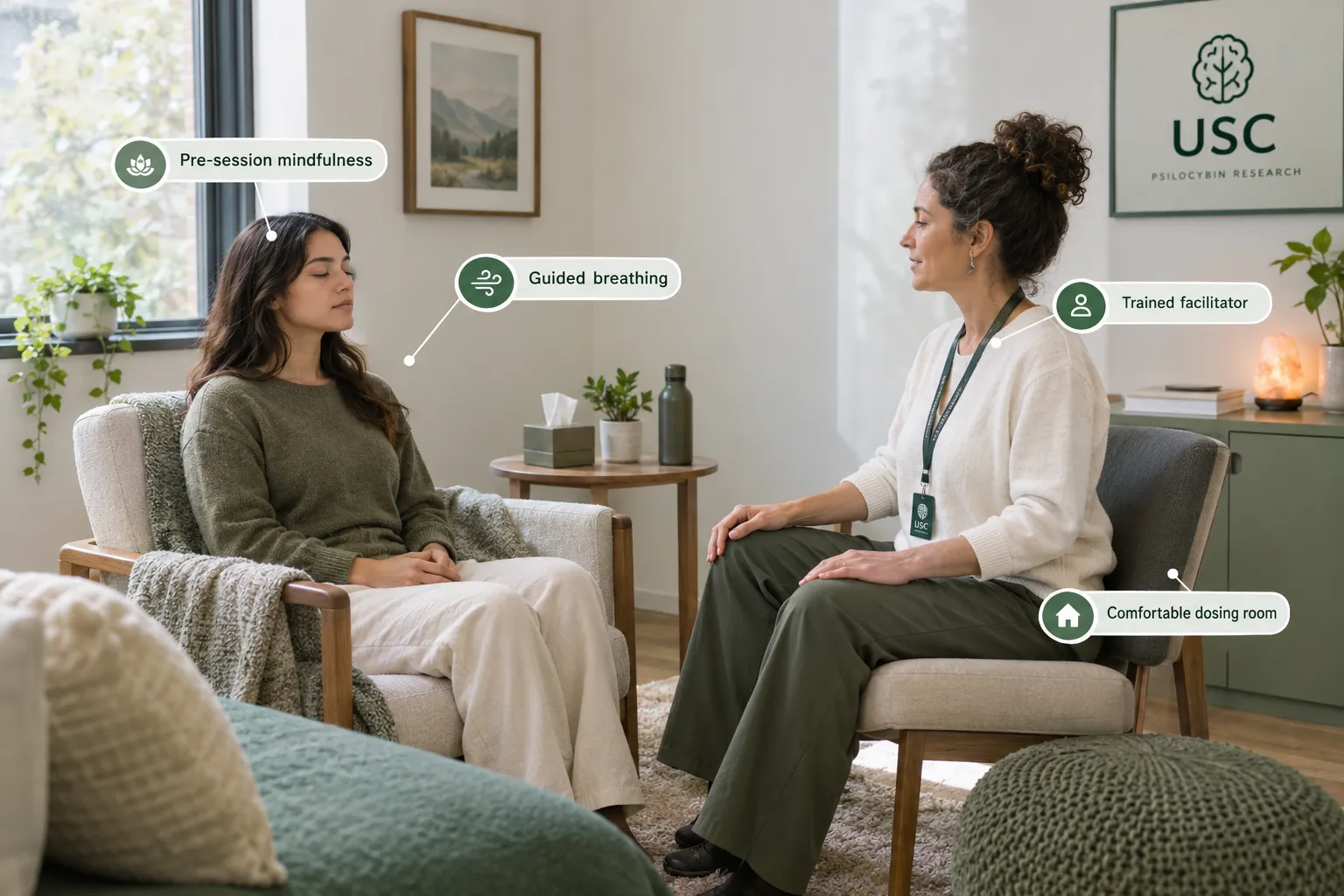
Funding of up to $4 million from the Advanced Research Projects Agency for Health, or ARPA-H, supports the trial’s scope, including its expanded data collection methods [2]. USC’s Keck School of Medicine is leading the research effort, with institutional leadership overseeing both the clinical and neuroscience components of the work [1][7].
Why pair these two interventions at all? Researchers point to overlapping effects on brain activity that neither treatment alone can fully sustain.
The Science Behind Pairing Psychedelics With Meditation
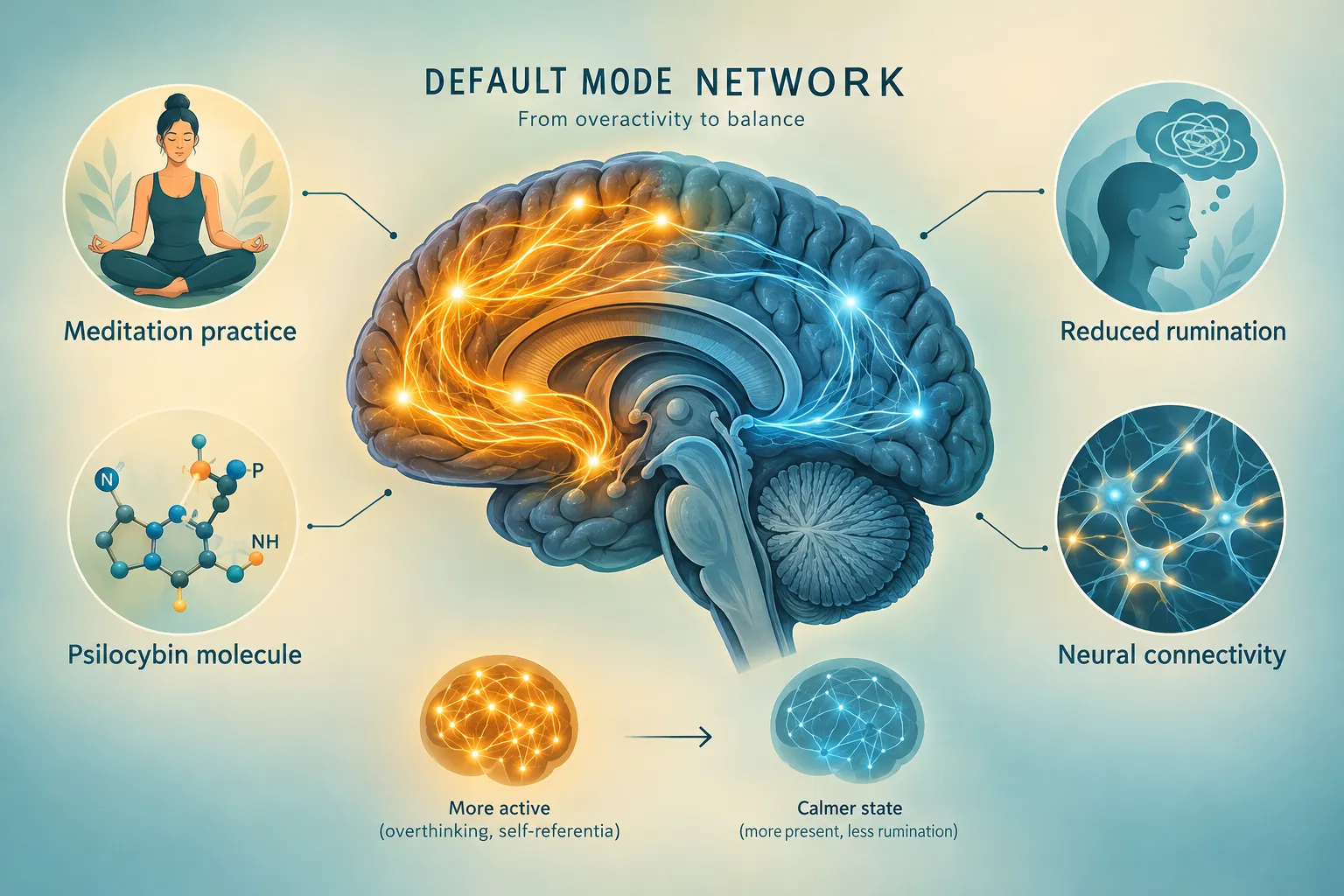
Both psilocybin and sustained meditation practice appear to influence a brain network known as the default mode network, or DMN. This network governs self-referential thinking, including the repetitive negative thought patterns common in depression [1][5]. Early research suggests that psilocybin temporarily quiets DMN activity, producing a window of increased mental flexibility.
“Pairing psychedelic-induced neuroplasticity with sustained mindfulness practice may help patients anchor altered states of consciousness into lasting emotional resilience,” reflects the rationale behind USC’s approach, according to Keck School researchers [1].
Mindfulness training, practiced consistently over weeks, is believed to reinforce this quieting effect long after the drug has left the system. This mirrors findings from USC’s earlier psilocybin-mindfulness study conducted in healthy adults, which explored similar brain mechanisms without a clinical depression diagnosis [1][5]. The new trial extends that groundwork into a patient population where the stakes, and potential benefits, are considerably higher.
Mindfulness Program Structure and Data Collection
The mindfulness component is not a single session. It follows a structured program that includes preparatory sessions before dosing, guided integration support afterward, and ongoing practice encouragement between visits [1]. This structure is designed to help participants process and apply insights gained during the psilocybin experience rather than letting them fade.
To measure results, the trial uses several tools:
- Standardized clinical depression scales administered at multiple checkpoints [3][9]
- Digital tracking tools that monitor mood and behavior patterns outside the clinic [9]
- Biomarker sampling to assess physiological changes tied to treatment response [9]
This combination of subjective reporting and objective data reflects a broader push in psychedelic research toward more rigorous, measurable outcomes [4][9].
Industry Partners and Regulatory Context
Private sector involvement plays a notable role in the trial’s execution. Filament and Rhelion Life Sciences are listed among the organizations supporting clinical operations and research infrastructure [4][6]. Their participation reflects a wider trend of biotech firms partnering with academic institutions to accelerate psychedelic medicine research.
The trial operates within strict federal safety and regulatory frameworks, including oversight tied to its ARPA-H funding and formal clinical trial registration [2][3][8]. This context matters because psilocybin remains a controlled substance outside of approved research settings, making institutional oversight essential to the trial’s legitimacy.
Expert Expectations and What Comes Next
As of October 2026, the trial is active and enrolling participants, with results expected over the coming months and years as data collection continues [4][10]. Researchers anticipate that findings could help clarify whether mindfulness meaningfully extends the benefits of psychedelic therapy, though these expectations remain speculative until peer-reviewed results emerge [4][9].
If successful, the model could influence how future depression treatments combine pharmacological and behavioral interventions, though experts caution it is too early to predict clinical approval timelines [9][10].
The USC trial pairs psilocybin and mindfulness meditation for depression in a design that treats neuroplasticity and sustained practice as complementary, not competing, tools. By tracking both digital biomarkers and traditional clinical measures, the study aims to answer a question with real stakes for millions living with treatment-resistant depression. Readers interested in psychedelic research developments should follow updates from USC’s Keck School of Medicine and monitor the trial’s official registration page for enrollment status and future findings.
References
[1] Usc Launches Clinical Trial Of Psilocybin And Mindfulness Meditation For Depression – https://keck.usc.edu/news/usc-launches-clinical-trial-of-psilocybin-and-mindfulness-meditation-for-depression/ [2] arpa-h.gov – https://arpa-h.gov/explore-funding/awards/4351 [3] Nct06233344 – https://www.clinicaltrials.gov/study/NCT06233344 [4] Usc Researchers Receive 244 Million To Test Psychedelic Therapy And Mindfulness For Depression – https://www.news-medical.net/news/20261006/USC-researchers-receive-244-million-to-test-psychedelic-therapy-and-mindfulness-for-depression.aspx [5] Mindfulness Meets Magic Mushrooms Usc Trials Psilocybin Therapy For Depression – https://bioengineer.org/mindfulness-meets-magic-mushrooms-usc-trials-psilocybin-therapy-for-depression/ [6] Keckschoolusc Researchers Receive Funding To Launch Usc Activity 7472688634249445376 Ysub – https://www.linkedin.com/posts/keckschoolusc_researchers-receive-funding-to-launch-usc-activity-7472688634249445376-YSUB [7] keck.usc.edu – https://keck.usc.edu/ [8] arpa-h.gov – https://arpa-h.gov/explore-funding/awards/4446 [9] New Usc Clinical Trial Explores Psilocybin For Mental Health – https://www.news-medical.net/news/20260616/New-USC-clinical-trial-explores-psilocybin-for-mental-health.aspx [10] Phase 2 Mental Health 6 2024 85442 – https://www.withpower.com/trial/phase-2-mental-health-6-2024-85442