More than half of people with ADHD are already reaching for a supplement bottle before they ever ask a doctor about it. A July 2025 nutrition study found that 56% of participants with ADHD were taking at least one dietary supplement, with fish oil, multivitamins, and vitamin D topping the list.[1] Yet the same researchers noted something uncomfortable: widespread use does not equal proven effectiveness. This article breaks down the real evidence behind 10 natural supplements that may help with ADHD, so you can separate genuine science from wishful thinking.
Key Takeaways
- 56% of people with ADHD use at least one supplement, but most have limited or mixed scientific support.[1]
- Omega-3 fatty acids are the most studied option, yet a 2025 meta-analysis found inconsistent benefits for hyperactivity and inattention.[9]
- Minerals like zinc, iron, and magnesium may help only when a true deficiency exists, not as a blanket treatment.[14]
- No natural supplement replaces stimulant medication; a 2026 federal evidence review confirms omega-3 remains clearly less effective than standard treatment.[2]
- Always coordinate supplement use with a healthcare provider, especially for children.
Understanding the Evidence Behind Natural Supplements for ADHD
Before exploring the list of 10 natural supplements that may help with ADHD, it helps to understand why the research is so mixed. ADHD involves complex brain chemistry, and no single nutrient corrects it on its own. Most studies test supplements as an add-on to standard care, not a replacement. Keep that context in mind as you review the options below.
1. Omega-3 Fatty Acids (Fish Oil)
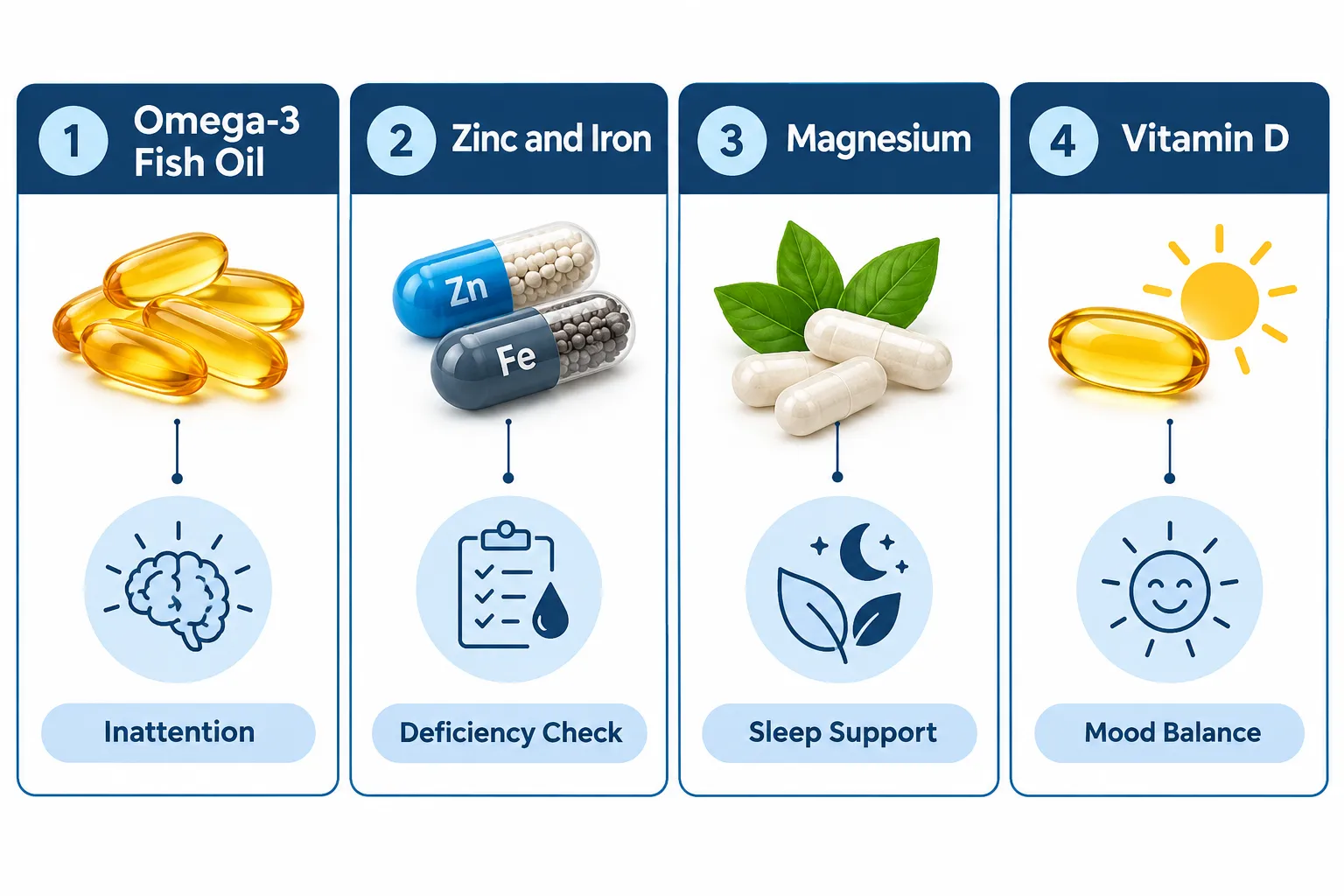
Omega-3s are the most researched natural supplement for ADHD. A 2025 meta-analysis of 31 randomized controlled trials involving 2,739 children found genuinely mixed results: 14 of 23 studies on hyperactivity and impulsivity showed no effect, while only 7 showed benefit. For inattention, just 10 of 24 studies reported improvement.[9] A 2024 systematic review reached a similar conclusion, finding no significant difference between omega-3 and placebo across five trials.[3][6]
That said, one small six-month pilot study found that raising omega-3 index levels from 4.4% to 11.6% correlated with symptom improvement, though this was an early-phase trial and not conclusive.[5] A 2026 federal evidence review states omega-3 may offer modest benefit in some trials but remains clearly less effective than stimulant medication.[2]
2. Zinc
Zinc plays a role in neurotransmitter regulation. A 2015 systematic review found mixed and inconclusive results for zinc supplementation in children with ADHD, with evidence too weak to recommend it broadly.[14]
3. Iron
Iron only appears to help when a child has documented anemia. The same 2015 review found no benefit for non-anemic children but some improvement in anemic ones, reinforcing that correcting a real deficiency matters more than supplementing blindly.[14]
4. Magnesium
Magnesium was reported by 16% of supplement users in the 2025 nutrition survey.[1] It is often paired with vitamin D or B6 in combination formulas, though standalone evidence remains limited.
5. Vitamin D
Vitamin D ranked among the most commonly used supplements in the 2025 study, alongside magnesium at 16% usage.[1] Deficiency is common in the general population, and correcting low levels may support overall brain function, though it is not a targeted ADHD cure.
6. Multivitamins
Sixteen percent of ADHD supplement users take a general multivitamin.[1] These products are typically used to fill broad nutritional gaps rather than target specific ADHD symptoms.
7. Probiotics
Probiotics appeared on the list of commonly used supplements in the 2025 nutrition study, reflecting growing interest in the gut-brain connection.[1] Research specific to ADHD symptom improvement is still emerging.
8. Vitamin C
Vitamin C was also among the frequently used supplements reported in the same study.[1] It is sometimes included in combination formulas aimed at general immune and antioxidant support.
9. Melatonin
Melatonin use was noted in the 2025 survey, largely aimed at improving sleep quality in people with ADHD rather than treating core attention symptoms directly.[1] Since sleep problems often worsen ADHD symptoms, better rest may indirectly help daytime focus.
10. Combination and Adjunct Nutrients
Some clinicians explore additional nutrient support, such as B-complex vitamins, as part of a broader functional approach to ADHD management.[7] These are typically used alongside, not instead of, established treatment plans.
Quick Comparison Table
| Supplement | Reported Use in ADHD Population[1] | Strength of Evidence |
|---|---|---|
| Omega-3 fish oil | 33% | Most studied; mixed/modest results[9][3] |
| Multivitamins | 16% | Limited targeted evidence |
| Vitamin D | Common | Helpful mainly if deficient |
| Magnesium | 16% | Limited standalone evidence |
| Zinc | Reported | Inconclusive[14] |
| Iron | Reported | Helps only if anemic[14] |
| Probiotics | Reported | Emerging research |
| Vitamin C | Reported | Limited direct evidence |
| Melatonin | Reported | Helps sleep, not core symptoms |
| B-complex/adjuncts | Emerging | Early-stage support[7] |
“Widespread use reflects interest in natural options, but does not show these supplements are effective as primary ADHD treatments.”, based on 2025 nutrition study findings[1]
Why Natural Supplements Are Not a Standalone Solution
It is worth repeating: none of these 10 natural supplements that may help with ADHD have been shown to match the effectiveness of stimulant medication. The 2026 federal evidence review is direct on this point, stating that even the best-supported option, omega-3, is “clearly less effective” than standard pharmacological treatment and cannot serve as a replacement.[2]
This does not mean supplements are worthless. For some individuals, especially those with a documented nutrient deficiency, targeted supplementation may offer real support alongside behavioral therapy, structured routines, or medication. The key is correcting an actual gap, not guessing.
Practical Steps Before Trying Any Supplement
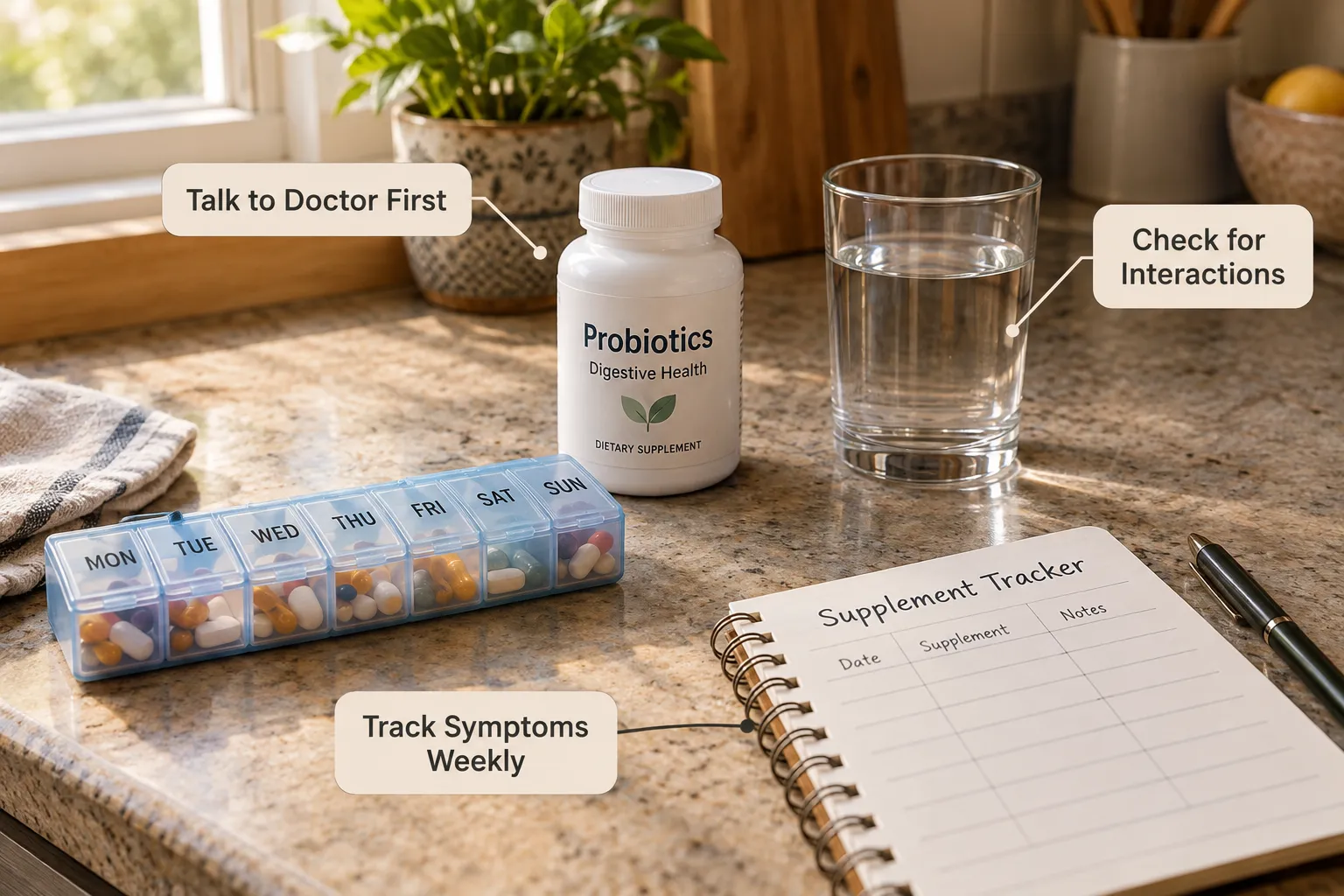
- Get tested first. Ask a doctor about checking iron, vitamin D, and zinc levels before starting anything.
- Start with one change at a time. This makes it easier to track what is actually helping.
- Watch for interactions. Some supplements can affect how ADHD medications work.
- Give it time, but set a checkpoint. Reassess after 8 to 12 weeks with your provider.
- Prioritize sleep and diet basics. These often influence ADHD symptoms as much as any pill.
Conclusion
The appeal of natural options is understandable, and the research summarized here shows why so many families explore them. Still, the honest takeaway from current evidence is that these 10 natural supplements that may help with ADHD work best as a supporting piece of a larger plan, not a substitute for proven treatment. Omega-3 fatty acids carry the most research support, though even that is modest and inconsistent. Minerals like zinc and iron matter mainly when a deficiency is confirmed through testing. Before adding any supplement, talk with a healthcare provider, request appropriate lab work, and keep track of any changes in behavior or focus. That combination of professional guidance and careful tracking is the safest path toward real improvement.
References
[1] Full – https://www.frontiersin.org/journals/nutrition/articles/10.3389/fnut.2025.1586925/full [2] Adhd And Complementary Health Approaches Science – https://www.nccih.nih.gov/health/providers/digest/adhd-and-complementary-health-approaches-science [3] esiculture – https://esiculture.com/index.php/esiculture/article/download/2808/1802/5525 [4] Journal of Disability Research ADHD review 26-3-2024 – https://www.scienceopen.com/document_file/1040b1c1-c8a9-4b6f-84c9-14f118745abf/ScienceOpenPreprint/Journal%20of%20Disability%20Research%20ADHD%20review%2026-3-2024.pdf [5] 2025 07052 005 – https://psycnet.apa.org/record/2025-07052-005 [6] esiculture – https://esiculture.com/index.php/esiculture/article/download/2806/1800/5521 [7] Functional Psychiatry Effective Supplements For Adhd – https://www.psychiatryredefined.org/functional-psychiatry-effective-supplements-for-adhd/ [8] Pmc4170184 – https://pmc.ncbi.nlm.nih.gov/articles/PMC4170184/ [9] journal.ppcr – https://journal.ppcr.org/index.php/ppcrjournal/article/view/346 [10] Vitamins Supplements Adhd – https://www.webmd.com/add-adhd/childhood-adhd/vitamins-supplements-adhd


