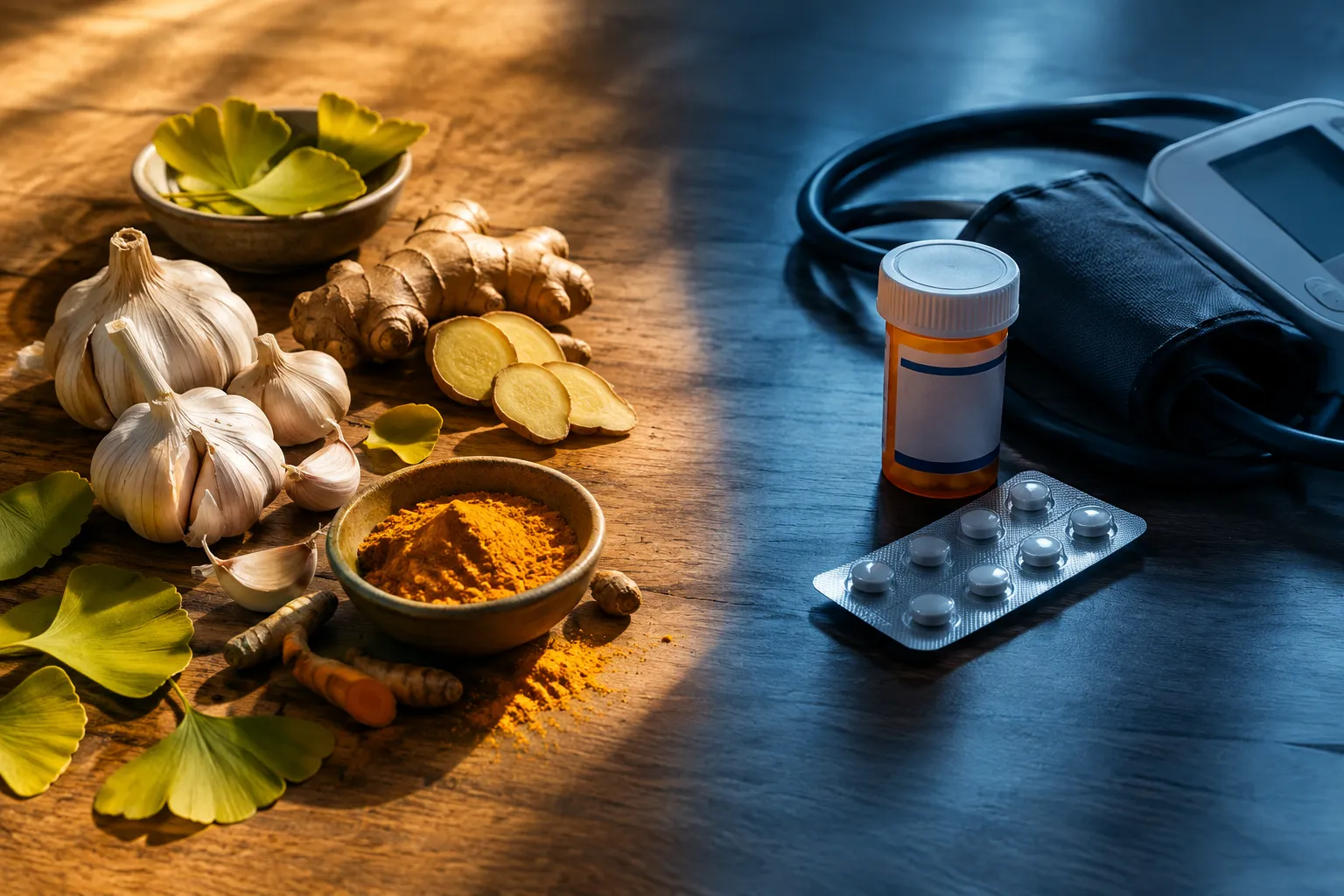
A supplement bottle sitting next to a prescription of warfarin looks harmless. It is not. New pharmacology data show that Herbal Remedies Quietly Reshape Blood Thinner Levels in Healthy Volunteers in ways that can push clotting tests into dangerous territory, even in people who consider themselves perfectly well. This is not a fringe concern reserved for hospitalized patients. It affects anyone combining common kitchen and health-food-store products with anticoagulant or antiplatelet therapy.
Key Takeaways
- Common herbs including garlic, ginkgo biloba, ginger, turmeric, and ginseng can amplify bleeding risk when combined with warfarin, aspirin, or clopidogrel [1].
- Coumarin-containing herbs can raise INR by an amount described as “comparable to warfarin” itself [1].
- St John’s wort works in the opposite direction, speeding up drug breakdown and making blood thinners less effective, which raises clot risk instead [4][6].
- Not every herb marketed as “blood-thinning” changes clotting measurably at typical doses; a trial using Ganoderma lucidum extract in healthy volunteers found no change in hemostatic parameters [7].
- Patients on anticoagulants should disclose all supplement use to their care team before starting or stopping any herbal product [5][10].
How Herbal Remedies Quietly Reshape Blood Thinner Levels in Healthy Volunteers
Coagulation depends on a delicate balance of clotting factors, platelets, and enzymes that break down medications in the liver. Herbal compounds can interfere with any part of that chain. A June 2026 pharmacology review found that garlic, ginkgo biloba, ginger, feverfew, parsley, turmeric, and ginseng each carry documented bleeding-risk interactions with anticoagulants like warfarin, aspirin, and clopidogrel [1]. Some of these herbs affect platelet clumping directly, while coumarin-rich varieties act on the same vitamin K pathway that warfarin targets, occasionally producing INR spikes similar in magnitude to a warfarin dose itself [1][11].
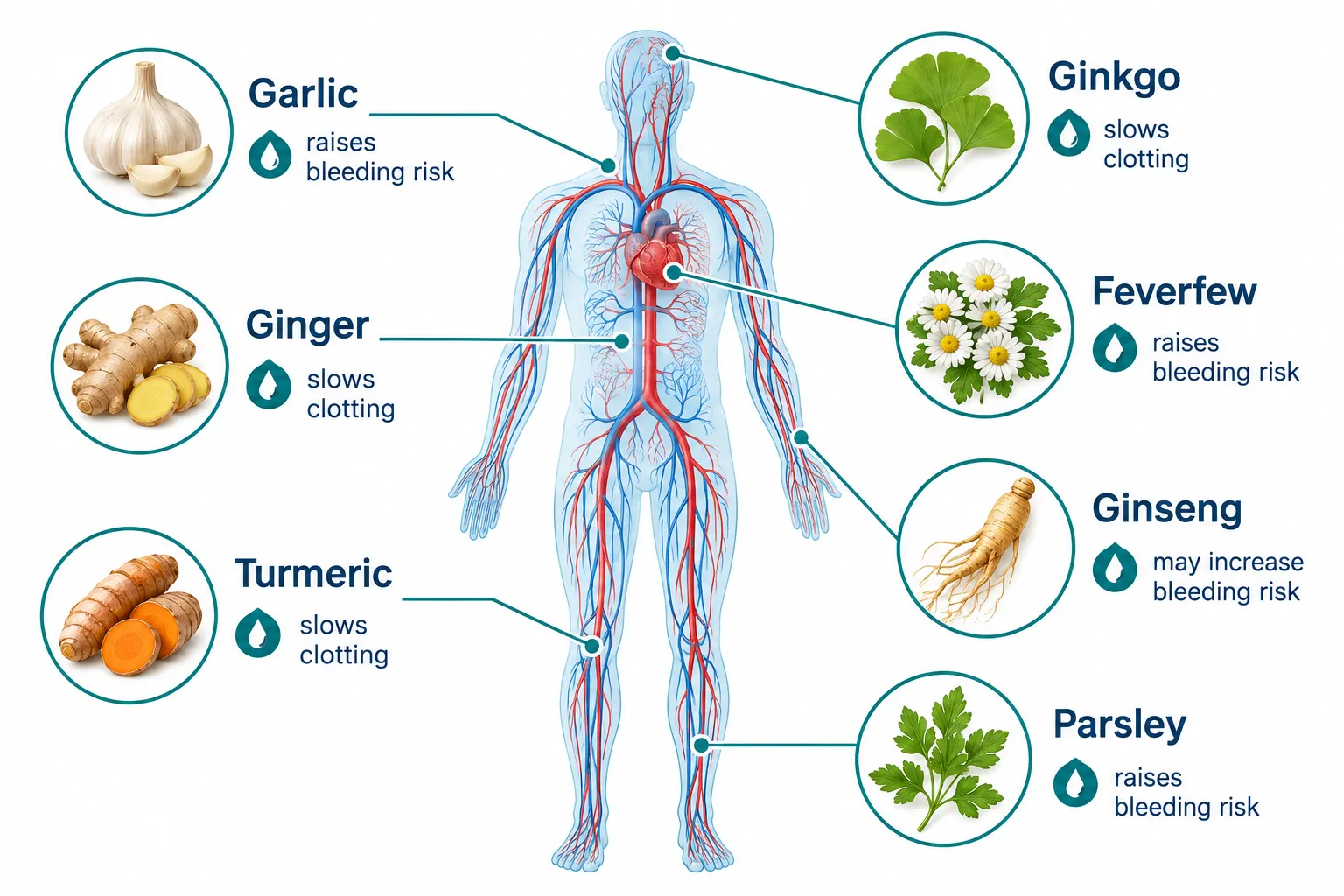
This is why Herbal Remedies Quietly Reshape Blood Thinner Levels in Healthy Volunteers even without any change in prescribed medication dose. The supplement itself becomes an unmonitored second drug acting on the same biological target.
Which Herbs Carry the Highest Risk, and Which Work the Opposite Way
A national complementary medicine institute update from September 2026 flagged ginkgo biloba combined with warfarin as linked to a higher rate of major bleeding events compared with warfarin alone, reinforcing the need for close monitoring whenever a “natural” product joins a prescribed regimen [14]. A global review published in April 2026 reached a similar conclusion about ginkgo, turmeric or curcumin, ginger, and garlic, noting these effects are pharmacologically real rather than theoretical, particularly for people already on antithrombotic therapy [3][15].
Mayo Clinic guidance from April 2026 lists danshen, evening primrose, ginkgo biloba, and ginseng among supplements that interact with warfarin, some raising bleeding risk and others reducing the drug’s efficacy [5]. Cleveland Clinic’s September 2026 update specifically advises patients on blood thinners to avoid or carefully discuss ginkgo biloba, garlic, melatonin, turmeric, peppermint oil, and St John’s wort [10].
Not every interaction pushes in the same direction:
- Bleeding-risk amplifiers: garlic, ginkgo biloba, ginger, turmeric or curcumin, ginseng, high-dose vitamin E, and coumarin-containing herbs [1][6][15].
- Efficacy reducers: St John’s wort and high vitamin K intake, both of which can make warfarin work less well and raise clot risk instead of bleeding risk [4][6][12].
- Uncertain or minimal effect at typical doses: some mushroom-based extracts, such as Ganoderma lucidum, showed no measurable change in hemostatic parameters over a four-week trial in healthy volunteers [7].
GoodRx’s 2024 pharmacy review, updated in September 2026, adds fish oil to the bleeding-risk list and confirms that St John’s wort can lower levels of both warfarin and newer direct oral anticoagulants like apixaban and rivaroxaban [12].
Why “Healthy Volunteers” Still Matters
Researchers often test herbal interactions in healthy volunteers precisely because it isolates the herb’s pharmacological effect from underlying disease. When Herbal Remedies Quietly Reshape Blood Thinner Levels in Healthy Volunteers during these controlled studies, it proves the mechanism is real and not simply a byproduct of illness. A 2024 cardiovascular review even described experiments where switching from warfarin to certain herbal preparations restored coagulation factors II, VII, and protein Z that warfarin normally suppresses, showing some herbal formulas can partially reverse anticoagulant activity [7].
Practical Steps for Patients on Anticoagulants
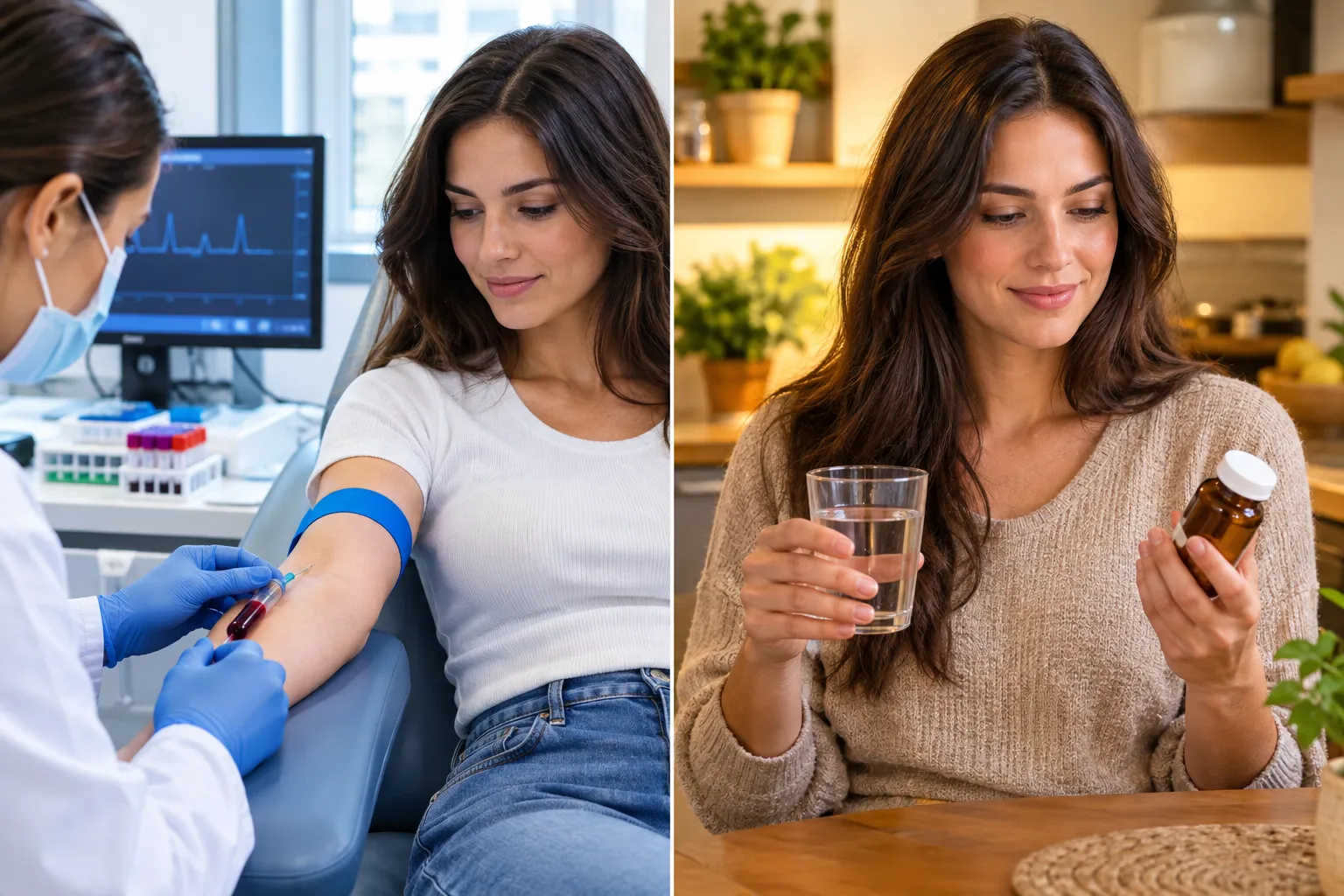
- Tell every prescriber and pharmacist about all supplements, teas, and over-the-counter products in use.
- Avoid starting or stopping garlic, ginkgo, ginger, turmeric, ginseng, or St John’s wort without medical guidance [10][13].
- Request more frequent INR or clotting checks after any supplement change.
- Remember that natural does not mean risk-free; consumer guidance from mid-2026 stresses these products are not as consistent or well-studied as prescription therapy [13].
Conclusion
The evidence is consistent across multiple 2026 clinical and research updates: Herbal Remedies Quietly Reshape Blood Thinner Levels in Healthy Volunteers through mechanisms that either intensify or blunt anticoagulant activity. The safest path forward is transparency with healthcare providers, regular monitoring, and treating every supplement as a medication with real pharmacological weight.
References
[1] Adverse Effects And Drug Interactions Of Commonly Used Herbal Products – https://www.ijpsjournal.com/assetsbackoffice/uploads/article/Adverse-Effects-and-Drug-Interactions-of-Commonly-Used-Herbal-Products.pdf [3] Acam.000707 – https://crimsonpublishers.com/acam/fulltext/ACAM.000707.php [4] Heart Medication Vitamins – https://www.bhf.org.uk/informationsupport/heart-matters-magazine/medical/ask-the-experts/heart-medication-vitamins [5] Art 20046488 – https://www.mayoclinic.org/healthy-lifestyle/consumer-health/in-depth/herbal-supplements/art-20046488 [6] Medication Interactions Food Supplements And Other Drugs – https://www.heart.org/en/health-topics/consumer-healthcare/medication-information/medication-interactions-food-supplements-and-other-drugs [7] Pmc12060911 – https://pmc.ncbi.nlm.nih.gov/articles/PMC12060911/ [10] What To Avoid When Taking Blood Thinners – https://health.clevelandclinic.org/what-to-avoid-when-taking-blood-thinners [12] GoodRx clinical pharmacy review – https://www.goodrx.com [13] Natural blood thinners consumer guide – https://www.medicalnewstoday.com/articles/322384 [14] National complementary medicine institute update – https://www.ijpsjournal.com/assetsbackoffice/uploads/article/Adverse-Effects-and-Drug-Interactions-of-Commonly-Used-Herbal-Products.pdf [15] Anti-atherosclerotic supplements review – https://pmc.ncbi.nlm.nih.gov/articles/PMC6459456/


