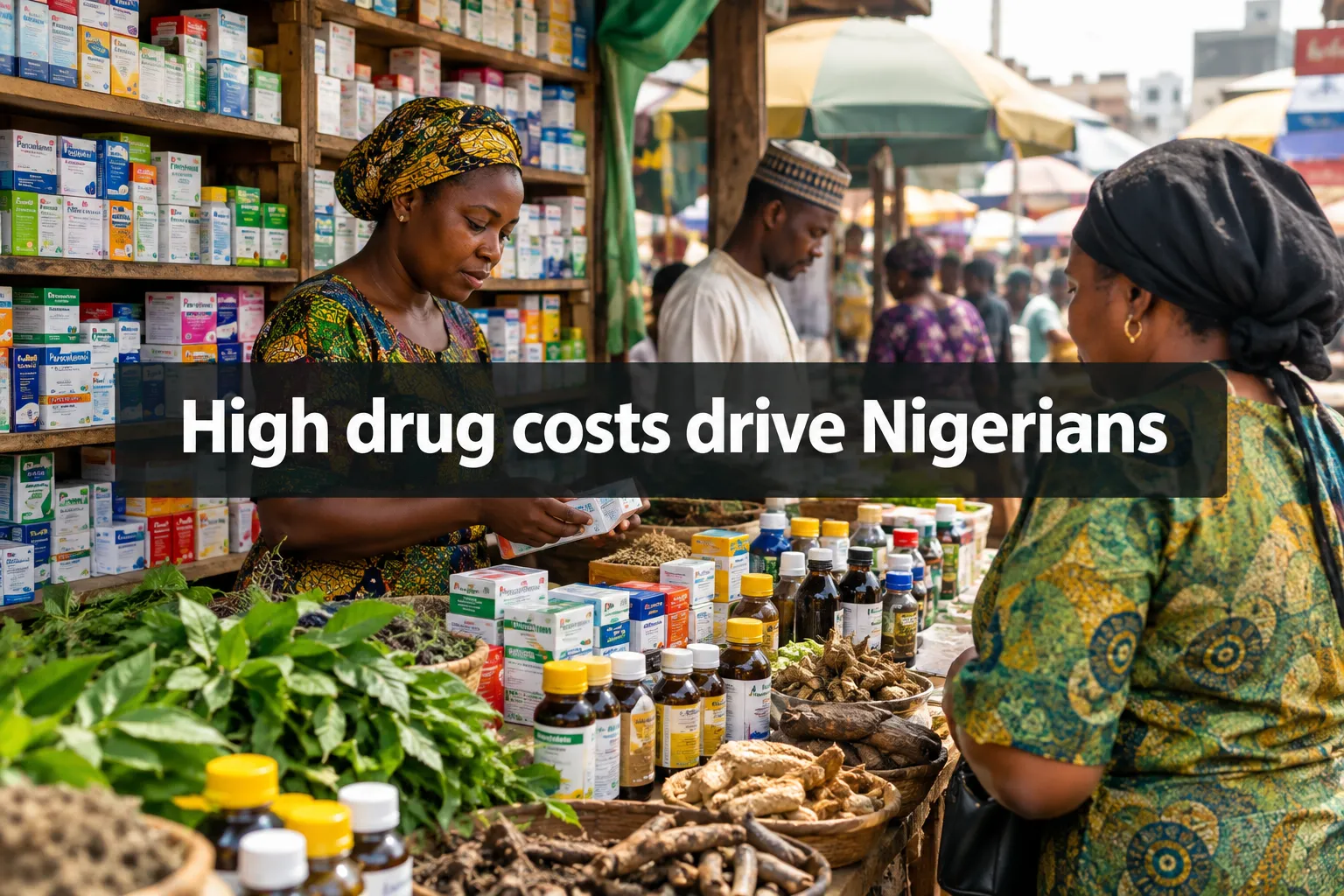
A bottle of dark herbal liquid now costs less than a single tablet of blood pressure medication in many Nigerian markets. That price gap, once a footnote in public health discussions, has become the defining reason high drug costs drive Nigerians to dangerous herbal remedies across cities and rural communities alike. As of September 2026, pharmacy shelves show prices that have climbed so sharply that ordinary households can no longer treat routine illnesses with registered medicines [1].
This shift is not a minor lifestyle trend. It is a survival response to an affordability crisis that has quietly reshaped how millions of Nigerians manage everything from malaria to diabetes.
Key Takeaways
- Branded medicine prices in Nigeria have risen more than tenfold for some drugs over the past few years [1].
- Pharmacy surveys show everyday drug prices doubling or tripling since 2023 [4].
- Economic shocks pushed routine medication costs up by roughly 300 percent within a single year [10].
- A large share of patients on chronic treatment have already switched to herbal cocktails instead of prescribed drugs [5].
- NAFDAC has strengthened consumer alerts in 2026, warning that some herbal drinks can cause organ failure [3][7].
Why High Drug Costs Drive Nigerians to Dangerous Herbal Remedies
The math is simple and brutal. When a monthly supply of hypertension or diabetes medication costs more than a family’s food budget, patients look for alternatives. Pharmacists across the country report that customers routinely walk away from the counter after hearing the price of drugs they have taken for years [4].
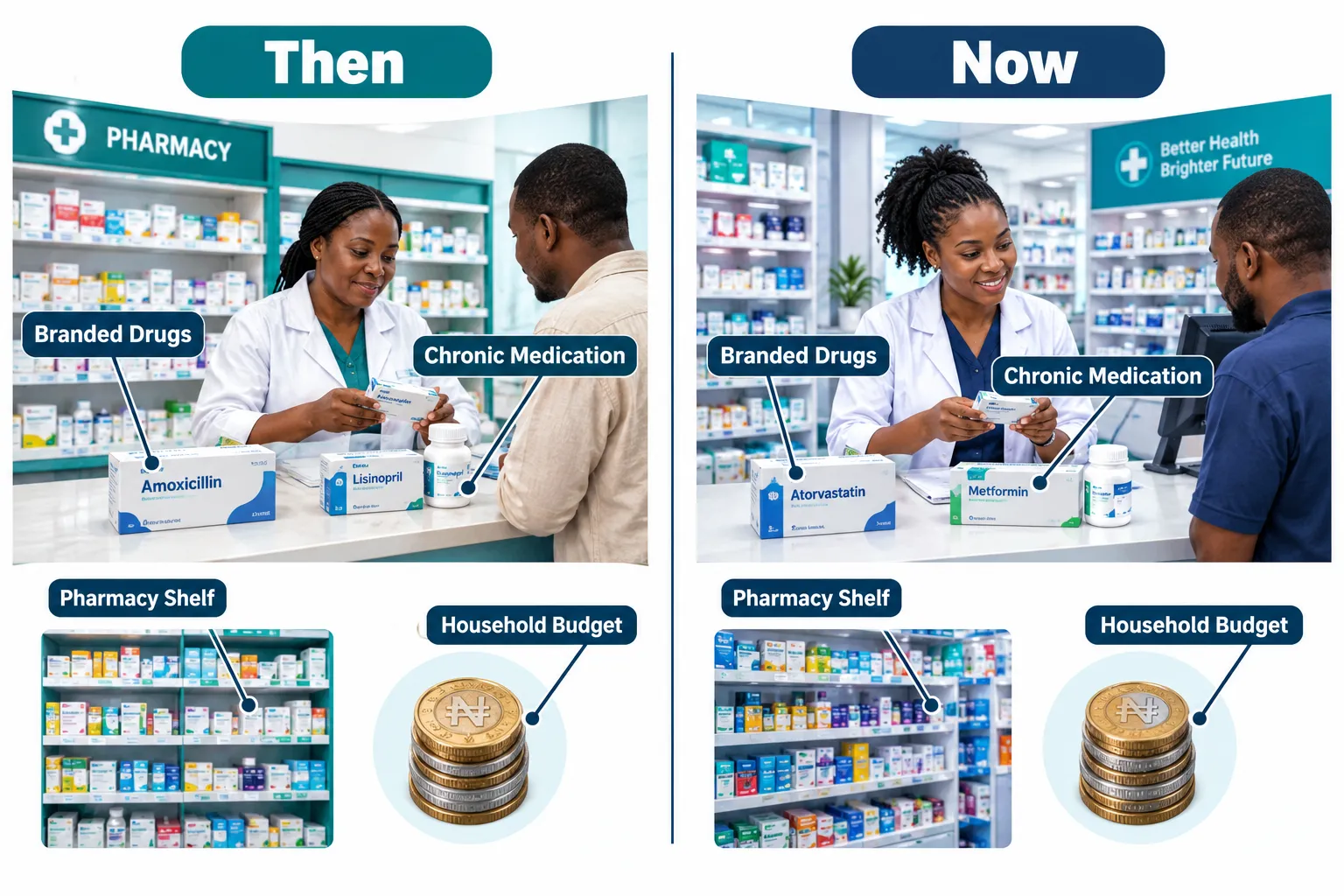
Economic pressures, including currency depreciation and rising import costs for raw pharmaceutical materials, have combined to push prices far beyond what average incomes can absorb [10]. Independent reporting has documented cases where common branded medicines saw price increases of more than ten times their previous cost within a short span [1]. For a population where a large majority of workers earn irregular or minimum-wage incomes, that kind of inflation does not just strain budgets. It removes medicine from reach entirely.
The Real Price of Medicine in Nigeria’s Pharmacies
Survey data collected from pharmacies nationwide paints a stark picture. Everyday drugs that once cost a few hundred naira now sell for double or triple that amount compared to 2023 prices [4]. This is not limited to specialty medications. Common antibiotics, pain relievers, and blood pressure drugs have all been swept into the price surge.
The following table illustrates the type of shift experts have observed across pharmacy counters, based on available reporting:
| Category | Reported Change | Source |
|---|---|---|
| Branded medicines | Increases exceeding tenfold in some cases | [1] |
| Everyday pharmacy drugs | Doubled or tripled since 2023 | [4] |
| Routine medication costs | Roughly 300 percent rise within a year | [10] |
| Chronic disease treatment | Large-scale patient switch to herbal options | [5] |
Health economists note that this is not a temporary blip tied to a single policy change. It reflects a deeper structural problem in how medicines are priced, imported, and distributed within Nigeria’s pharmaceutical supply chain [10].
How Herbal Remedies Fill the Affordability Gap
Traditional healers and informal herbal vendors have stepped into the space left by unaffordable orthodox medicine. Reports from across Nigeria describe patients abandoning hospital prescriptions in favor of herbal concoctions sold in markets, motor parks, and roadside stalls [5][6][8][9].
The appeal is straightforward. Herbal mixtures are often available for a fraction of the cost of registered pharmaceutical products, making them an accessible option for households facing impossible choices between medicine and other basic needs [6]. Experts estimate that a large majority of Nigerians simply cannot afford basic drugs anymore, and many patients managing long-term conditions such as diabetes and hypertension have already shifted, at least partially, toward herbal alternatives [5].
This pattern is not new. Traditional medicine has always played a role in Nigerian healthcare culture. What has changed is the scale and urgency of the shift, now accelerating sharply under current economic pressure [2][8].
“The trend toward herbal remedies is long-standing, but it is now accelerating under economic pressure that leaves patients with few other options.”
The Hidden Dangers of Unregulated Herbal Products
The affordability of herbal remedies comes with a serious tradeoff: safety. Regulators have repeatedly warned that many popular herbal drinks sold in informal settings, including those marketed at motor parks and open markets, carry ingredients that can cause severe organ damage [3].
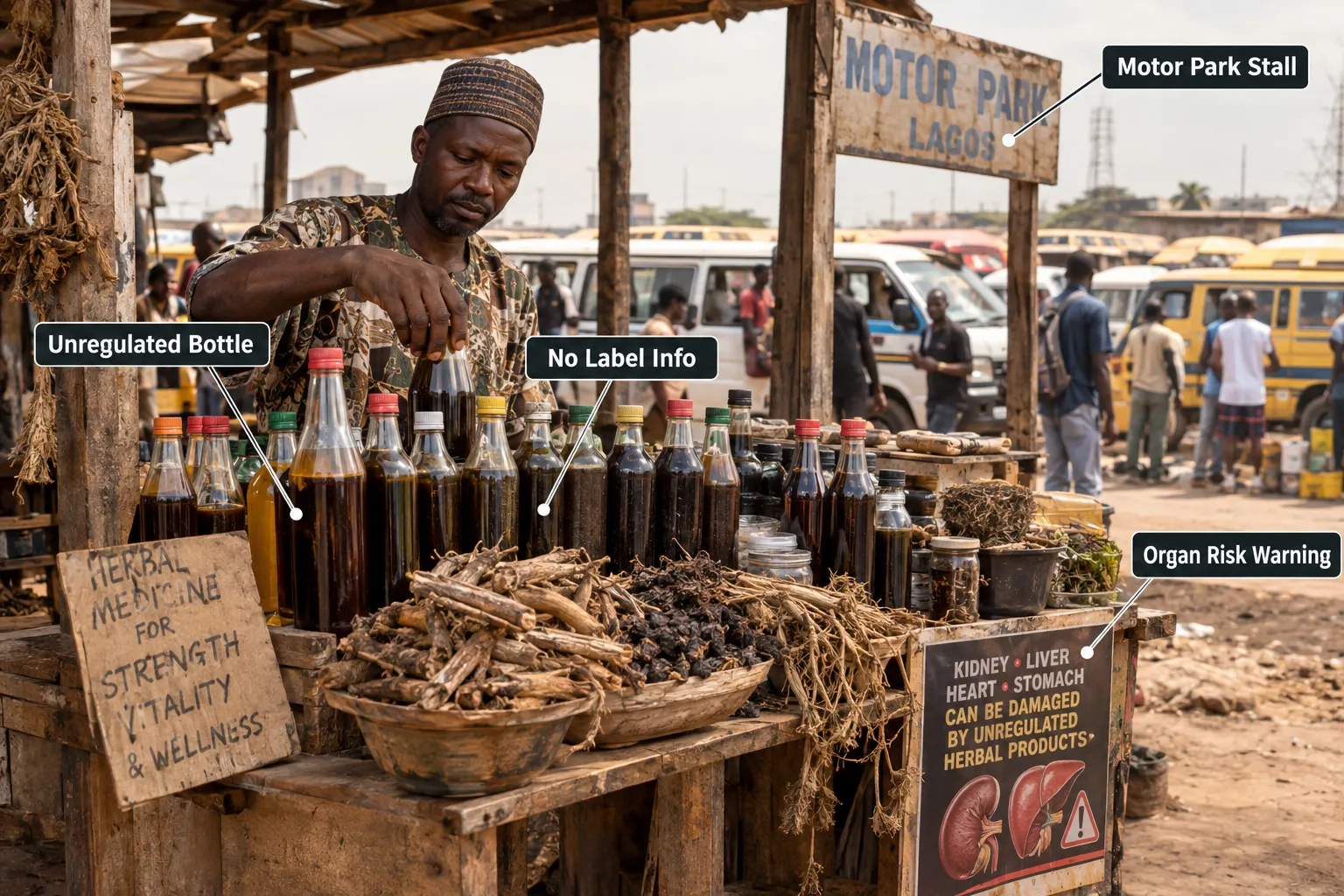
The National Agency for Food and Drug Administration and Control has flagged specific herbal drinks as risky, citing potential harm to the liver and kidneys from unregulated formulations [3]. Because these products are typically unlicensed, they carry no verified dosage guidance, no ingredient transparency, and no quality control standards. A consumer buying a bottle of herbal mixture has no way of knowing what it actually contains or how it might interact with existing health conditions or prescribed medications.
This is the central danger behind the trend where high drug costs drive Nigerians to dangerous herbal remedies: financial desperation is overriding basic safety caution, often silently, until a health crisis forces the issue into the open.
What NAFDAC and Regulators Are Doing About It
Regulatory bodies have not been silent on this issue. NAFDAC has intensified consumer guidance efforts in 2026, expanding complaint mechanisms so the public can report suspicious or harmful herbal products more easily [3]. The agency continues to publish recall notices and safety alerts targeting unregistered and unsafe items, including specific herbal remedies found circulating in markets and transport hubs [7].
These enforcement actions reflect an ongoing concern within the regulatory community: unregistered herbal products remain widely available despite repeated warnings, largely because they fill a price gap that formal healthcare cannot currently close [7]. Public health officials acknowledge that regulation alone cannot solve the underlying affordability problem driving people toward these products in the first place.
The Outlook: A Growing Public Health Risk
Unless medicine prices fall or some form of financial protection, such as expanded insurance coverage or subsidized essential drug programs, becomes available, reliance on risky herbal remedies is likely to keep growing. The pattern already visible in pharmacy data and patient behavior suggests this is not a temporary adjustment but a structural shift in how Nigerians access healthcare [2][9][10].
Without intervention, the gap between what people need and what they can afford will keep widening, and informal herbal markets will keep expanding to meet that unmet demand, regardless of the safety risks involved.
Conclusion
The evidence is consistent across pharmacy surveys, regulatory alerts, and patient accounts: high drug costs drive Nigerians to dangerous herbal remedies, and the trend shows no sign of slowing without meaningful economic or policy change. Rising medicine prices, some reaching increases of 300 percent or more within a year, have made routine treatment unaffordable for a large share of the population, pushing many toward cheaper but unverified herbal alternatives that regulators warn can cause serious organ damage.
Addressing this crisis requires action on multiple fronts. Policymakers need to explore ways to stabilize drug pricing and expand health insurance coverage. Regulators must continue strengthening enforcement against unsafe herbal products while making safety information more accessible to the public. And individuals facing financial pressure should seek guidance from licensed pharmacists or public health clinics before turning to unregulated remedies, and report suspicious products directly to NAFDAC. The cost of inaction is measured not just in naira, but in preventable harm to health.
References
[1] Price Index – https://ogbogwu.com/price-index/ [2] swissinfo.ch – https://www.swissinfo.ch/spa/nigeria-se-vuelca-en-la-medicina-tradicional-ante-el-encarecimiento-de-los-medicamentos/89847682 [3] Motor Park Herbal Drinks May Cause Organ Failure Nafdac – https://punchng.com/motor-park-herbal-drinks-may-cause-organ-failure-nafdac/ [4] Drugs – https://ogbogwu.com/drugs/ [5] Nigerians Turn To Traditional Healers As Prices Of Drugs Go Out Of Reach – https://punchng.com/nigerians-turn-to-traditional-healers-as-prices-of-drugs-go-out-of-reach/ [6] Nigerians Resort To Herbal Concoctions On Rising Cost Of Drugs – https://businessday.ng/health/article/nigerians-resort-to-herbal-concoctions-on-rising-cost-of-drugs/ [7] Page – https://nafdac.gov.ng/category/recalls-and-alerts/page/4/ [8] Nigerians Switch From Orthodox To Traditional Medicines Amid Economic Hardship – https://www.nigeriainfo.fm/abuja/news/homepageabuja/nigerians-switch-from-orthodox-to-traditional-medicines-amid-economic-hardship/ [9] Nigerians Switch From Orthodox To Traditional Medicines Amid Economic Hardship – https://www.nigeriainfo.fm/news/homepagelagos/nigerians-switch-from-orthodox-to-traditional-medicines-amid-economic-hardship/ [10] Rising Costs Of Medicine A Look At Nigerias Pharmaceutical Crisis – https://independent.ng/rising-costs-of-medicine-a-look-at-nigerias-pharmaceutical-crisis/


