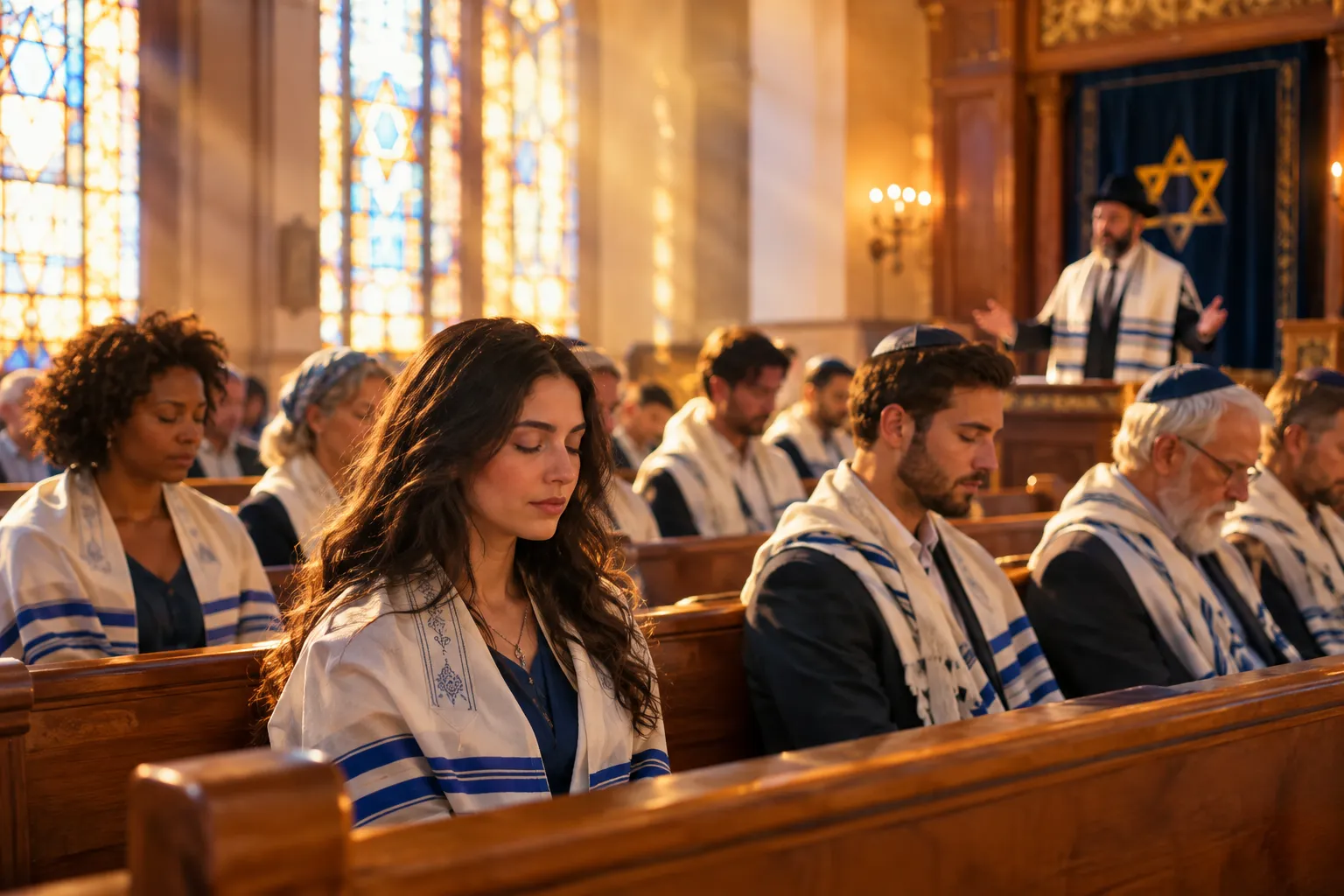
Nearly every major Jewish denomination now builds silence into its holiest day of the year. That single fact marks a quiet revolution inside American synagogue life. What once felt like a countercultural import from Buddhist retreat centers has settled into the rhythm of Yom Kippur afternoons, Rosh Hashanah walks, and even weekday text study. Understanding how Jewish mindfulness meditation became a mainstay in High Holiday services and beyond means tracing a decades-long shift in how congregations define spiritual seriousness.
According to reporting syndicated from Religion News Service and the Associated Press, practices like sitting in silence, tracking the breath, and staying present in the moment now appear across Orthodox, Conservative, Reform, Reconstructionist, and Renewal communities during Yom Kippur services, frequently as afternoon or walking meditations [1].
Key Takeaways
- Mindfulness practices such as breath awareness and silent sitting have become standard, not experimental, elements of Yom Kippur and Rosh Hashanah services across denominations [1].
- Large city congregations and small rural synagogues alike now schedule dedicated meditation sessions, often with hybrid or Zoom options [5][6][12].
- Clergy training programs, including the Institute for Jewish Spirituality’s Clergy Leadership Program, are actively preparing rabbis and cantors to bring mindfulness into their pulpits [11].
- Meditation has expanded beyond the holidays themselves into Elul preparation, daily online sits, and everyday spiritual ethics classes [14][13].
- Independent and renewal communities are restructuring entire services around chant, movement, and contemplative practice rather than treating meditation as an add-on [9][10].
Why Meditation Moved From the Margins to the Main Stage
Two generations ago, sitting quietly for extended stretches during services would have seemed foreign to most American synagogues. Today, that same practice anchors afternoon programming at some of the country’s most prominent congregations. Reporting from the Associated Press notes that techniques once associated primarily with Buddhism and the Jewish Renewal movement have been absorbed into everyday Jewish teaching and pastoral care [1]. Rabbi Jenny Solomon of Raleigh, North Carolina, for example, now routinely opens classes on spiritual ethics with guided mindfulness meditation, treating it as a normal entry point into Jewish learning rather than a novelty [13].
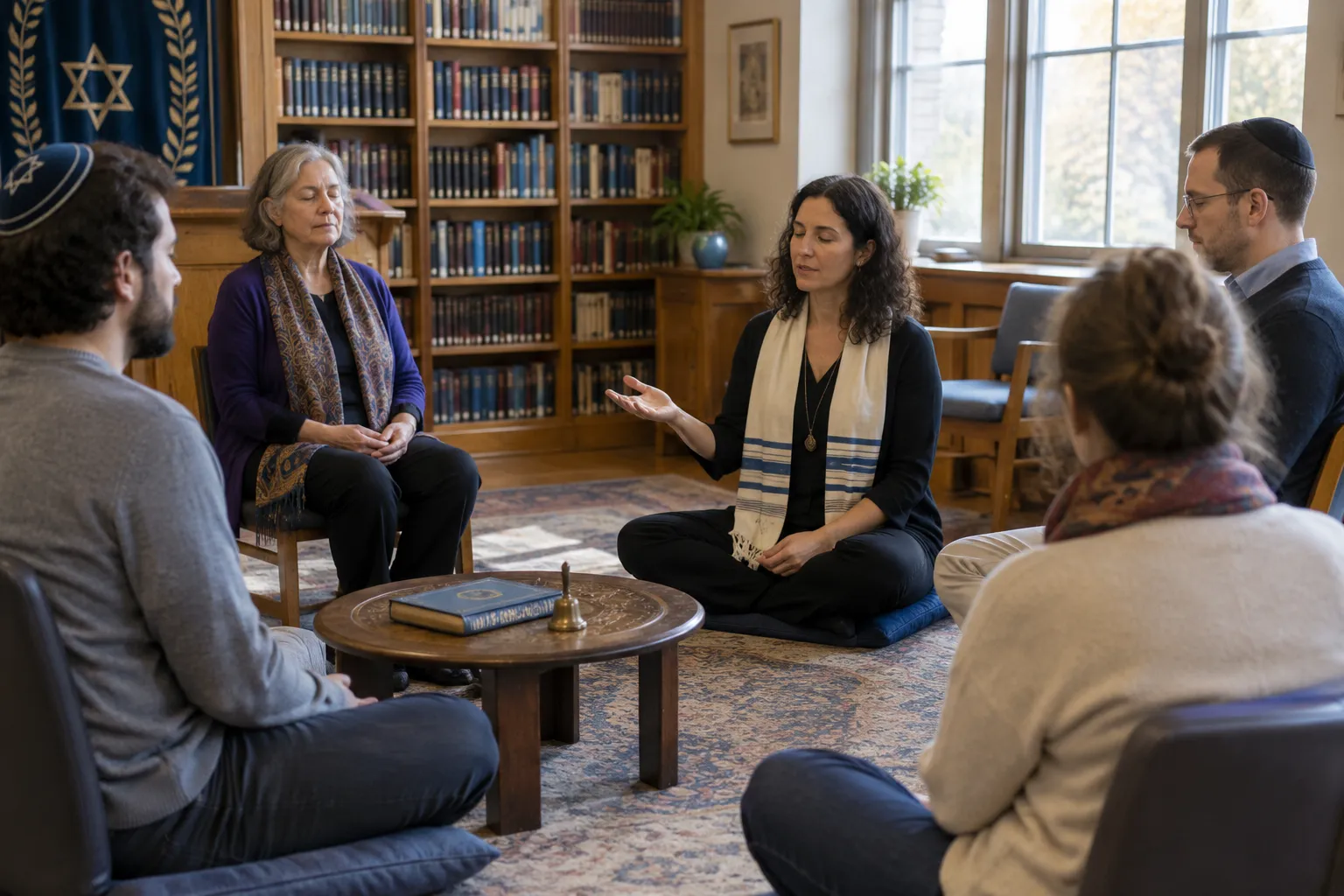
This shift did not happen by accident. A wave of clergy training has pushed contemplative practice into mainstream rabbinic formation. The Institute for Jewish Spirituality’s 2025-2026 Clergy Leadership Program gathered 42 rabbis, cantors, and kohanot at the Pearlstone Retreat Center to meditate, pray, sing, and practice mindful movement together, with the explicit goal of equipping religious leaders to carry these tools back into their own communities and liturgy [11]. When clergy experience mindfulness as part of their own formation, it naturally becomes part of what they offer congregants.
How Jewish Mindfulness Meditation Became a Mainstay Across Denominations and Formats
The clearest evidence of this normalization shows up in how communities structure their High Holiday calendars for 2026. Consider a few concrete examples:
- Denver’s Judaism Your Way lists “Jewish Yoga: Return to the Radiant Center” on Rosh Hashanah afternoon and “Jewish Yoga: Intimate Love” on Yom Kippur afternoon, both livestreamed sessions built to help participants “meditate and move” through the holiday alongside its main services [2][3].
- Washington, D.C.’s regional High Holiday guide lists a “Nigun Circle and Meditation” hosted by Congregation Beth El, complete with virtual attendance, treating the practice as a standard communal offering rather than a fringe alternative [4].
- Temple Israel features “The Quiet Within: A Yom Kippur Afternoon Meditation,” a 45-minute guided session led by Rabbi Jason Rodich, framed as accessible reflection space that requires no prior experience [5].
- Temple Beth Abraham in Nashua, New Hampshire, incorporates a half-hour Yom Kippur meditation led by congregant Laura Hegfield, blending melody, grounding teaching, and silent practice, offered both on Zoom and in the synagogue library [6].
- B’nai Jeshurun in New York is “once again” running a dedicated mindfulness service from 9:00 a.m. to 1:00 p.m. alongside its traditional services, a phrase that signals recurring demand rather than a one-time experiment [12].
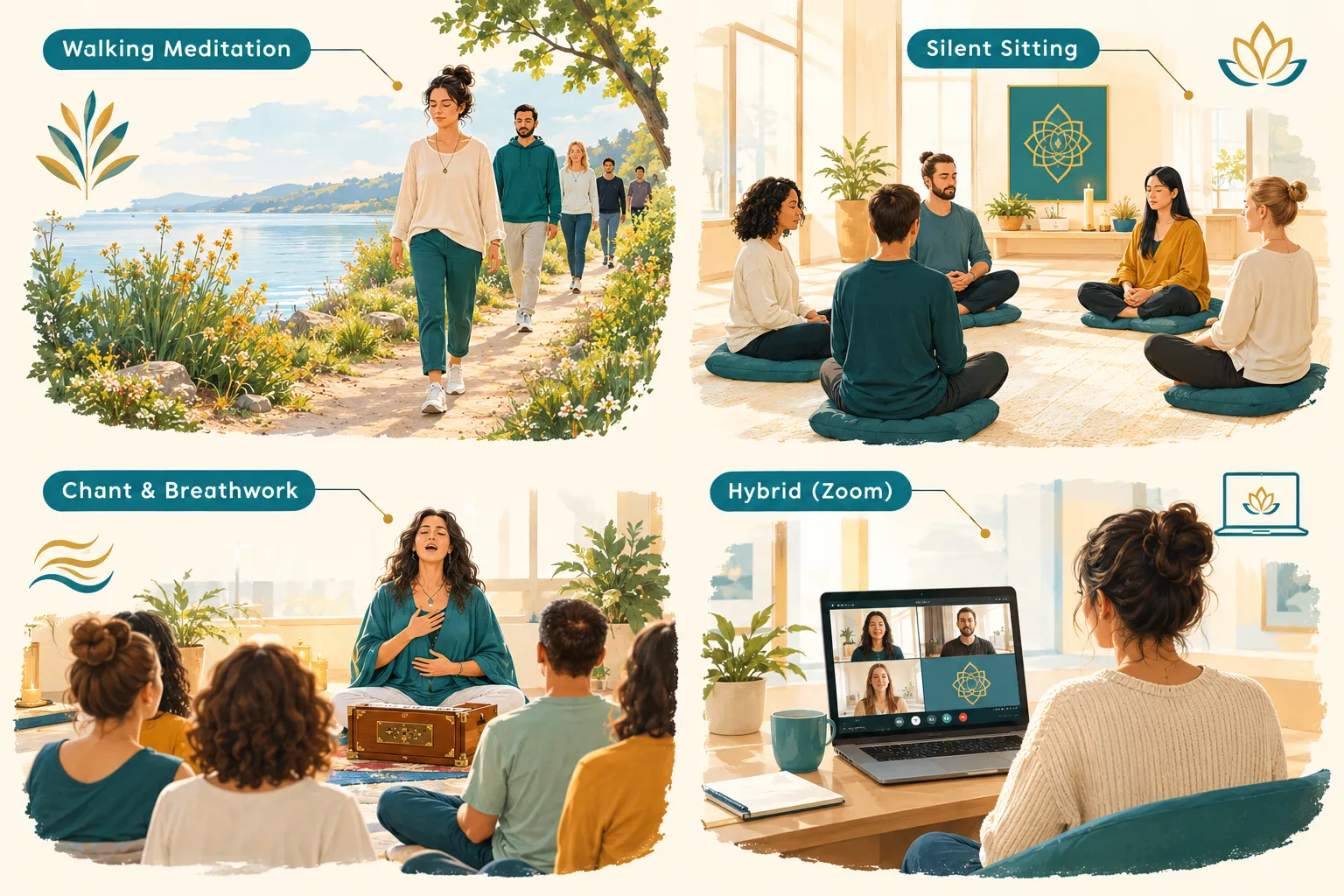
Independent and renewal-oriented communities have gone further, restructuring entire services around contemplative themes. Pardes Hannah built its Rosh Hashanah Day 2 program around “Chant & Meditation” from 10:00 a.m. to 12:30 p.m., followed by Tashlich [9]. My Jewish Learning’s “Rosh Hashanah & Yom Kippur Reimagined” gathering, led by Rabbis Jill Zimmerman and Francine Roston, uses poetry and three structured meditations on self-forgiveness, forgiving others, and receiving forgiveness to connect mindfulness directly to core Yom Kippur theology [10].
Beyond the Holidays: A Year-Round Practice
The reach of this movement extends well past the Ten Days of Repentance. Jewish Family Services of Northeastern New York frames Elul as a month for introspection and points readers toward the Institute for Jewish Spirituality’s free daily meditation sits, held online Monday through Friday from 12:30 to 1:00 p.m. Eastern [14][11]. That kind of standing, year-round offering signals something important: mindfulness is no longer treated as a special holiday add-on but as an everyday spiritual habit that happens to intensify around the High Holidays.
National coverage suggests most people attending Yom Kippur services today can expect at least some contemplative component, whether a short guided meditation, an extended silent sit, or a walking meditation woven into the afternoon liturgy [1][15].
Conclusion
The story of how Jewish mindfulness meditation became a mainstay in High Holiday services and beyond is really a story about communities meeting a hunger for presence and reflection with tools that work. From Denver’s meditative yoga sessions to Nashua’s Zoom-and-library format, congregations of every size and denomination have found room for silence inside their busiest liturgical days. For readers curious to experience this firsthand, the practical next step is simple: check a local congregation’s High Holiday schedule for a meditation, mindfulness service, or contemplative walk, and consider sampling a free daily sit through a program like the Institute for Jewish Spirituality before the holidays even begin.
References
[1] Jewish Mindfulness Meditation Buddhism Spirituality – https://apnews.com/article/jewish-mindfulness-meditation-buddhism-spirituality-6a64a31c382ab662b5abd77e440c85a0 [2] High Holidays 2026 – https://judaismyourway.org/holidays-shabbat/high-holidays-2026/ [3] Jewishhighholidays – https://judaismyourway.org/holidays-shabbat/high-holidays-1/jewishhighholidays/ [4] Dmv High Holiday Guide 2026 5787 – https://gatherdc.org/dmv-high-holiday-guide-2026-5787/ [5] templeisrael – https://www.templeisrael.com/hhd [6] High Holy Days 2026 5787 – https://www.tbanashua.org/spirituality/high-holy-days-2026-5787/ [9] High Holy Days 5787 2026 September Events At Pardes Hannah – https://pardeshannah.org/high-holy-days-5787-2026-september-events-at-pardes-hannah/ [10] Rosh Hashanah Yom Kippur Reimagined High Holy Days 2026 5787 – https://www.myjewishlearning.com/the-hub/rosh-hashanah-yom-kippur-reimagined-high-holy-days-2026-5787/ [11] Hhd Services – https://www.bethelmc.org/spirituality/holidays/hhd2026/hhd-services/ [12] Hhd5787 – https://cbst.org/hhd5787/


