Roughly a third of Americans now describe themselves as living in constant “optimization mode,” according to a 2025 study cited in a recent podcast feature on self-improvement culture.[6] That single statistic explains why wellness has stopped being a side interest and become something closer to a lifestyle identity. Strike Magazines captured this shift directly in a September 2026 feature, arguing that Wellness Is En Vogue: The Culture of Self-Improvement because health and self-optimization now function as markers of status, not just personal care.[2]
This is not a passing trend. It is a full reorganization of how people spend money, time, and attention. But 2026 also marks a turning point, as consumers begin pushing back against the very systems that promised to fix them.
Key Takeaways
- Wellness has shifted from niche health interest to a visible marker of lifestyle and social status, as highlighted in coverage of Wellness Is En Vogue: The Culture of Self-Improvement.[2]
- The Global Wellness Summit’s 2026 trends report names “Over-Optimization Backlash” as a defining theme, favoring meaning over measurement.[7][15]
- Biohacking tools like continuous glucose monitors and $400 biometric rings have normalized 24/7 self-tracking, according to a 2026 Atlantic analysis.[12]
- Critics warn that constant self-improvement, fueled by social media’s “that girl” aesthetic, can trigger anxiety and burnout rather than genuine wellbeing.[5][8]
- Emerging 2026 forecasts point toward community-based, emotionally restorative, and sustainability-driven wellness models replacing pure performance metrics.[7][9][10][15]
The Rise of Wellness as Status Symbol
Wellness culture today looks less like a health regimen and more like a public identity. Strike Magazines’ framing of Wellness Is En Vogue: The Culture of Self-Improvement captures this precisely, positioning self-care routines, fitness rituals, and biometric data as visible signals of discipline and success.[2] This mirrors longer academic concerns raised in JSTOR Daily’s 2017 essay, which argued that wellness culture was never just about health but about beliefs tied to status, gender, and personal worth.[1][3]
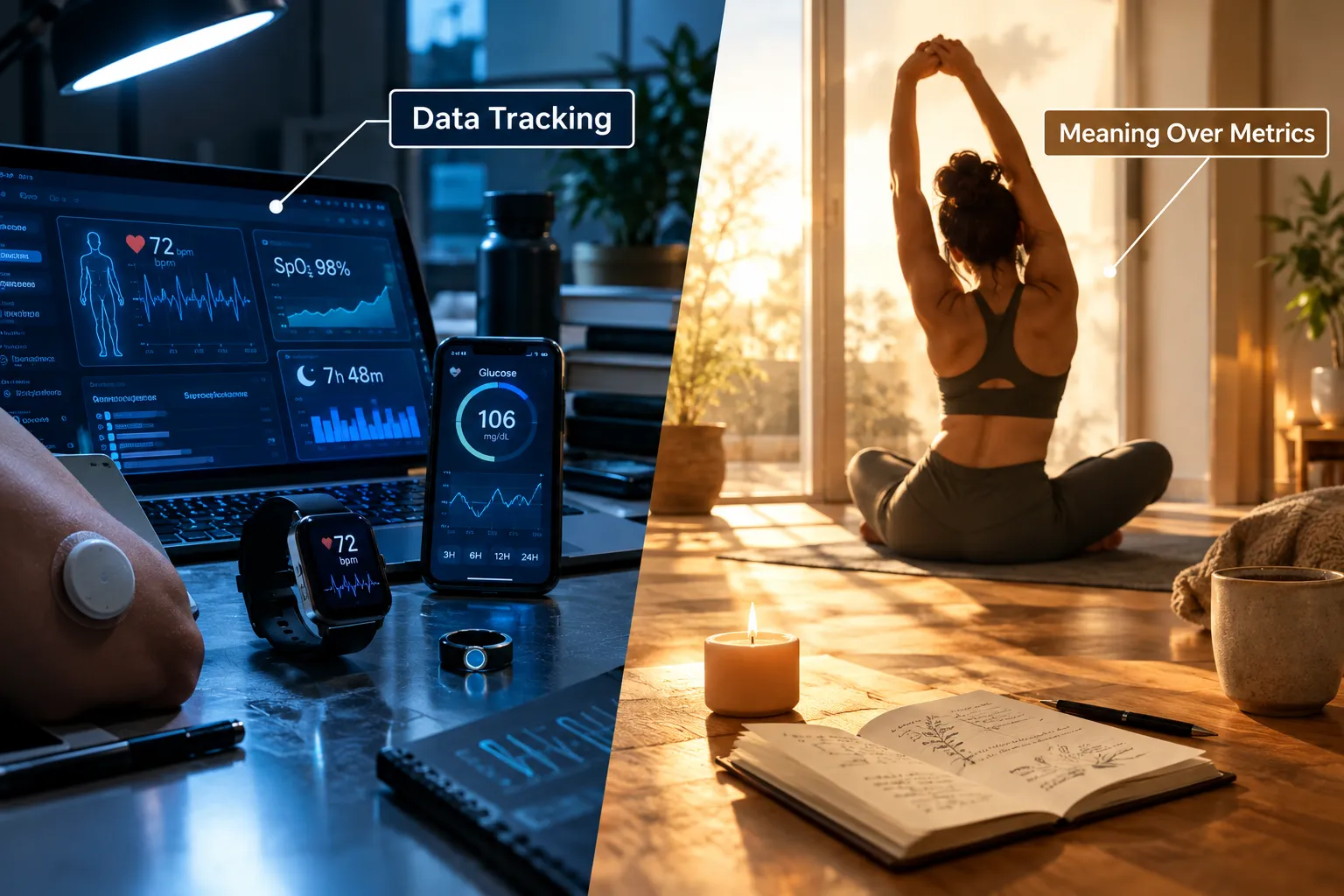
NPR’s 2025 reporting described this trajectory as an “epidemic” of fitness fads and mental health trends spreading across American culture, reshaping everything from grocery aisles to workplace benefits.[1] The Atlantic’s 2026 look at yoga culture illustrates how far this has gone: practitioners now routinely wear continuous glucose monitors and roughly $400 biometric rings to track blood-sugar spikes, heart-rate variability, and sleep in real time.[12] What once felt like elite biohacking has become mainstream expectation.
Why the Culture of Self-Improvement Is Facing a Backlash
Not everyone is buying in. The Global Wellness Summit’s July 2026 trend report identifies “Over-Optimization Backlash” as one of the year’s defining forces, describing a consumer revolt against high-tech, performance-obsessed wellness routines.[7][15] Instead of chasing perfect metrics, people are prioritizing meaning over measurement and emotional repair over clinical data points.
A June 2026 feature from Era En Vogue reinforces this, arguing that wellness has become “a lifestyle filter” people feel pressured to maintain rather than a genuine retreat from stress.[11] The piece asks a pointed question: how does someone build a life that does not constantly require recovery? That question sits at the heart of Wellness Is En Vogue: The Culture of Self-Improvement as both an aspiration and a warning.
Critics have been sounding alarms for years. The Portugal News described self-improvement trends turning “toxic” as early as 2022, pointing to social media’s “that girl” mindset that pressures young people to perfect their skin, schedules, and bodies simultaneously.[5] A 2026 piece in The Boar echoes this, linking chronic self-optimization to rising anxiety and burnout among young adults.[8]
Where the Culture of Self-Improvement Is Headed Next
Despite the backlash, wellness is not shrinking. It is diversifying. The Global Wellness Summit’s 2026 report highlights several parallel priorities:
- Women’s health and longevity as strategic focus areas.[7][15]
- Neurowellness practices targeting brain health and cognitive resilience.[7][9][15]
- Festival-style wellness experiences that blend community and celebration.[7][15]
- Disaster-readiness planning tied to climate and environmental stress.[7][15]
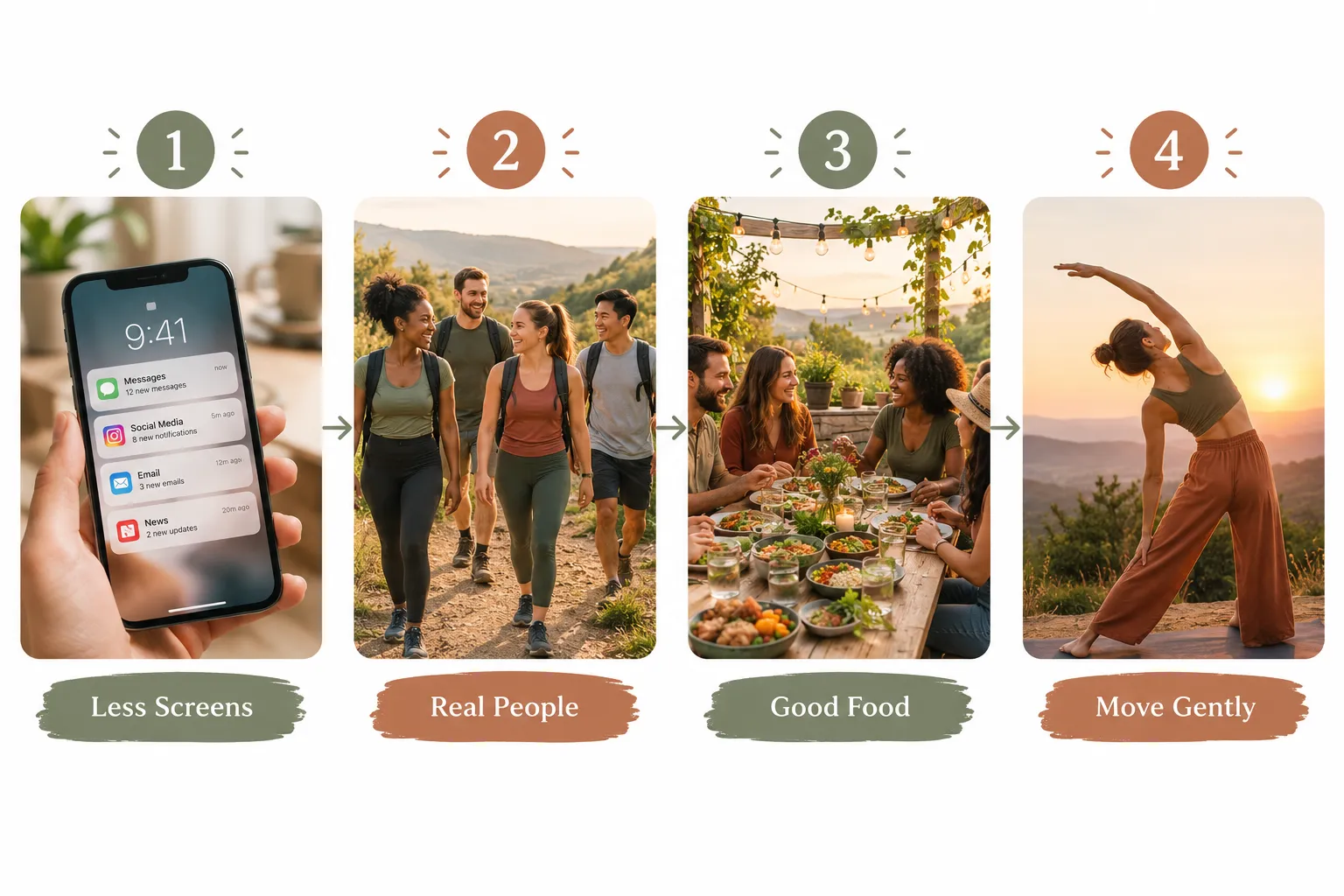
A July 2026 summer wellness trends overview adds that the emerging philosophy centers on social connection, everyday sustainability, and “more human rhythms,” including a movement called “Wellness IRL” that pulls people back toward analog, real-world practices instead of app-driven tracking.[9] Strength, mobility, and recovery are replacing pure aesthetics as the measure of success.
Looking further ahead, a December 2025 forecast for 2026 self-growth trends predicts mindful technology use, “slow productivity,” emotional fitness training, and science-backed micro-habits will define the next phase.[10] Meanwhile, regional forecasts from Vogue Adria and The Independent point to concrete directions: longevity science, GLP-1 therapy recalibration, oral health as the “new gut health,” biomarker bragging rights like grip strength, and record-high interest in digital detox searches.[13][14]
Conclusion
Wellness Is En Vogue: The Culture of Self-Improvement reflects a genuine cultural turning point, not a fleeting fad. The next phase will likely favor sustainable, community-oriented habits over constant self-surveillance. Readers looking to engage wisely should start small: choose one evidence-based habit, resist pressure to track everything, and prioritize connection and rest as seriously as performance. That balance, rather than perfection, is what separates lasting wellbeing from another burnout cycle.
References
[1] From Fitness Fads To Mental Health Trends How Wellness Became An American Epidemic – https://www.npr.org/2025/05/15/nx-s1-5399181/from-fitness-fads-to-mental-health-trends-how-wellness-became-an-american-epidemic [2] strikemagazines – https://www.strikemagazines.com/ [3] The False Promises Of Wellness Culture – https://daily.jstor.org/the-false-promises-of-wellness-culture/ [5] theportugalnews – https://www.theportugalnews.com/news/2022-11-27/how-self-improvement-has-become-a-toxic-trend/72435 [6] How Self Improvement Is Actually A Trap The Deep – https://zeale.co/shows/the-deep/how-self-improvement-is-actually-a-trap-the-deep [7] Global Wellness Summit Releases 10 Wellness Trends For 2026 – https://globalwellnessinstitute.org/press-room/press-releases/global-wellness-summit-releases-10-wellness-trends-for-2026/ [8] The Self Improvement Trap – https://theboar.org/2026/07/the-self-improvement-trap/ [9] Summer 2026 Wellness Trends In And Out – https://www.nssgclub.com/en/beauty/45652/summer-2026-wellness-trends-in-and-out [10] 5 Self Improvement Trends 2026 – https://yourstory.com/2025/12/5-self-improvement-trends-2026


