
A cold virus typically runs its course in seven to ten days no matter what you do. That single fact reshapes how people should think about natural remedies for common cold and flu, they are not shortcuts to a cure, but tools that make the waiting easier [1]. Hundreds of products on pharmacy shelves promise fast relief, yet the most trusted health authorities keep pointing back to the same simple, low-cost strategies: rest, fluids, and a few time-tested comfort measures.
This matters because misinformation about “miracle cures” spreads quickly every autumn. Understanding what natural remedies for common cold and flu can realistically do, and what they cannot, helps people avoid wasted money and, more importantly, avoid risky product interactions.
Key Takeaways
- Natural remedies for common cold and flu relieve symptoms; they do not shorten the illness or kill the virus [1][3].
- Rest, hydration, humidified air, and saline nasal rinses remain the core, evidence-backed home measures [1][6].
- Honey can calm coughs but should never be given to children under one year old [5][9].
- Supplements like elderberry, zinc, and vitamin C show modest, inconsistent benefits and carry interaction risks [8].
- Flu symptoms call for the same comfort care as colds, but antivirals and medical guidance remain essential, especially for high-risk individuals [4].
Core Natural Remedies For Common Cold And Flu That Doctors Actually Recommend
Despite decades of new products, clinical guidance from the CDC and Mayo Clinic has not changed much: the body heals itself, and home care simply supports that process [1][3]. Rest allows the immune system to direct energy toward fighting infection rather than daily activity. Staying well-hydrated with water, broth, or diluted juice helps thin mucus and prevents the dehydration that fever and congestion can cause [6].
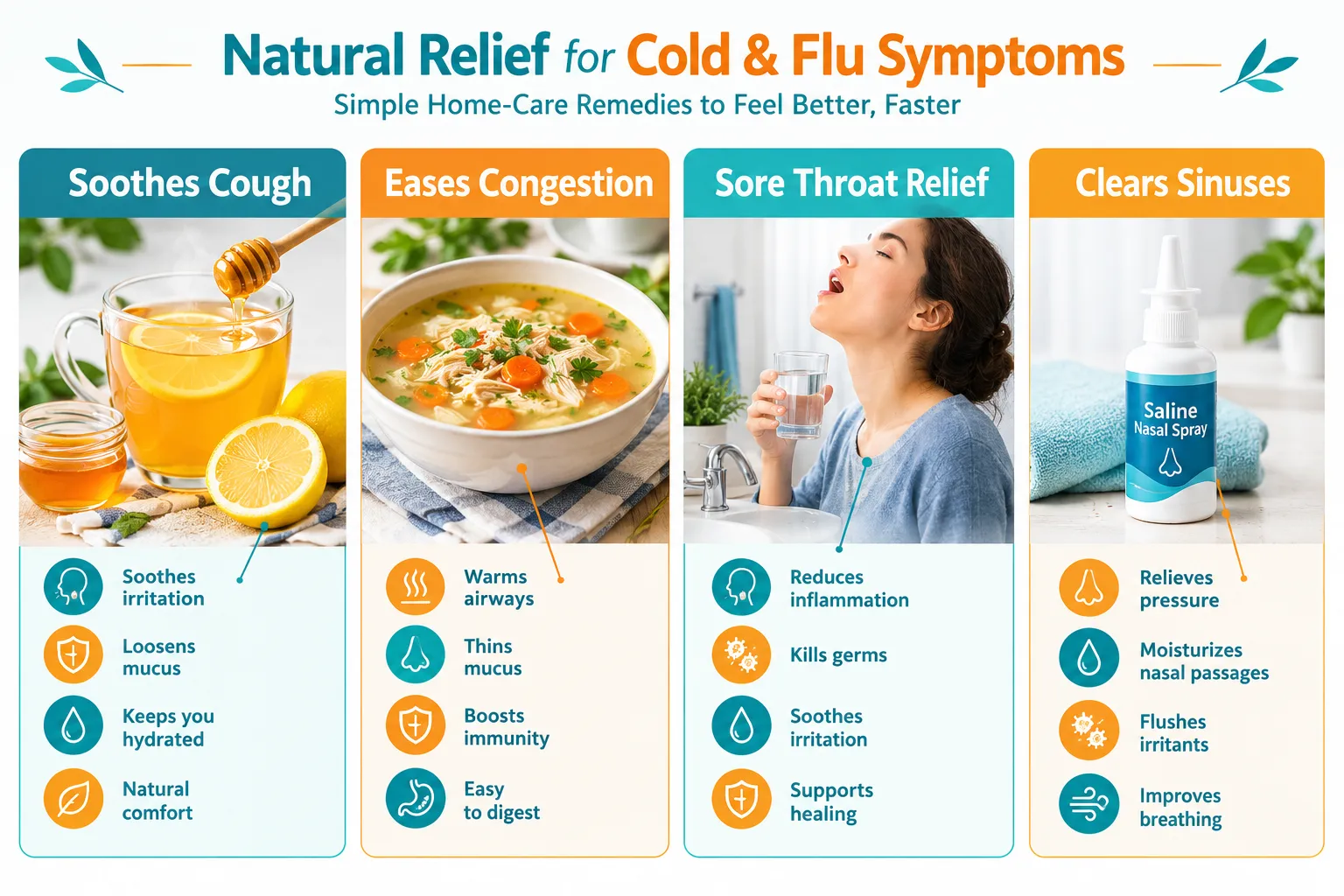
Warm liquids deserve special mention. Chicken soup, in particular, has outlasted most trends because it genuinely helps. Research cited by Baylor College of Medicine notes that warm soup can speed the movement of mucus through nasal passages, offering temporary relief from congestion while also providing calories and electrolytes during illness [5]. Tea with honey and lemon works similarly, soothing an irritated throat while delivering fluids.
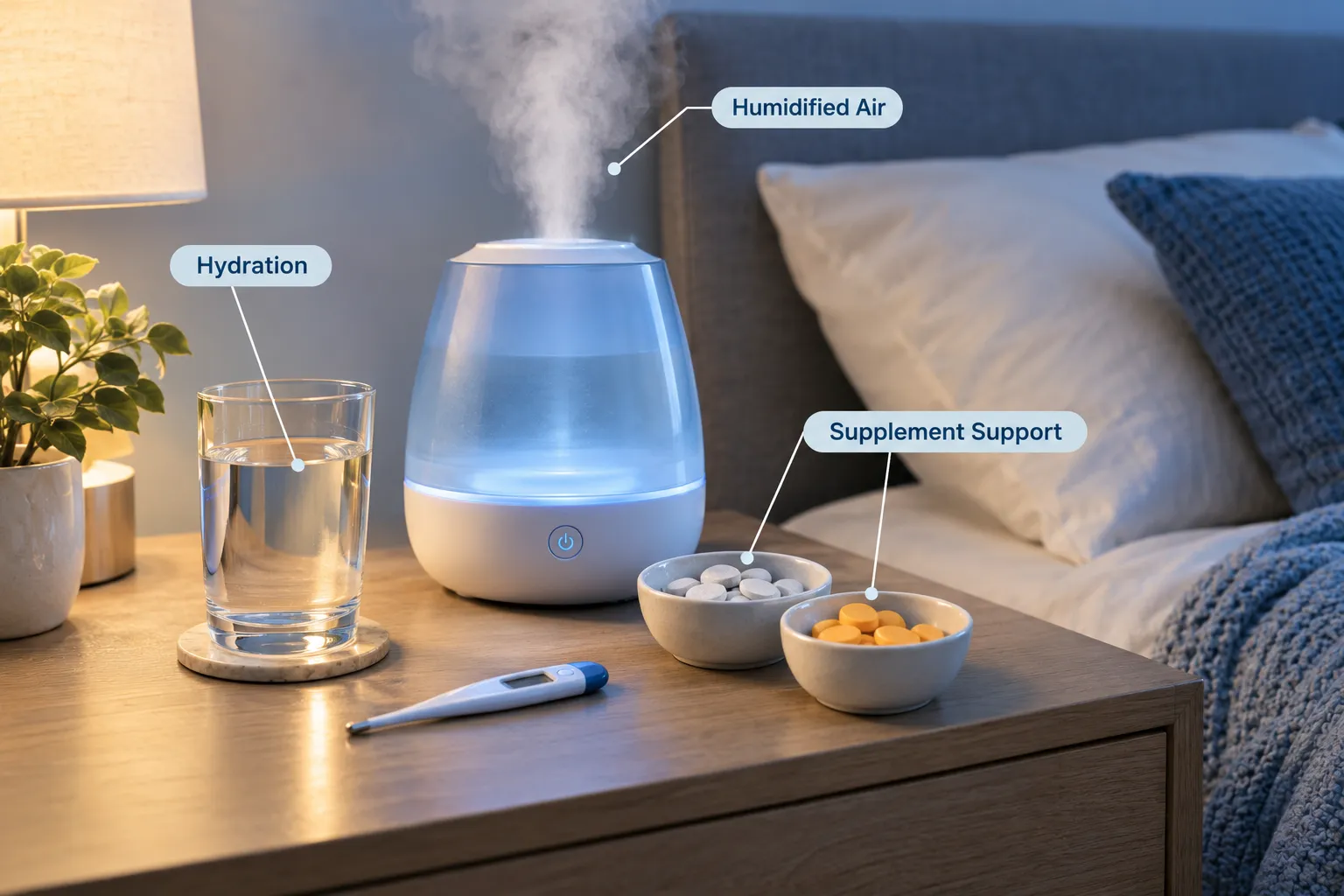
Humidified air is another pillar. Dry indoor air, especially from winter heating, can thicken mucus and irritate airways. A cool-mist humidifier or a hot shower’s steam loosens congestion, though cleanliness is critical, unclean humidifiers can grow mold or bacteria and worsen respiratory symptoms rather than easing them [3][9].
Honey, Saline, And Supplements: Evaluating Natural Remedies For Common Cold And Flu
Among single-ingredient remedies, honey has the strongest backing for calming coughs, particularly at bedtime. Multiple clinical sources support a teaspoon or two of honey, alone or stirred into warm water or tea, as an effective cough soother, but only for people older than one year, since honey carries a botulism risk for infants [5][9].
Saltwater gargles and saline nasal irrigation are simple, inexpensive, and consistently recommended. A typical gargle uses about a quarter to half teaspoon of salt dissolved in eight ounces of warm water, used several times a day to ease throat pain [6][9]. Saline nasal sprays or rinses flush irritants and thin mucus without the side effects of medicated decongestants [1].
Supplement evidence is far less settled. The National Institutes of Health’s Office of Dietary Supplements notes that elderberry, echinacea, zinc, andrographis, and vitamin C have been studied for cold and flu symptoms, but results are mixed and often based on small or inconsistent trials [8]. Some people report modestly shorter symptom duration with zinc lozenges started early, while others see little benefit. Importantly, these products can interact with medications such as blood thinners or immune-suppressing drugs, so checking with a pharmacist or doctor before combining supplements with prescriptions is essential [8].
Flu Care, Safety Limits, And When Natural Remedies For Common Cold And Flu Fall Short
Flu symptoms, fever, body aches, fatigue, and cough, often feel more intense than a typical cold, and the same comfort measures apply: rest, fluids, warm liquids, and humidified air [4]. However, flu carries higher risks of complications like pneumonia, particularly for young children, older adults, pregnant women, and people with chronic conditions. For these groups, natural remedies are adjuncts, not replacements, for antiviral medications and medical evaluation [4][10].
Safety is the recurring caution across expert sources. Herbal products are not regulated with the same rigor as prescription drugs, meaning potency and purity can vary between brands [8]. WebMD’s cold and flu treatment checklist echoes this, urging people to track symptoms and seek care if fever exceeds 103°F, lasts more than three days, or is accompanied by difficulty breathing, chest pain, or confusion [10].
Clinical experts at major health centers, including Cleveland Clinic, generally converge on a conservative approach: use natural remedies for common cold and flu to ease discomfort, but rely on vaccination, handwashing, and avoiding close contact with sick individuals as the real front line of defense [7][9]. Prevention consistently outperforms any after-the-fact remedy, natural or pharmaceutical.
Natural remedies for common cold and flu remain valuable for one clear reason: they make unavoidable illness more bearable. Rest, hydration, warm soups and teas, honey for cough, saline rinses, and humidified air all have consistent support from health authorities as comfort measures [1][3][5][6]. Supplements like zinc and elderberry may offer modest help for some people but require caution due to interaction risks [8]. None of these approaches cures a cold or flu outright, and flu symptoms in high-risk individuals still warrant medical attention and antiviral treatment [4].
The most practical next step is simple: stock a few basics before flu season peaks, honey, saline spray, a clean humidifier, and electrolyte fluids, and get the annual flu vaccine as the strongest preventive measure available [7]. When symptoms escalate beyond typical discomfort, contacting a healthcare provider remains the safest course.
References
[1] Index – https://www.cdc.gov/common-cold/treatment/index.html [2] Baa Common Cold Final 508 – https://www.cdc.gov/common-cold/media/pdfs/2026/03/BAA_Common-Cold_Final-508.pdf [3] Art 20046403 – https://www.mayoclinic.org/diseases-conditions/common-cold/in-depth/cold-remedies/art-20046403 [4] Index – https://www.cdc.gov/flu/takingcare/index.html [5] Home Remedies For Cold And Flu – https://blogs.bcm.edu/2026/01/28/home-remedies-for-cold-and-flu/ [6] medlineplus.gov – https://medlineplus.gov/ency/patientinstructions/000466.htm [7] Index – https://www.cdc.gov/respiratory-viruses/prevention/index.html [8] Immunefunction Healthprofessional – https://ods.od.nih.gov/factsheets/ImmuneFunction-HealthProfessional/ [9] How To Get Rid Of A Cold – https://health.clevelandclinic.org/how-to-get-rid-of-a-cold [10] Cold And Flu Treatment Checklist – https://www.webmd.com/cold-and-flu/cold-and-flu-treatment-checklist


