A single tomato plant can lose 30 percent of its leaves to hornworms in less than a week, yet many gardeners still reach for synthetic sprays before trying anything else. That instinct is changing fast. Natural remedies for pest control now sit at the center of a global shift toward safer, residue-free food production, backed by billions of dollars in new research and market growth. This guide breaks down what actually works, what the science says, and how to build a natural pest defense system that holds up in real gardens and farms.
Key Takeaways
- Healthy soil, companion planting, and beneficial insects form the foundation of natural remedies for pest control, according to 2026 garden guidance.[1]
- Low-toxicity products such as neem oil, insecticidal soap, diatomaceous earth, and Bacillus thuringiensis (BT) are widely available and effective against common pests.[15]
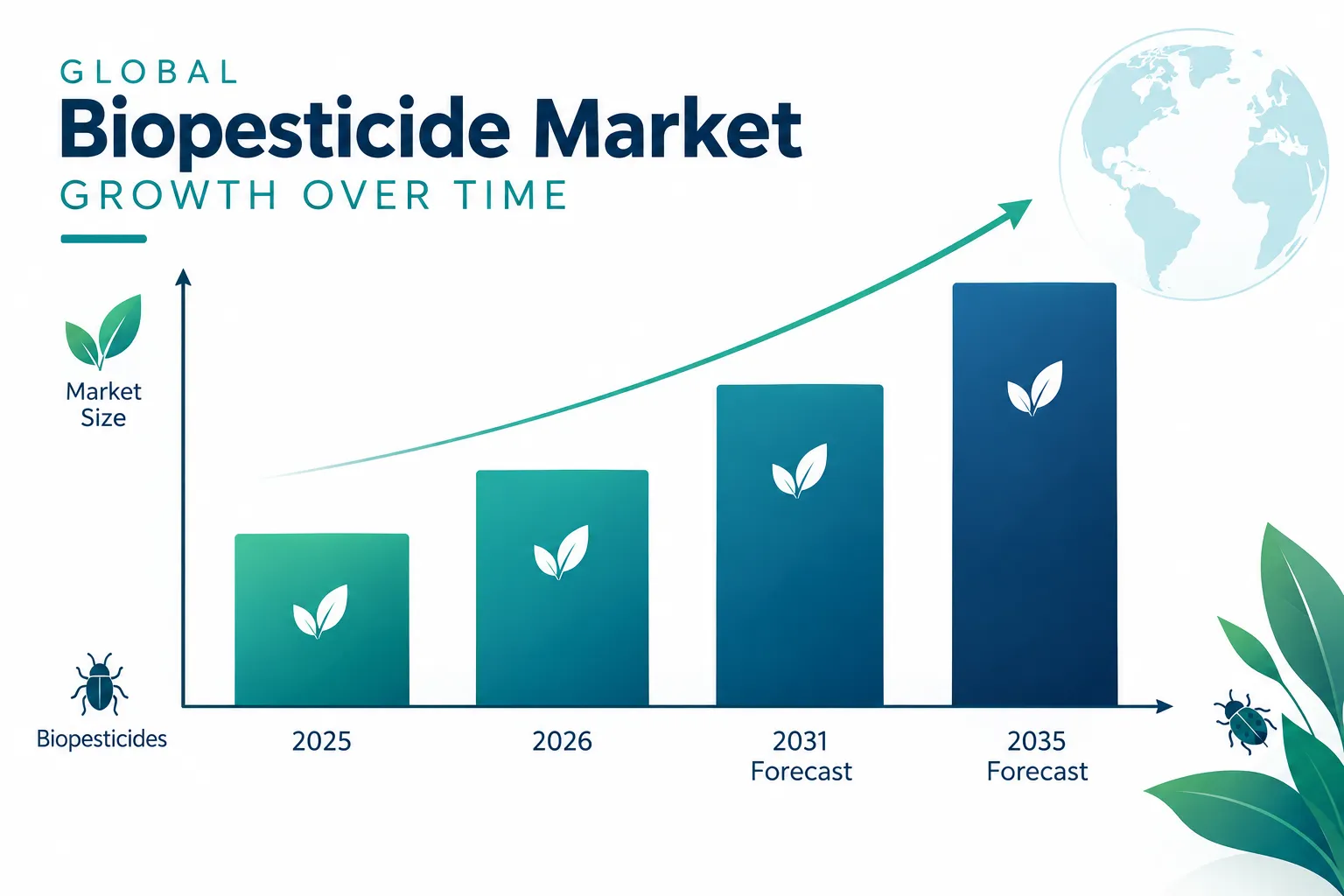
- The global biopesticides market is projected to grow from roughly USD 7.46 billion in 2026 to over USD 12 billion by 2031, reflecting strong demand for natural alternatives.[3][2]
- Plant-based botanicals repel, deter, and disrupt insect growth through multiple mechanisms, which may slow resistance compared to single-target synthetic chemicals.[14][12]
- Even natural products can harm plants or beneficial organisms if overused, so integrated, targeted application matters more than volume.[1][15]
What Counts as Natural Remedies for Pest Control
Natural remedies for pest control cover a broad category of pest-management tools derived from living organisms or naturally occurring minerals, rather than lab-synthesized chemicals. Industry researchers classify most of these under the term “biopesticides,” which includes microbial agents (bacteria, fungi, viruses), plant-derived compounds, and mineral substances like diatomaceous earth.[5][10]
This is not a niche category anymore. Market analysts tracking the sector in 2026 report the global biopesticides market at approximately USD 7.46 billion, up from USD 6.72 billion in 2025, with projections reaching USD 12.65 billion by 2031 at an estimated 11 percent compound annual growth rate.[3][2] Other forecasts are even more bullish, with one analysis projecting growth to USD 17.68 billion by 2030 at a 14.6 percent CAGR.[4] The common driver across these reports is consistent: tighter regulations on synthetic pesticides and rising consumer demand for residue-free produce.[3][5][10]
Proven Natural Remedies for Pest Control in the Garden
For home gardeners, the most effective natural remedies for pest control start with prevention, not spraying. A 2026 garden guide recommends building healthy soil and using companion planting as the primary defense against beetles, aphids, and cabbage loopers. Onion, garlic, basil, chrysanthemum, rosemary, tansy, catnip, and petunias planted alongside vulnerable crops can help repel common invaders naturally.[1]
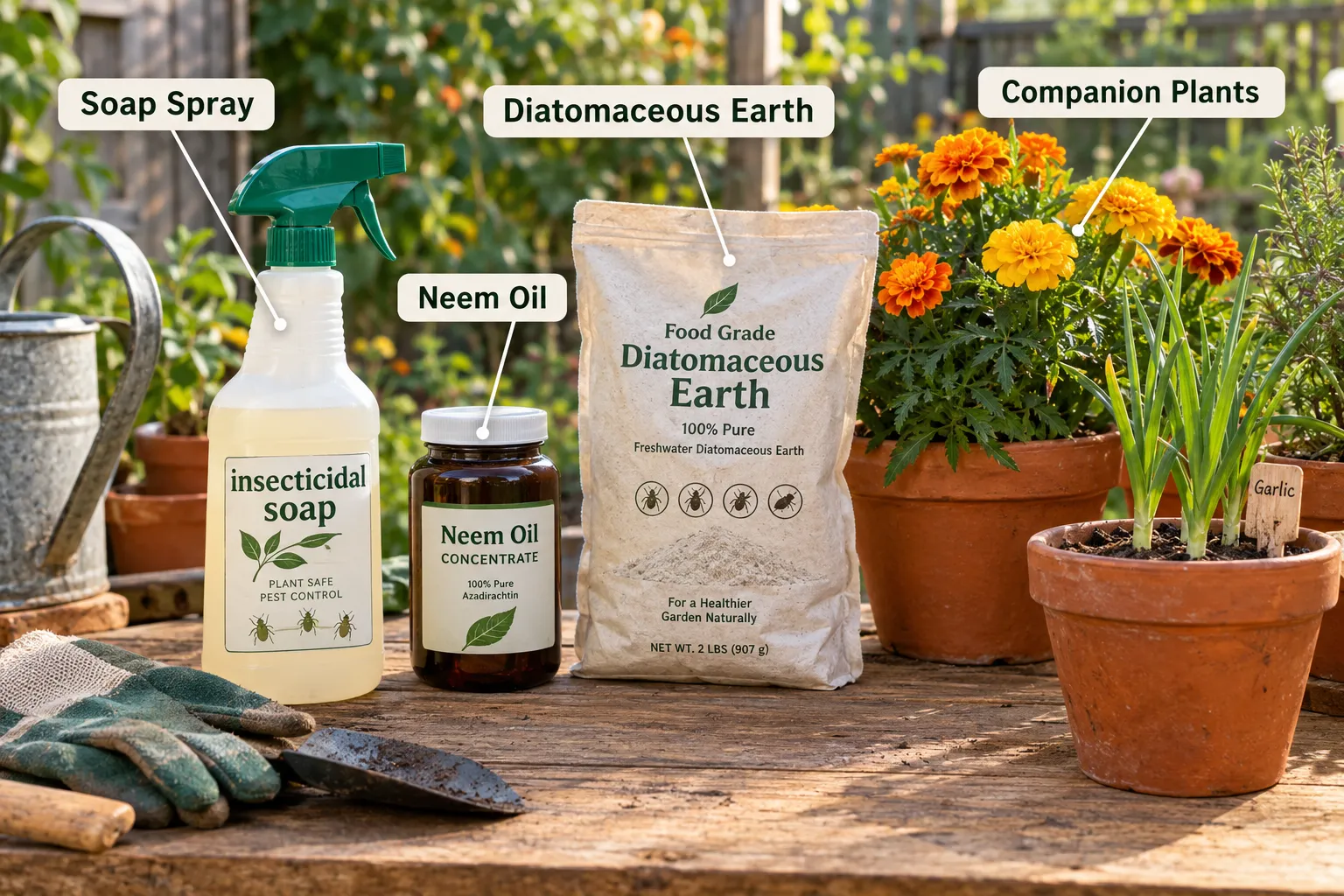
When prevention isn’t enough, simple targeted sprays fill the gap. According to the same guide, a mix of 2 teaspoons of liquid dish soap per quart of water can control soft-bodied pests like aphids, while 3 teaspoons of cayenne pepper per quart deters cabbage worms. Diluted fish fertilizer is even used to keep squirrels away from garden beds.[1]
Beyond homemade mixes, several commercially available low-toxicity products have become staples for organic growers, based on a 2026 review of natural pest solutions:
| Product Type | Best Used For | Example |
|---|---|---|
| Insecticidal soap | Aphids, mites, whiteflies | Safer Brand |
| Neem oil concentrate | Broad-spectrum insects, fungal issues | Various brands |
| Diatomaceous earth (food-grade) | Crawling insects, slugs | Various brands |
| Bacillus thuringiensis (BT) | Caterpillars | Various brands |
| Iron-phosphate slug bait | Slugs and snails | Sluggo Plus |
| Spinosad formulations | Caterpillars, beetles | Captain Jack’s Deadbug Brew |
| Physical barriers | General pest exclusion | Garden netting |
These products are widely available and generally considered low-risk compared with synthetic chemical pesticides.[15]
Scientific literature backs up much of this practical guidance. A 2026 review in the Nigerian Journal of Agricultural and Applied Technologies synthesized studies from 2020 to 2025 showing that plant botanicals, extracts, powders, and essential oils, effectively manage both field crop pests and stored-grain insects. These botanicals work through repellency, antifeedant effects, growth disruption, and by discouraging egg-laying.[14] A separate narrative review on vegetable production, updated in August 2026, similarly found that natural plant-based pesticides can control sucking insects, caterpillars, thrips, and storage pests while reducing harm to the environment and human health.[12]
“Plant botanicals represent a promising future pesticide class, but standardized formulations and proper dosing remain essential for reliable results.”, synthesized from 2026 agricultural research review[14]
Why the Market for Natural Remedies for Pest Control Is Booming
The growth numbers behind natural remedies for pest control are hard to ignore. DataM Intelligence estimated the biopesticides market at USD 8.92 billion in 2025 and USD 10.28 billion in 2026, forecasting a rise to USD 37.07 billion by 2035 at a 15.3 percent CAGR.[6] SNS Insider projected similar momentum, from USD 10.09 billion in 2025 to USD 37.9 billion by 2035.[9] Straits Research placed the 2026 figure at USD 10.60 billion, climbing to USD 33.23 billion by 2034.[11]
Analysts consistently point to bio-insecticides, bio-fungicides, and bionematicides as the fastest-growing segments, largely because fruit and vegetable growers face increasing pressure from stricter residue limits and organic-certified retail demand.[4][5][10] Researchers are also pushing the science forward. A July 2026 article on botanical pesticide discovery described a new research approach: studying how plants naturally defend themselves, mining plant-associated microbes for active compounds, and using genomics and synthetic biology to manufacture these natural actives at scale.[13]
Limitations to Understand Before Relying on Natural Remedies
Natural does not mean risk-free or foolproof. Reviews of botanical pesticides note real limitations: many essential oils and plant extracts degrade quickly in sunlight, can cause phytotoxicity (plant damage) at high concentrations, and often show inconsistent results across different field conditions.[12][14] Improved delivery systems, such as microencapsulation, are being developed to address these gaps, but they are not yet standard for home use.
Consumer guidance for 2026 reinforces a balanced approach: build soil health, encourage beneficial insects, use physical barriers like row covers and netting, and apply sprays such as soap, neem, or pepper solutions only when needed, not as a default habit. Even natural products can injure non-target insects or beneficial pollinators if overused or misapplied.[1][15]
Conclusion
Natural remedies for pest control have moved from a fringe gardening practice to a scientifically supported, rapidly growing global industry. The evidence is clear on three fronts: prevention through soil health and companion planting works, targeted low-toxicity products like neem oil and insecticidal soap offer reliable backup, and ongoing research into plant botanicals and biopesticides is expanding what natural options can achieve. Start small, improve soil, add companion plants, and keep a soap or neem spray on hand for outbreaks. Monitor plants regularly, apply treatments only when pest pressure is confirmed, and avoid stacking multiple products at once. This measured, integrated approach delivers effective pest control while protecting the garden’s broader ecosystem.
References
[1] Combat Garden Pests Naturally – https://www.farmersalmanac.com/combat-garden-pests-naturally [2] Biopesticide Market – https://www.freshfruitportal.com/news/2026/03/11/biopesticide-market/ [3] Biopesticides Market 11 Cagr Forecast For 20262031 Amid Curbs On Synthetic Pesticides Reports Mordor Intelligence 302705554 – https://www.prnewswire.com/news-releases/biopesticides-market—11-cagr-forecast-for-20262031-amid-curbs-on-synthetic-pesticides-reports-mordor-intelligence-302705554.html [4] Biopesticides Market To Reach Usd 17 68 Billion By 2030 Growing At A Cagr Of 14 6 Marketsandmarkets – https://www.globenewswire.com/news-release/2026/08/14/3345357/0/en/biopesticides-market-to-reach-usd-17-68-billion-by-2030-growing-at-a-cagr-of-14-6-marketsandmarkets.html [5] Global Biopesticides Market Industry – https://www.mordorintelligence.com/industry-reports/global-biopesticides-market-industry [6] Bio Pesticides Market – https://www.datamintelligence.com/research-report/bio-pesticides-market [9] Biopesticides Market Size Skyrocket Usd 101300056 – https://finance.yahoo.com/sectors/healthcare/articles/biopesticides-market-size-skyrocket-usd-101300056.html [10] Bio Pesticide Market – https://www.marketdataforecast.com/market-reports/bio-pesticide-market [11] Straits Research (biopesticides market forecast, 2026) [12] Narrative review on natural plant-based pesticides in vegetable production systems, 2026 [13] Article on botanical pesticide discovery and R&D paradigm, July 2026 [14] Review in Nigerian Journal of Agricultural and Applied Technologies, 2026 [15] Review of best natural pest solutions for gardens, June 2026


