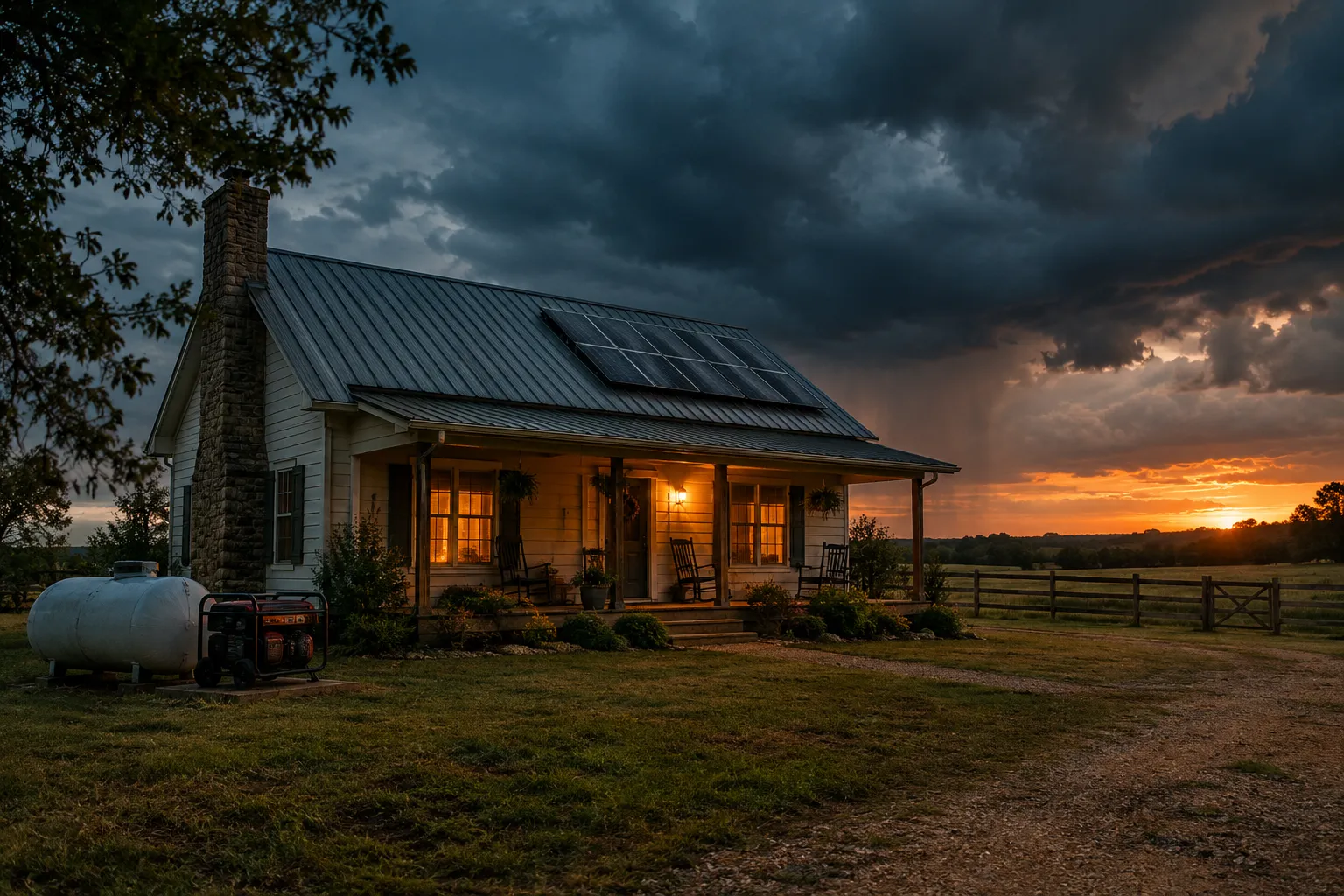
A single ice storm can knock out power to rural Southern counties for a week or more, and generator fuel runs out long before the lines get fixed. That reality is what pushed one Southern rural homeowner wants off-grid solar for long outages, learns battery component isn’t cheap story into the spotlight, according to a widely shared local news report. The homeowner researched off-grid solar as a permanent fix, only to discover that the battery storage portion of the system, not the solar panels themselves, drives the overall cost far higher than expected.
This pattern is common enough that it deserves a closer, practical look for anyone in a similarly storm-prone, grid-fragile area.
Key Takeaways
- Solar panels are the cheapest part of an off-grid system; battery storage typically represents 40 to 60 percent of total project cost.
- Long-duration backup for multi-day outages requires significantly more battery capacity than short blackout protection.
- Lithium battery banks capable of powering a full home for several days can cost tens of thousands of dollars.
- Sizing the system to real energy needs, not worst-case assumptions, is the most effective way to control expenses.
- Partial backup, phased installation, and incentives can make off-grid solar more affordable without sacrificing outage resilience.
Why This Southern Rural Homeowner Wants Off-Grid Solar for Long Outages
Rural properties across the South face a particular kind of vulnerability. Power lines often run for miles through wooded terrain, and a single fallen tree can leave a household dark for days. Hurricanes, ice storms, and summer thunderstorms combine to make extended outages a near-yearly event in many counties.
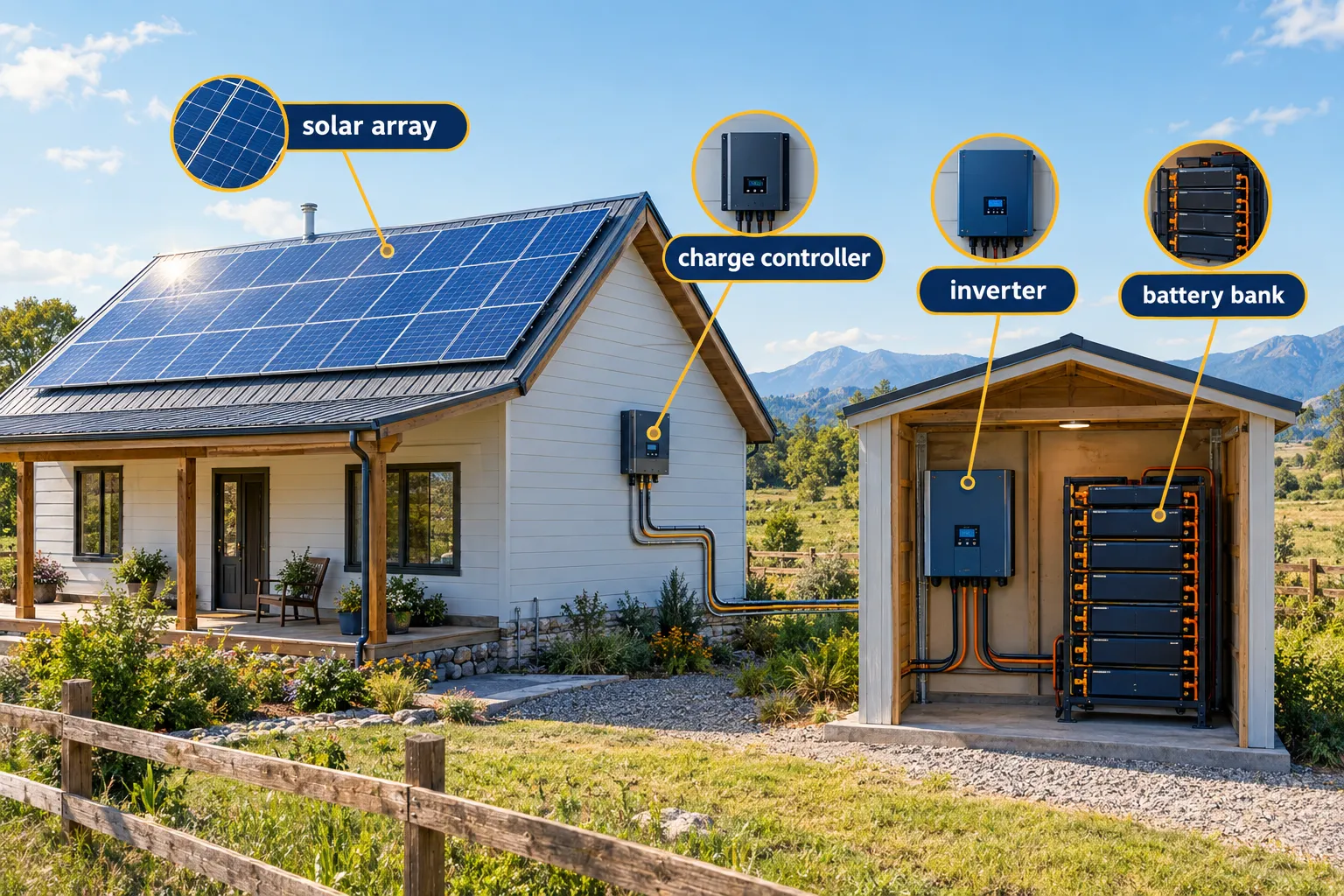
For the homeowner in the original report, the goal was independence, not just a backup plan. A grid-tied system with a small battery buffer would not cover a five-day outage. Only a true off-grid or heavily battery-backed hybrid system could keep well pumps, refrigeration, and medical equipment running through a prolonged event.
That decision to prioritize long-duration resilience, rather than short-term convenience, is exactly what exposed the true cost of battery storage.
The Real Cost Shock: Learning the Battery Component Isn’t Cheap
Solar panels have gotten dramatically cheaper over the past decade. Batteries have not followed the same curve. Lithium iron phosphate batteries, the current standard for home energy storage, remain expensive because of raw material costs, manufacturing complexity, and safety engineering requirements.
A modest solar array capable of covering daytime energy use might cost a few thousand dollars. A battery bank sized to run an entire home for three to five days without sunlight, however, often costs two to three times that amount. Industry estimates commonly put battery storage at 40 to 60 percent of total system cost, and multi-day off-grid capacity pushes that percentage even higher because more battery modules are required to store enough reserve energy.
This is the core lesson embedded in the phrase Southern rural homeowner wants off-grid solar for long outages, learns battery component isn’t cheap: the panels catch sunlight, but the batteries carry the financial weight of true independence.
What Off-Grid Systems Actually Require Beyond Batteries
Battery cost is not the only factor. A complete off-grid system also needs:
- A properly sized inverter to convert stored DC power into usable AC electricity
- A charge controller to regulate power flowing from panels into batteries
- Backup generation, often propane or diesel, for extended cloudy stretches
- Professional installation and electrical permitting, which varies by county
- Ongoing maintenance and eventual battery replacement, typically every 8 to 12 years
Homeowners frequently underestimate how much daily energy use adds up. Well pumps, HVAC systems, and refrigeration draw far more power than lighting or phone charging, and sizing a battery bank for those loads across multiple cloudy days requires substantially more capacity than a basic blackout kit.
Smarter Paths Forward for Southern Rural Homeowner Wants Off-Grid Solar for Long Outages, Learns Battery Component Isn’t Cheap
Full off-grid independence is not the only option. Several strategies can reduce cost while still improving outage resilience:
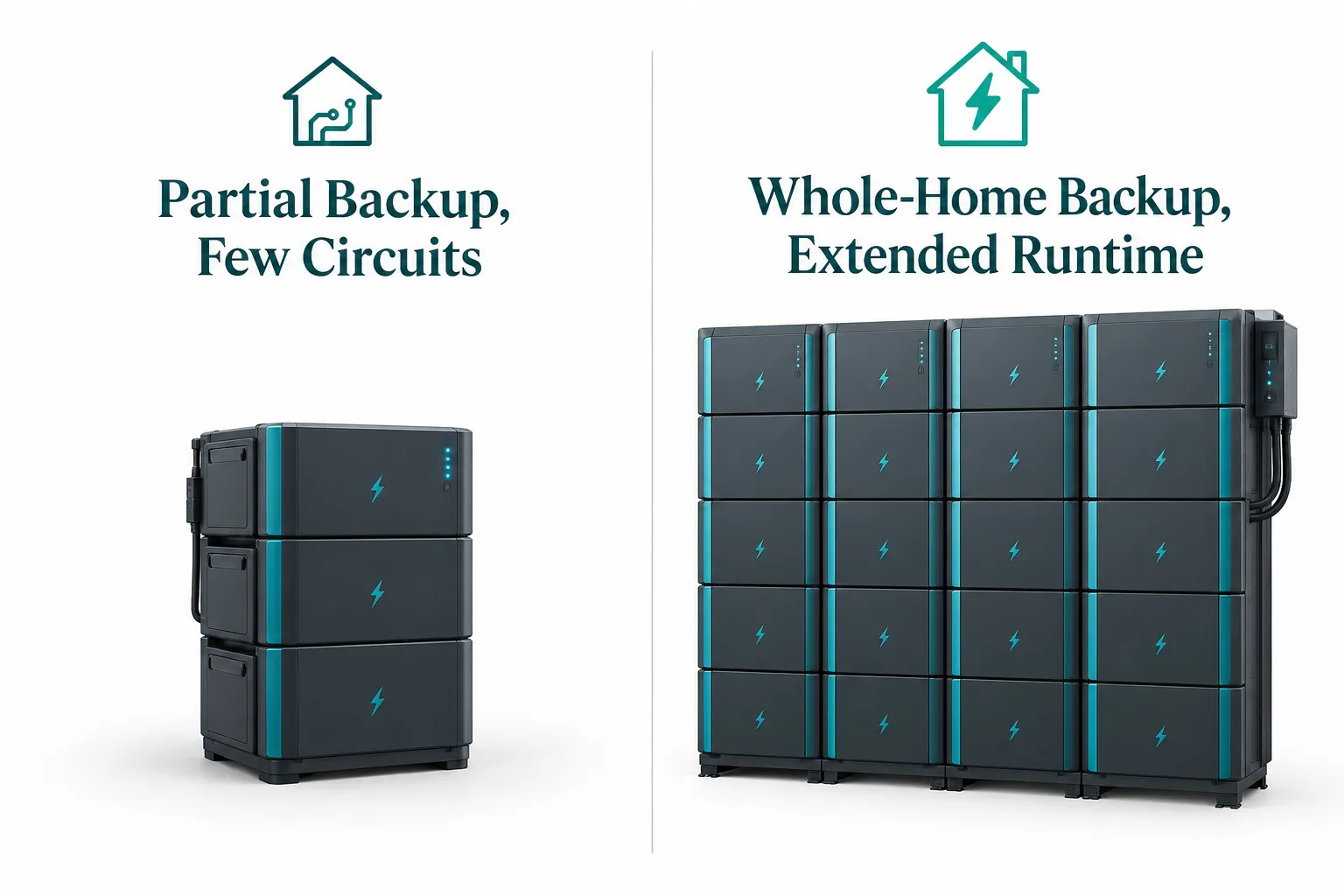
- Start with partial backup covering only critical circuits, then expand later
- Pair a smaller battery bank with a propane generator for extended events
- Take advantage of federal and state solar incentives that can offset installation costs
- Improve home energy efficiency first, which reduces the battery capacity needed
- Get multiple quotes, since installer pricing and battery brand choices vary widely
Conclusion
Off-grid solar can absolutely deliver the long-outage protection that rural Southern homeowners need, but the battery component almost always determines whether the project is affordable. Anyone considering this path should start with an honest energy-use audit, size the system to real needs rather than worst-case assumptions, and explore phased or hybrid approaches before committing to a full off-grid build. Consulting a licensed solar installer for a detailed load analysis is the most reliable next step toward a system that is both resilient and financially realistic.
off-grid solar, rural power outages, solar battery cost, home battery backup, lithium battery storage, Southern rural homeowner, off-grid living, solar panel installation, energy resilience, storm preparedness, renewable energy costs, battery bank sizing


