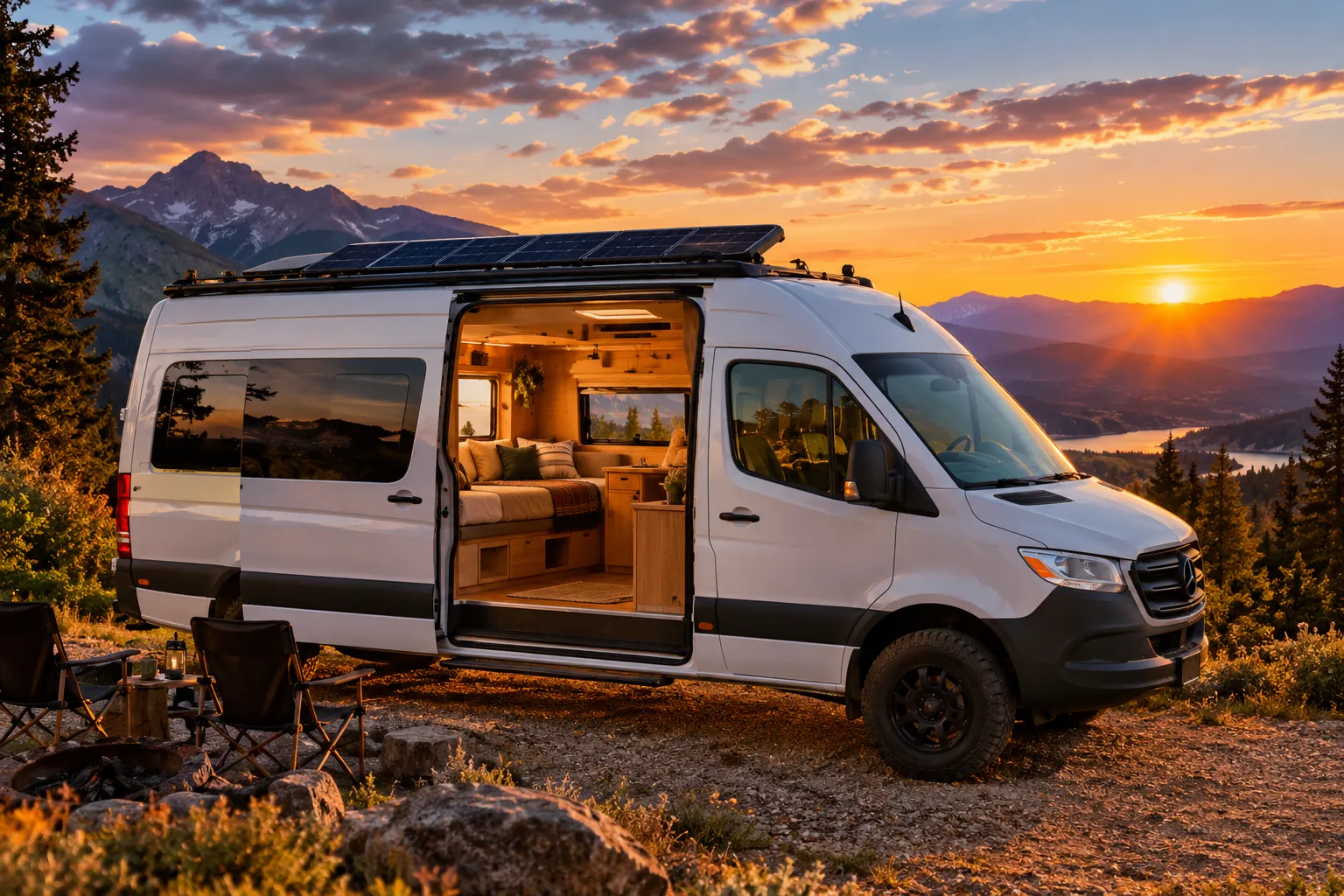
A camper van that can run an air conditioner, a hot water heater, and a full lithium power bank for days without touching a hookup sounds like a compromise waiting to happen. Yet according to autoevolution’s coverage of the build, this one manages to skip the trade-off entirely [1]. The result is a project simply called Super Lounger, and it stands out precisely because it refuses to pick a side between plush interior living and serious off-grid independence.
Super Lounger is a custom camper van built around interior comfort and off-grid capability, and the build treats both goals as equally important design pillars rather than one being an afterthought to the other [1]. Built on a Ford Transit 148-inch extended wheelbase chassis, the van is configured for two people who want a genuine home-on-wheels experience, not a stripped-down sleeping box [1].
Key Takeaways
- Super Lounger uses a Ford Transit 148-inch extended wheelbase as its base platform, sized for two occupants living comfortably [1].
- A custom gas-strut Murphy bed converts between sleeping, forward-facing lounge, and rear-facing lounge configurations [1].
- Off-grid power comes from a 920 Ah Epoch heated lithium battery bank, 400 W of rooftop solar, and a Victron-based charging and monitoring system [1].
- Climate control includes a Dometic RTX 2000 air conditioner and an Aqua-Hot 125D hydronic heater with on-demand hot water [1].
- Service hatches and removable panels were built in specifically so major systems can be repaired without tearing apart the interior [1].
The Interior Comfort Focus Behind Super Lounger
Most camper vans force owners to choose between a fixed bed that eats daytime space or a dinette that has to be broken down every night. Super Lounger is a custom camper van built around interior comfort and off-grid capability specifically because its designer rejected that either-or setup [1].
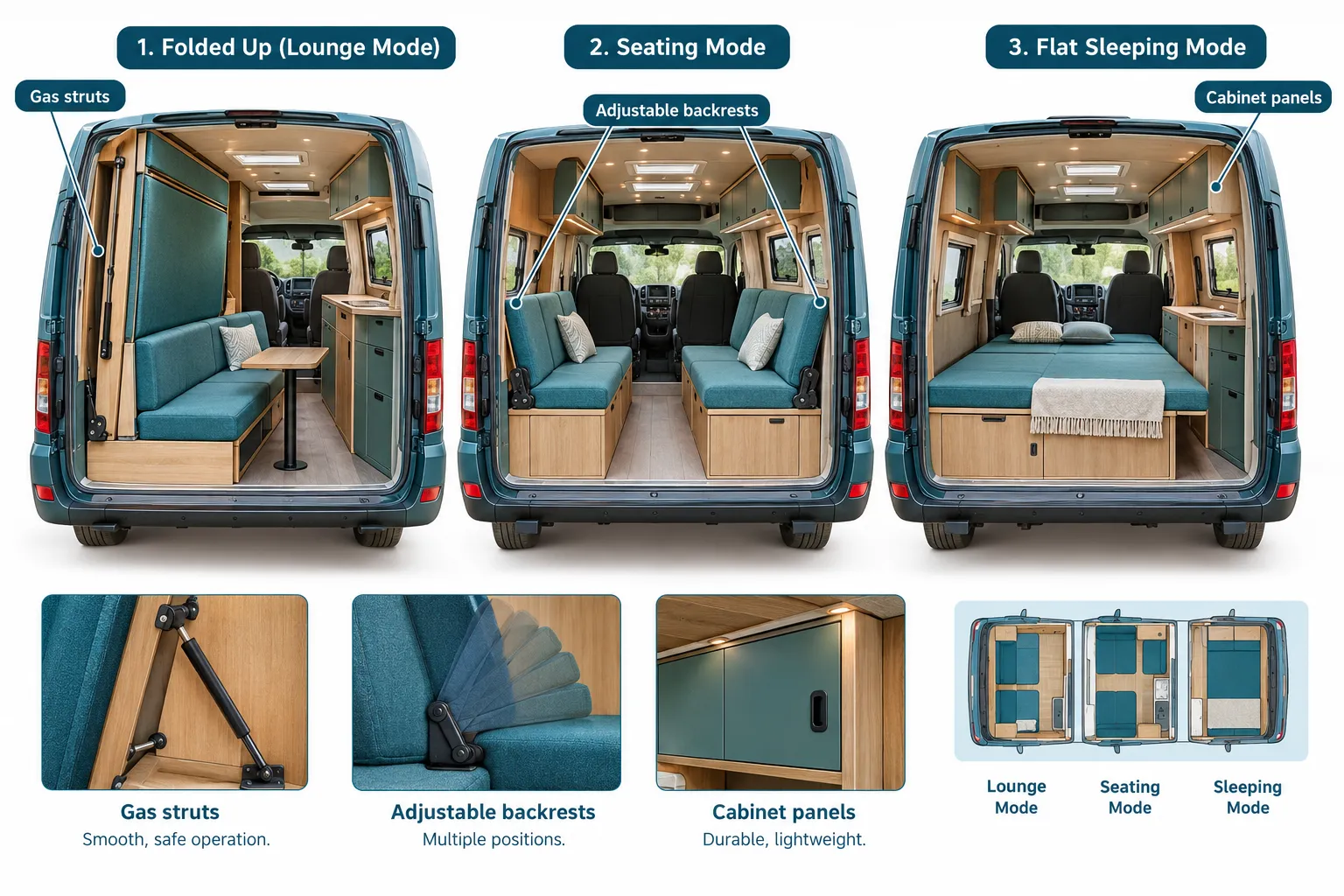
The centerpiece is a rear gas-strut Murphy bed that drops down from the wall and reconfigures into multiple lounge modes. Owners can set it up facing forward toward the van’s interior, or rotate it to face the rear doors for open-air campsite views [1]. The system relies on adjustable backrests, which means the same platform serves as:
- A flat sleeping surface at night for two people
- Forward-facing dual lounge seating during the day
- Rear-facing seating oriented toward an open door and the outdoors
- A cleared-out cargo zone when hauling gear takes priority
This modularity matters because it eliminates the constant setup-and-teardown routine common in smaller vans. According to the autoevolution report, the layout was intentionally designed around “open-door camping,” where relaxed seating faces outward rather than boxing occupants into a standard dinette booth [1]. That single design choice reshapes how the whole van is used, turning it into a lounge-first space rather than a bed-first one.
Off-Grid Capability Built Into Super Lounger’s Power and Climate Systems
Comfortable furniture means little if the van cannot sustain itself away from campgrounds. This is where Super Lounger is a custom camper van built around interior comfort and off-grid capability in the truest sense, since its power architecture was clearly engineered for extended independence [1].
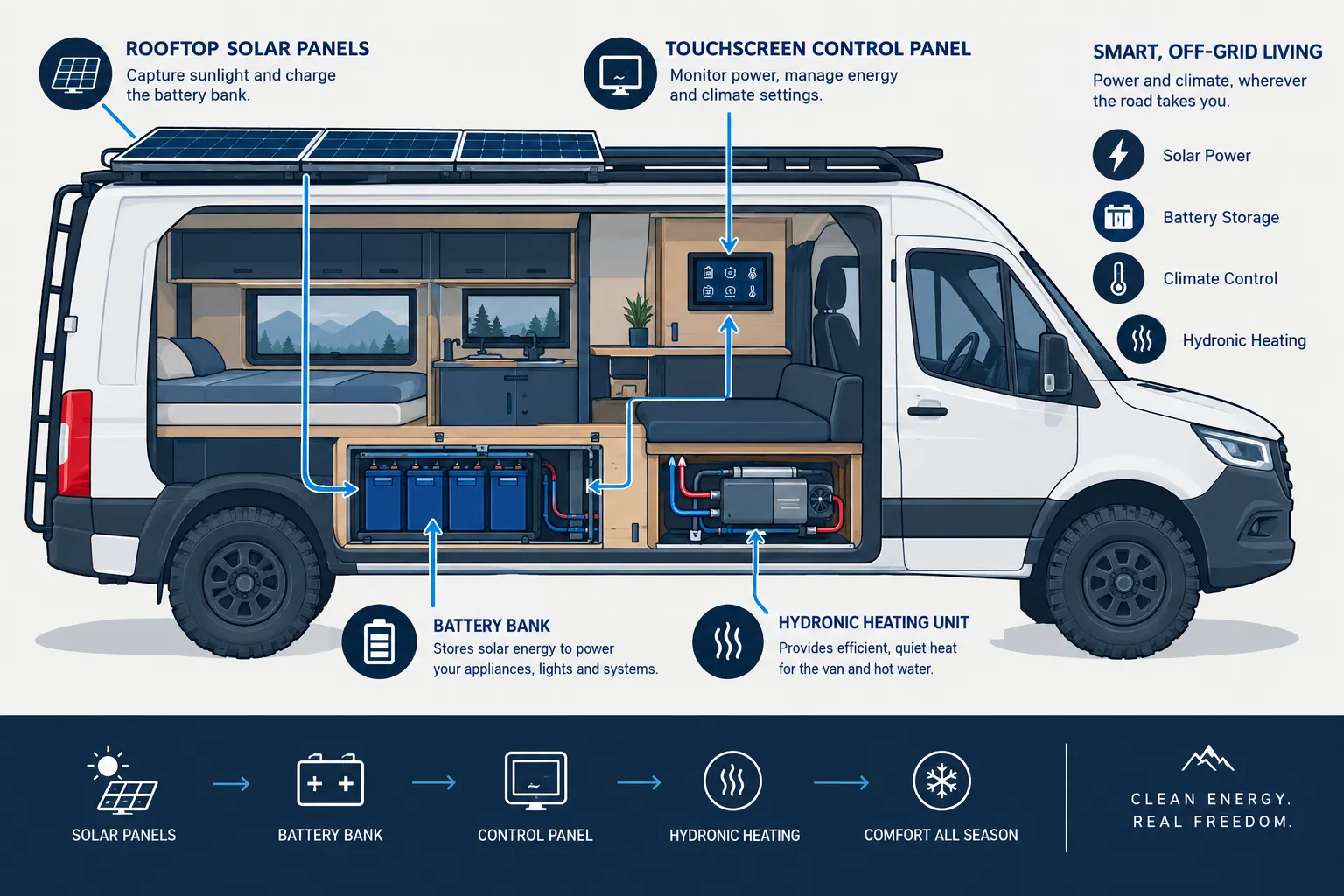
At the core sits a 920 Ah Epoch heated lithium battery bank, chosen specifically because heated cells tolerate cold-weather charging better than standard lithium packs [1]. That bank pairs with a Victron 3,000 W inverter/charger, dual 50 A Victron DC-DC chargers, dual alternators, a Victron MPPT solar controller, and 400 W of rooftop solar [1]. Together, these components let the van recharge from the engine while driving, from solar while parked, or from shore power when available.
Monitoring is centralized through a Victron Cerbo GX paired with a seven-inch touchscreen, giving a real-time readout of battery state, power draw, and charging status [1]. For anyone spending days off the grid, that visibility replaces guesswork with hard data.
Climate and water systems round out the self-sufficiency picture. A Dometic RTX 2000 air conditioner handles hot-weather cooling, while an Aqua-Hot 125D hydronic unit supplies both space heating and on-demand hot water, making the van usable in cold seasons too [1]. Water capacity includes a 35-gallon fresh-water tank and a 20-gallon gray-water tank, both sized to support multi-day trips without frequent refilling or dumping runs [1].
Notably, the build also prioritizes serviceability. Major components sit behind dedicated service hatches, removable cabinet panels, and wiring trays, so a failed part can be repaired or swapped without gutting the interior [1]. That is a detail often overlooked in custom builds, where accessing a single component sometimes means disassembling half the cabinetry.
A Custom Build, Not Yet a Product Line
It is worth being clear about what Super Lounger currently represents. As of the autoevolution report published in late September 2026, this is a one-off custom build reflecting a specific owner’s priorities, not a standardized package available for order [1]. There is no confirmed pricing, production timeline, or commercial rollout tied to the Super Lounger name [1].
That said, the build reflects a broader pattern the report identifies among custom van builders: pairing modular Murphy bed systems with high-capacity lithium and solar setups to close the gap between lounging comfort and genuine off-grid readiness in mid-size vans [1]. Builders working with clients on similar projects, such as those featured through campervanbuilders.com.au’s project listings or simplevans.eu’s build catalog, often face the same tension between daytime living space and overnight sleeping needs [2][4].
Super Lounger is a custom camper van built around interior comfort and off-grid capability that shows what happens when a build brief refuses to compromise on either priority. The modular Murphy bed system solves the daytime-versus-nighttime space conflict, while the Epoch battery bank, Victron charging network, and Aqua-Hot climate system provide the endurance needed for real off-grid trips [1].
For anyone researching a similar build, the practical next step is identifying which trade-offs matter most: bed flexibility, battery capacity, climate control, or serviceability. Reviewing detailed builder catalogs and completed project examples, rather than relying on marketing renderings alone, remains the most reliable way to gauge whether a given van layout will actually meet real-world off-grid demands.
References
[1] Super Lounger Is A Custom Camper Van Built Around Interior Comfort And Off Grid Capability 276242 – https://www.autoevolution.com/news/super-lounger-is-a-custom-camper-van-built-around-interior-comfort-and-off-grid-capability-276242.html [2] simplevans.eu – https://simplevans.eu/en/ [4] campervanbuilders.com.au – https://campervanbuilders.com.au/collections/all


