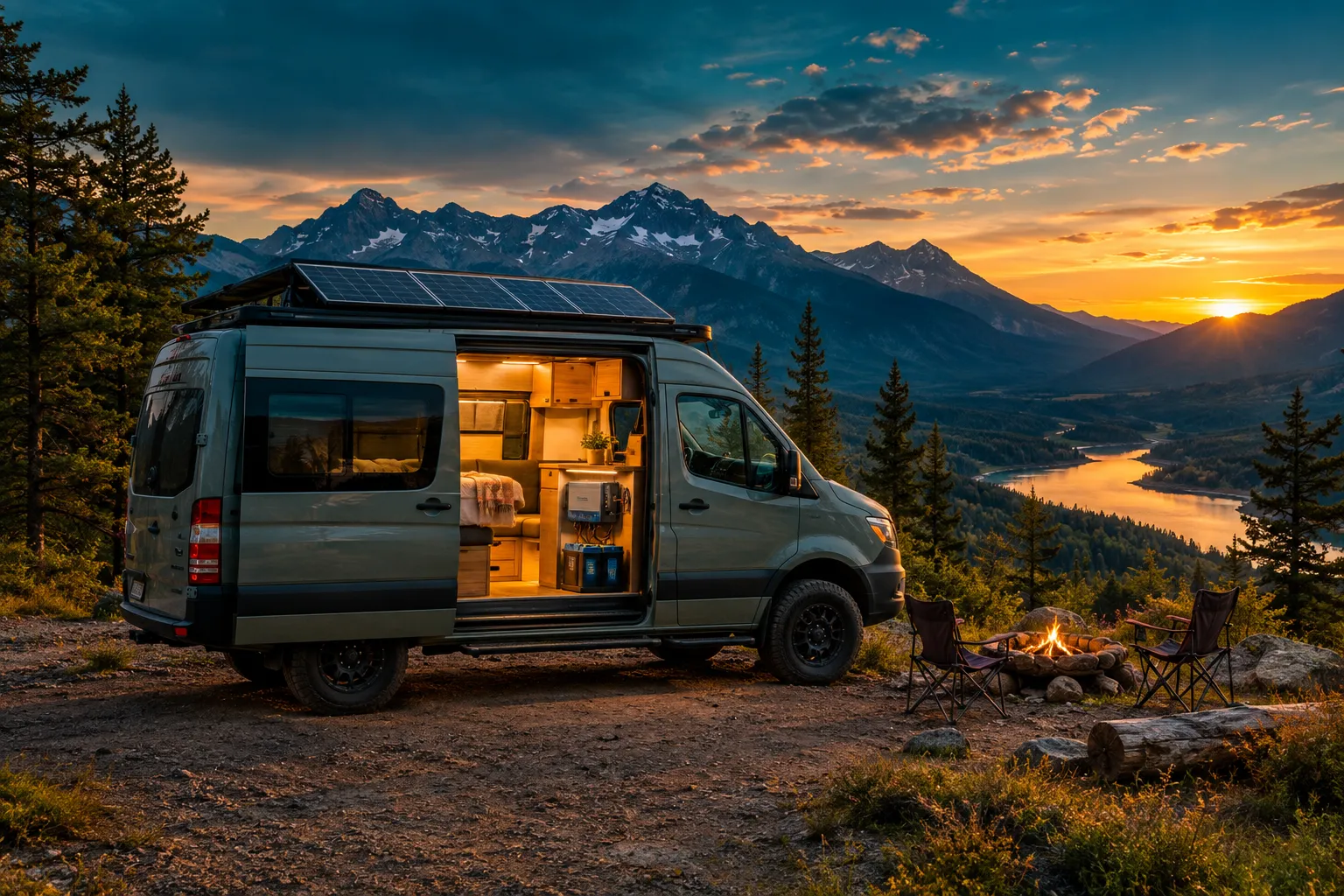
A record 413 million camping nights were logged across the European Union in 2025, according to Eurostat figures cited in an industry digest, and that single number tells a bigger story than any travel blog post could.[2] The Rise of Mobile Off-Grid Living is no longer a fringe lifestyle choice confined to retirees with campervans or bohemian influencers chasing sunsets. It has become a measurable shift in how people live, work, and travel, backed by hard registration data, maturing technology, and a growing economic footprint.
Key Takeaways
- EU camping nights hit a record 413 million in 2025, while Sweden’s motorhome market grew 62 percent and Spain’s February 2026 registrations jumped 84.3 percent year-over-year.[2][8]
- Vanlife has shifted from online trend to economic force, with the #vanlife hashtag surpassing 8.2 million posts and manufacturers redesigning vehicles around mobile living demand.[3]
- Lithium iron phosphate (LiFePO4) batteries now dominate off-grid solar setups, offering thousands of charge cycles and near-full depth of discharge.[5]
- Cities including Bristol, Ibiza, and San Francisco are tightening van parking rules, even as countries like Spain and Turkey restrict wild camping.[2]
- Hybrid platforms such as the Aboard T4, packing more than 200kWh of onboard power, are extending how long nomads can stay truly off-grid.[10]
The Numbers Behind The Rise of Mobile Off-Grid Living
The data points in one direction: more people are choosing wheels over walls, at least part of the time. Beyond the EU’s record camping nights, Spain’s new motorhome registrations rose 84.3 percent year-on-year in February 2026, with caravan registrations up 52.6 percent, according to a vanlife industry update.[8] Sweden’s motorhome market expanded 62 percent, and camper segments in Sweden and the Netherlands are described as “overheating” by industry observers.[2]
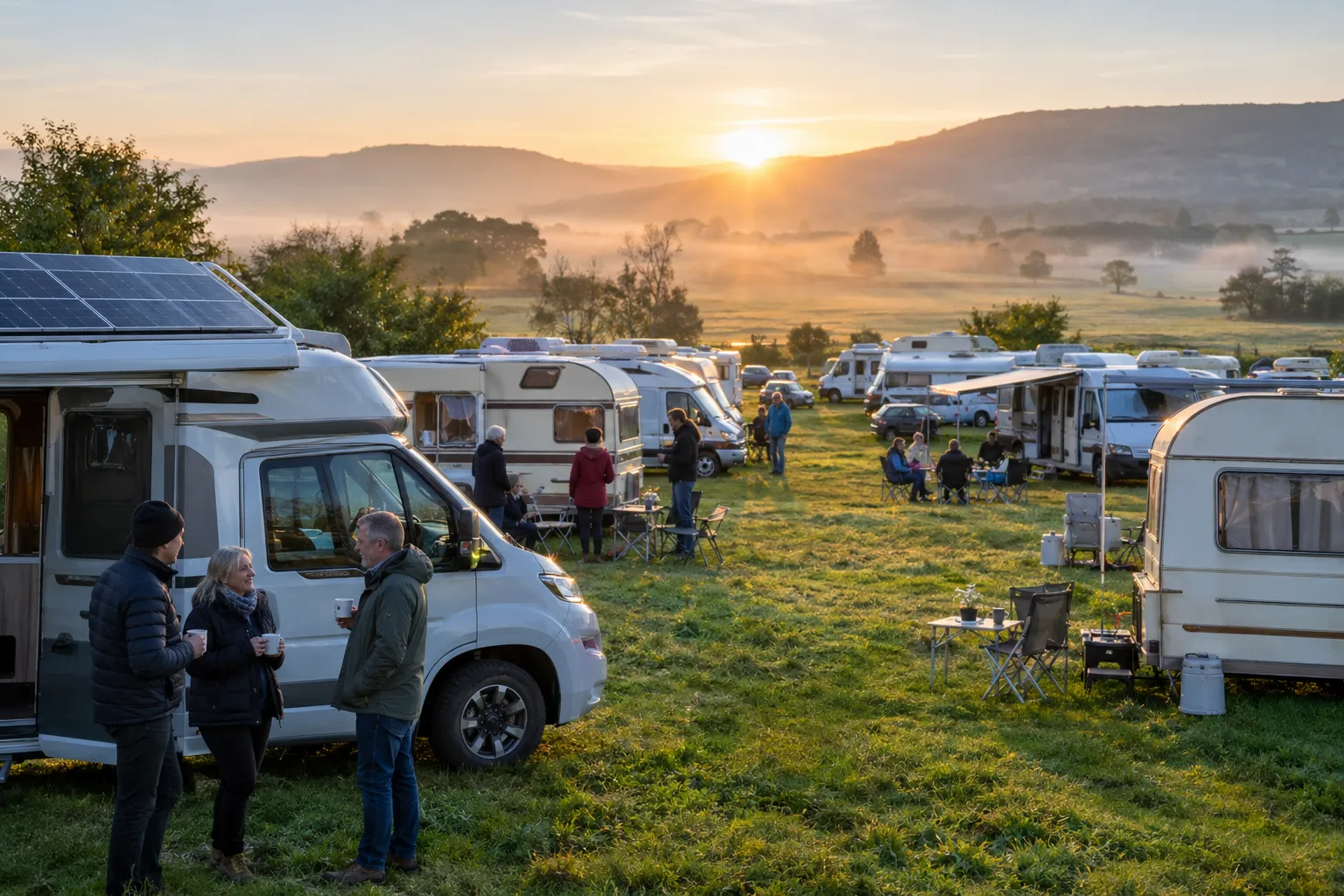
At the same time, traditional caravan manufacturing is shrinking. German manufacturer Bürstner announced it is exiting the caravan business after seven decades, a signal that buyers increasingly prefer self-contained, off-grid-capable motorhomes over towable caravans dependent on campsite hookups.[2] This is not simply growth, it is a restructuring of the entire mobile living market around autonomy and self-sufficiency.
Culture, Community, and the Business of Vanlife
Social media did more than popularize vanlife; it built an economy around it. The #vanlife hashtag had accumulated over 8.2 million posts by mid-2026, offering constant social proof that off-grid mobile living is achievable and desirable. A February 2026 industry analysis describes vanlife as a genuine economic force reshaping RV manufacturer roadmaps, not a passing online fad.[3]
Importantly, the movement is broadening. A February 2026 off-grid living analysis notes the strongest growth is among people in the “middle”, those who convert vans or trailers, buy small rural plots, and blend part-time off-grid living with conventional jobs.[6] For many, a mobile rig functions less as a permanent home and more as a flexible second base, mixing remote work with extended off-grid stretches. Dedicated vanlife events scheduled throughout 2026 further reflect an organized, mature community rather than a scattered subculture.[7]
The Technology Making Mobile Off-Grid Living Possible
None of this growth would be possible without a quiet revolution in batteries. LiFePO4 has become the default chemistry for off-grid solar and RV power, delivering 4,000 to 15,000 charge cycles and 80 to 100 percent usable depth of discharge, according to a detailed 2026 solar guide.[5] RV battery comparisons confirm lithium packs now deliver 3,000 to 6,000-plus cycles, making them the clear choice for full-time boondocking.
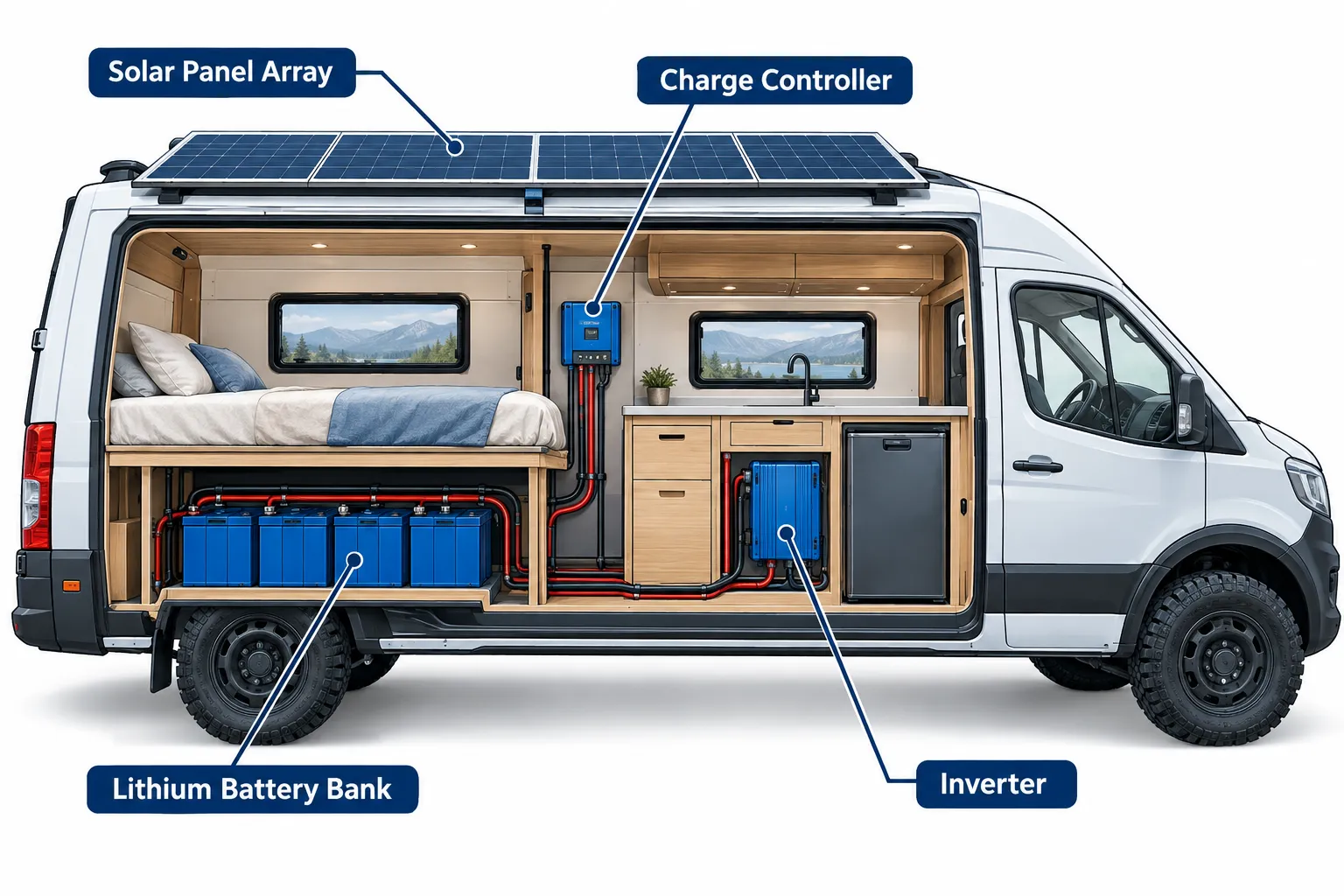
“Modern off-grid RVs commonly carry 400 to 800 watts of rooftop solar as the sweet spot for extended boondocking.”[4]
Full-time off-grid users increasingly pair a 460Ah battery with 1,000 to 1,500 watts of solar for sustained mobile living.[1] At the premium end, the Aboard T4, a 24-foot self-propelled travel trailer, carries more than 200kWh of onboard power, with a 41kWh LFP battery for daily loads and a 60kW range-extending generator that recharges the system in under 30 minutes.[10] Mainstream manufacturers are catching up too, with camper vans now shipping factory-installed 400Ah lithium batteries, 200W solar panels, and 3,000W inverters as standard off-grid packages.[9]
Regulations and Regional Differences
Growth has not gone unchecked. Bristol, Ibiza, and San Francisco are among the cities tightening control over informal van parking.[2] Spain and Turkey are increasing pressure on wild camping, even as Italian rental data shows half of motorhome renters are now under 35, signaling mainstream appeal among younger travelers. National strategies diverge sharply: Japan is focusing on compact, affordable conversions, while the United States is pushing premium electric caravans, two very different bets on the future of The Rise of Mobile Off-Grid Living.
Conclusion
The Rise of Mobile Off-Grid Living reflects a convergence of culture, technology, and economics rather than a passing trend. Record camping nights, surging motorhome registrations, and factory-standard lithium-solar systems all point to a durable shift in how people define home. For those considering the lifestyle, the practical next steps are straightforward: calculate daily energy needs in watt-hours, size a LiFePO4 battery bank for at least three days of autonomy, pair it with 400 to 800 watts of solar, and research local parking and camping regulations before committing to a route. Starting small, with a weekend conversion or rental, remains the lowest-risk way to test whether mobile off-grid living fits a given lifestyle before investing in a full-time rig.
References
[1] Best Lifepo4 Batteries For Rv Solar – https://www.panozauto.com/best-lifepo4-batteries-for-rv-solar/ [2] Vanlife Weekly 2026 W19 – https://openvan.camp/en/news/lifestyle/vanlife-weekly-2026-w19 [3] Van Life In 2026 Why The Movement Exploded And Why Its Still Growing – https://truervs.com/blog/van-life-in-2026-why-the-movement-exploded-and-why-its-still-growing [4] Off Grid Rv With Solar – https://www.blackseries.net/blog/off-grid-rv-with-solar.html [5] Best Lithium Batteries For Off Grid Solar – https://findingdulcinea.com/best-lithium-batteries-for-off-grid-solar/ [6] Off Grid Living Is No Longer Fringe – https://www.xcapeworld.com/2026/02/off-grid-living-is-no-longer-fringe.html?m=1 [7] 2026 Vanlife Events – https://vanlifetrader.com/2026-vanlife-events/ [8] Vanlife Weekly 2026 W13 – https://openvan.camp/en/news/lifestyle/vanlife-weekly-2026-w13 [9] The Best 10 Solar And Lithium Powered Camper Vans 2 – https://generalrv.com/blog/the-best-10-solar-and-lithium-powered-camper-vans-2 [10] 5 Best Off Grid Essentials Every Nomad Needs In July 2026 – https://www.yankodesign.com/2026/07/29/5-best-off-grid-essentials-every-nomad-needs-in-july-2026/


