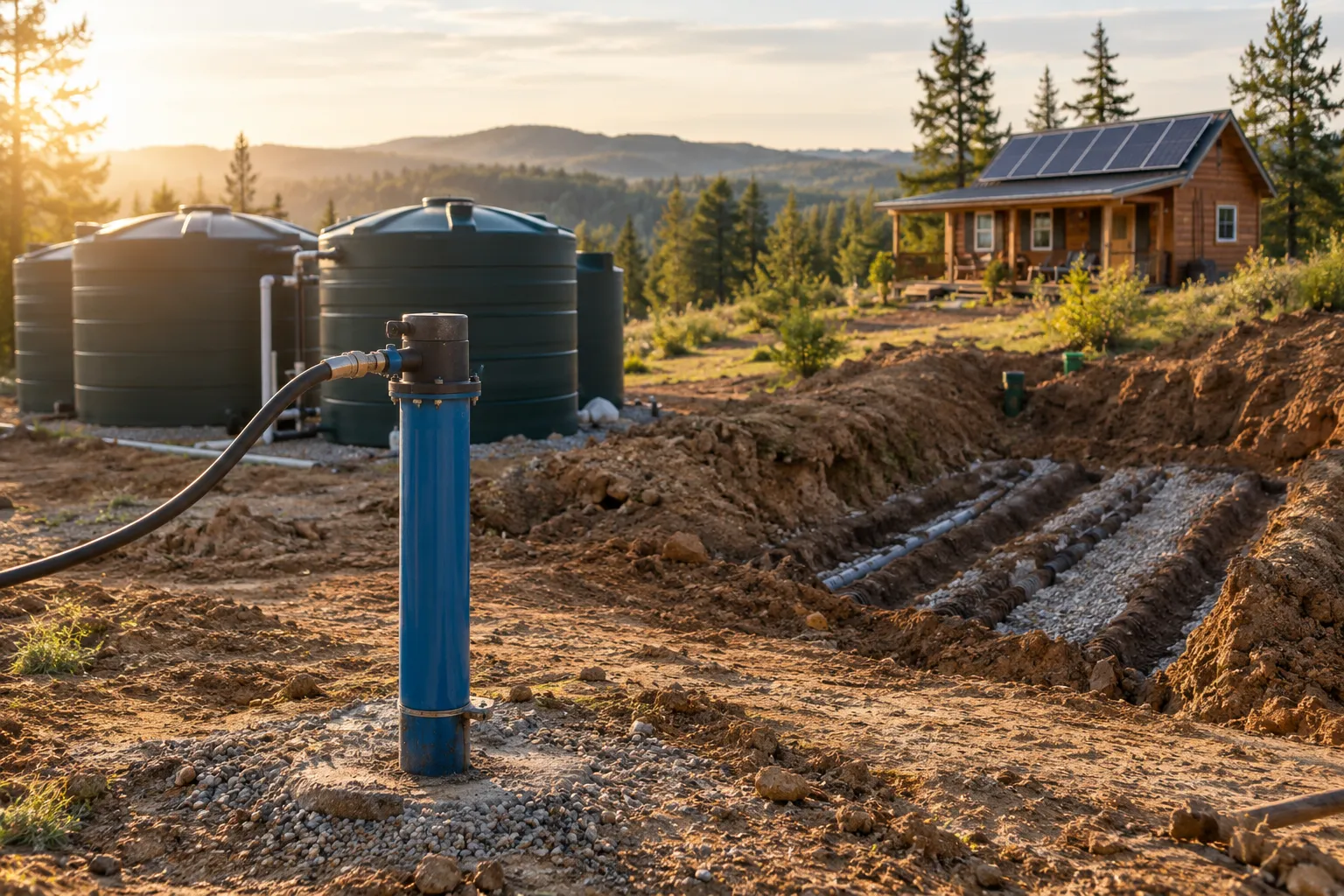
A single drilled well can cost as much as a used car. A septic system engineered for difficult soil can rival a kitchen remodel. These are the kinds of numbers that recently stopped one aspiring off-grid homeowner in their tracks, according to reporting that traced a would-be homesteader’s journey from dreaming about self-sufficiency to confronting the real math behind water, waste, and independence. The story of this aspiring off-grid homeowner’s reality check on water, waste, and the cost of going independent highlights a pattern showing up across the off-grid movement in 2026: the lifestyle promises freedom from utility bills, but the infrastructure required to earn that freedom is anything but cheap.
Key Takeaways
- Complete off-grid water systems, including wells, pumps, and treatment, typically cost $15,000,$30,000 for professional installation as of 2026[1].
- Septic and waste systems range from $500 for basic composting setups to $25,000+ for engineered septic designs in difficult soil[3][4][13].
- Septic tanks need pumping every 3-5 years at $300,$600 per visit, and aerobic units add $300,$600 annually in service contracts[4].
- Full off-grid homesteads often total $80,000,$250,000+ once land, power, water, and waste are combined[11].
- Local permitting rules frequently require conventional septic systems regardless of composting toilet plans[4][5][11].
Why Water Systems Are the First Reality Check
Water is usually the first place where off-grid budgets break down. A drilled well with casing, a submersible pump, a pressure tank, and basic treatment typically runs $8,000 to $25,000 in the United States, according to industry cost guides[1]. For a family of four, a complete professionally installed water package is commonly budgeted between $15,000 and $30,000 as of mid-2026[1].
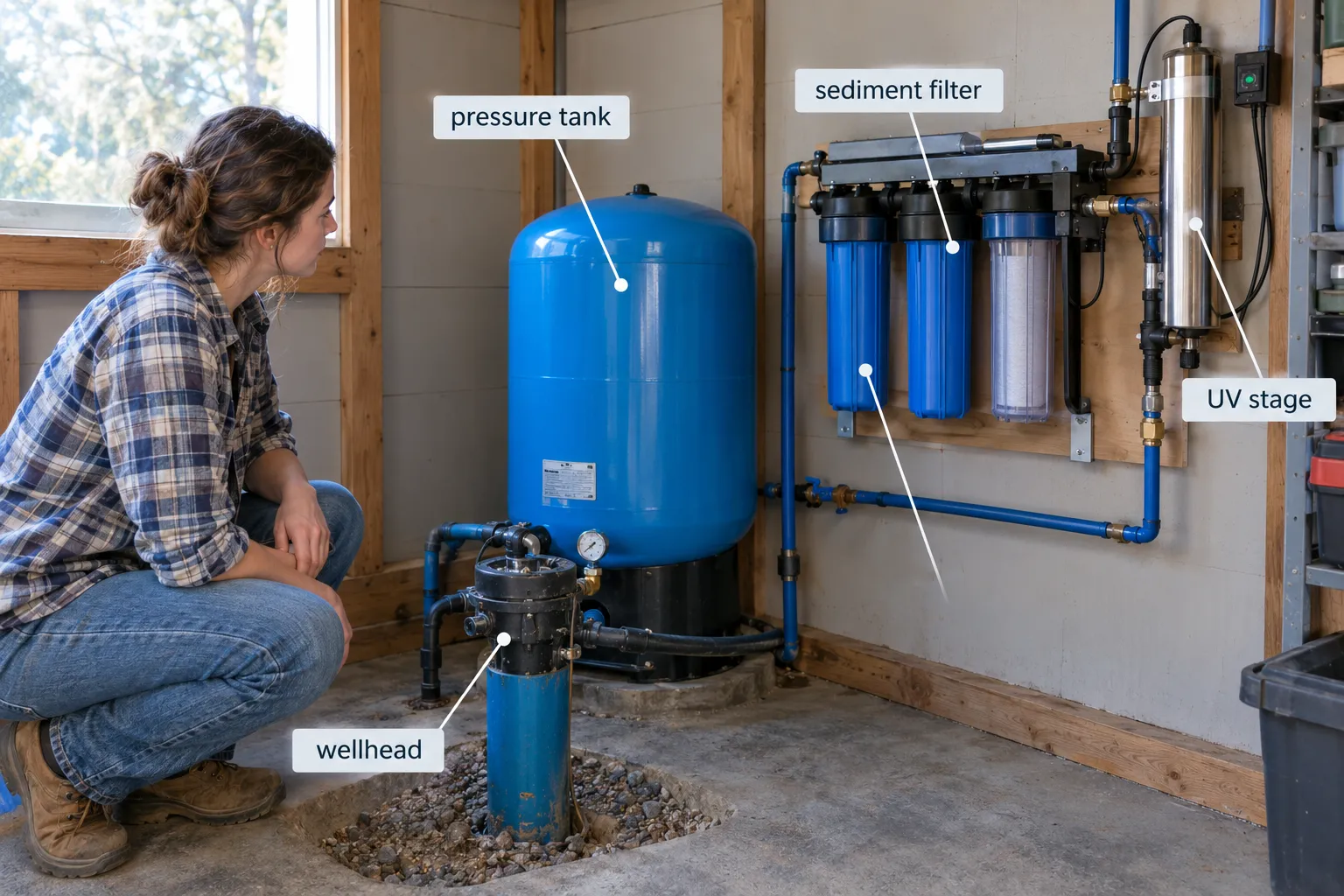
Rainwater catchment looks like a budget-friendly alternative on paper. Basic do-it-yourself systems can start around $1,000 to $5,000[1]. But once tanks, pumps, and multi-stage filtration are added, professionally installed rain-catchment setups commonly land in the $5,000 to $20,000-plus range[1]. Shallow wells under 100 feet deep may run $2,000 to $5,000, while deeper wells of 100 to 400-plus feet often reach $5,000 to $15,000 or more, depending on regional geology[1][8]. Filtration and storage are rarely optional extras. Multi-stage systems with sediment, carbon, and sometimes UV treatment can push total water system costs to $25,000 or beyond for larger, redundant setups[1][15].
This is often the point where an aspiring off-grid homeowner’s reality check on water, waste, and the cost of going independent truly begins: free well water still demands ongoing spending on filters, disinfection, and replacement parts[1][15][14].
The Waste and Septic Reality Check Behind Off-Grid Independence
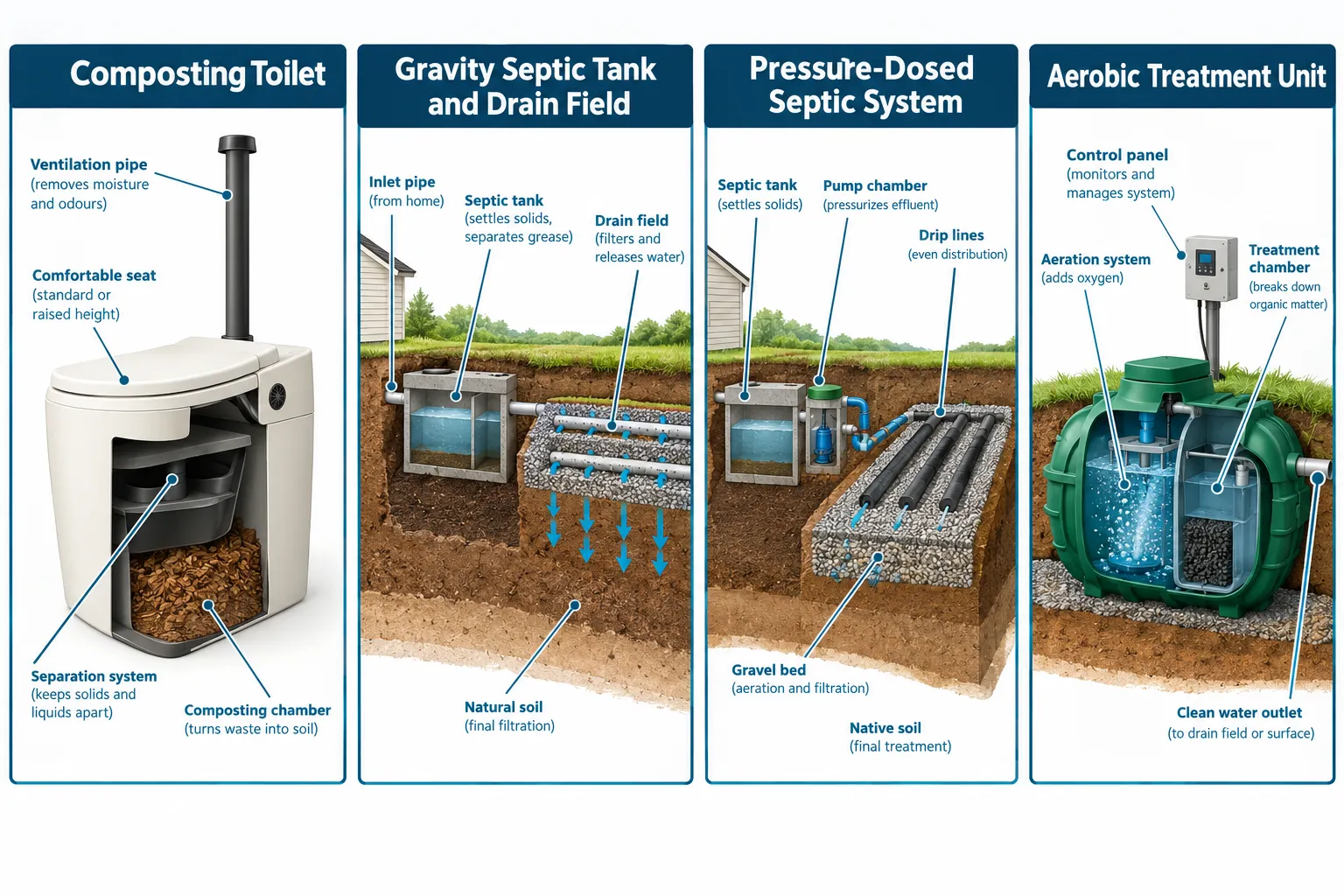
If water is the first surprise, waste management is often the second, larger one. Cost breakdowns for off-grid homesteads in 2026 place sanitation spending anywhere from $500 to $8,000 for simple setups, with composting toilets averaging $800 to $2,500[3]. Conventional septic systems, by contrast, typically cost $5,000 to $15,000 depending on site conditions[3].
More detailed 2026 analyses break this down further:
- Conventional gravity septic systems: $8,000,$15,000 installed, or as low as $3,000,$7,000 in favorable soil[4][13]
- Pressure-dosed systems: $10,000,$18,000[4]
- Mound systems for poor drainage: $15,000,$25,000[4]
- Aerobic treatment units (ATUs): $12,000,$20,000[4]
- Engineered systems in difficult soils: $15,000,$30,000 or more[13]
Maintenance compounds these upfront costs. Septic tanks generally need pumping every three to five years at $300 to $600 per visit, and ATUs require annual service contracts of $300 to $600 on top of pumping[4]. These recurring bills often blindside homeowners who budgeted only for installation[4][9].
Design standards add another layer of surprise. Septic systems are typically sized around 100 to 150 gallons per bedroom per day, meaning a modest three-bedroom off-grid home may need capacity for 300 to 450 gallons daily,far more than minimalist lifestyle assumptions suggest[4][11]. Local code officials generally size systems to these standards rather than individual conservation claims[4][11].
Permitting Rules Complicate the Off-Grid Independence Plan
Composting toilets and greywater systems appeal to many aspiring off-grid homeowners because they cost less and avoid excavation. Approved composting setups run about $1,500 to $4,000, and combined composting-plus-greywater packages fall between $3,000 and $10,000[4][12]. Yet many counties still require a permitted septic system for full-time residences regardless of composting plans[4][11][12]. Some jurisdictions, including several Washington counties, mandate permitted septic systems even for tiny homes, effectively blocking composting-only solutions[5].
What Full Independence Actually Costs
Once land, power, water, and waste are combined, total project costs scale dramatically. A 2026 beginner’s guide estimates a bare-bones cabin with basic solar, rainwater, and a composting toilet at $15,000,$40,000 plus land; a comfortable tiny home with a well and septic at $40,000,$90,000 plus land; and a family-size off-grid homestead at $80,000,$250,000-plus plus land[11]. Even after construction, annual operating costs, fuel, filters, maintenance, and property taxes, typically run $5,000 to $20,000 per year[9]. Eliminated utility bills (roughly $100,$200 monthly for electricity, $30,$70 for water, and $30,$50 for sewer) rarely offset these capital and recurring costs[2][9][14].
Prediction: Given current 2026 cost clusters and tightening environmental regulations on water quality and wastewater treatment, fully compliant off-grid systems are likely to grow more expensive, not cheaper, through 2028-2030 in most jurisdictions.
Conclusion
The experience of this aspiring off-grid homeowner’s reality check on water, waste, and the cost of going independent underscores a broader truth: self-sufficiency is an infrastructure project, not just a lifestyle choice. Before breaking ground, prospective off-gridders should research local septic and water permitting rules, get multiple well and septic quotes based on actual soil and site conditions, and budget for recurring maintenance, not just installation. Treating water and waste systems as long-term capital commitments, rather than one-time purchases, is the clearest path to a sustainable, surprise-free transition off the grid.
References
[1] Off Grid Water System – https://www.septictankhub.com/blog/off-grid-water-system/ [2] A Beginners Guide To Living Off Grid – https://wildhearthlife.com/blog/a-beginners-guide-to-living-off-grid/ [3] Real Costs Of Living Off Grid What To Expect – https://gridfreelife.com/real-costs-of-living-off-grid-what-to-expect/ [4] Off Grid Septic System – https://septicmind.com/off-grid-septic-system [5] Off Grid Tiny Homes – https://readypaths.com/off-grid-tiny-homes/ [8] Off Grid Homestead Water Electricity Solutions – https://thehomesteadmovement.com/off-grid-homestead-water-electricity-solutions/ [9] Blog How Much Does It Cost To Live Off Grid – https://www.thelandgeek.com/blog-how-much-does-it-cost-to-live-off-grid/ [11] Off Grid Homes – https://www.ankersolix.com/blogs/home-power-backup/off-grid-homes [12] A Beginners Guide To Living Off Grid – https://wildhearthlife.com/blog/a-beginners-guide-to-living-off-grid/ [13] Off Grid Septic System – https://septicmind.com/off-grid-septic-system [14] How Much Does It Cost To Live Off Grid – https://www.ankersolix.com/blogs/home-power-backup/how-much-does-it-cost-to-live-off-grid [15] Off Grid Water System – https://www.septictankhub.com/blog/off-grid-water-system/


