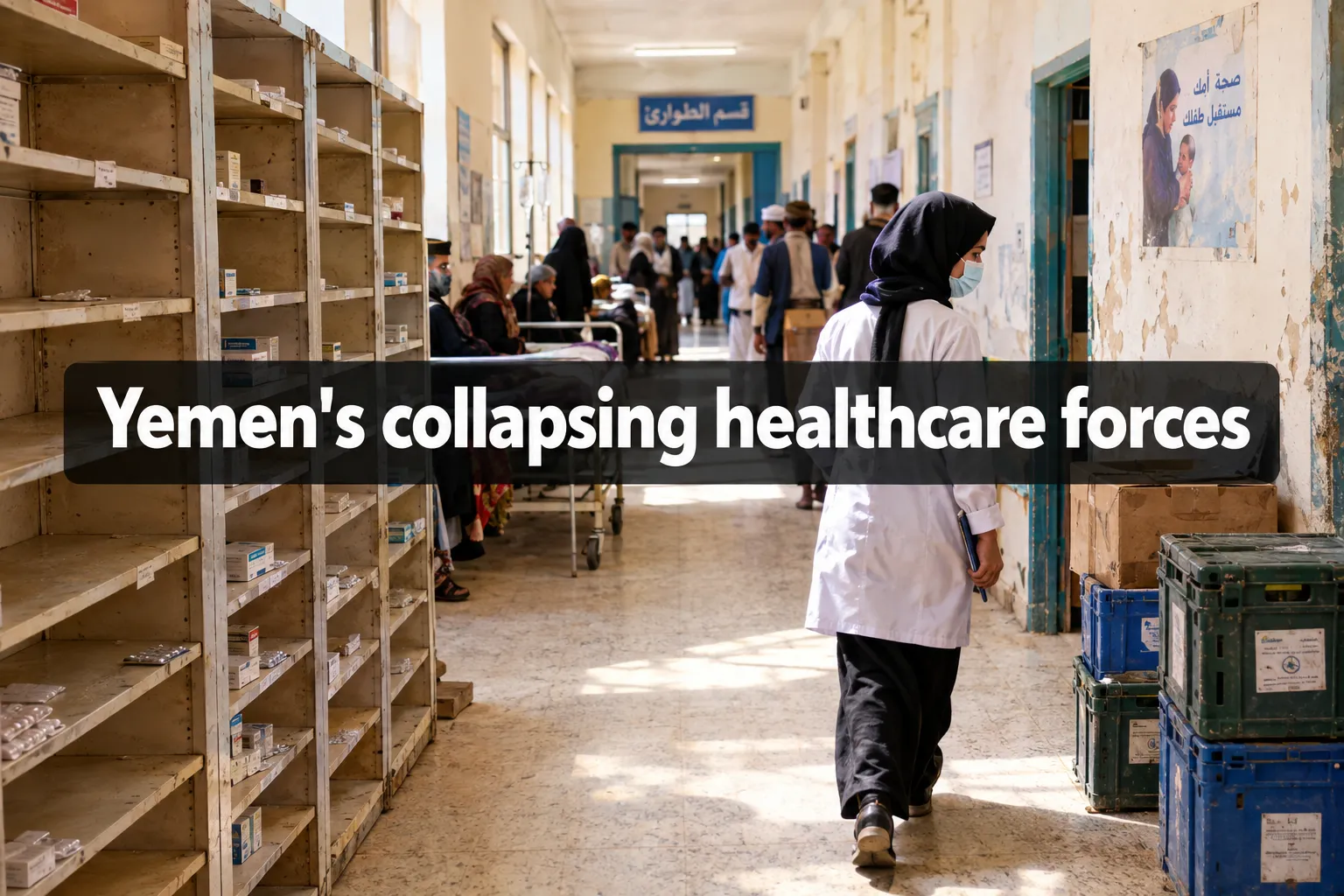
More than 20 million people in Yemen now live without reliable access to a doctor, a hospital bed, or basic medicine. That number, confirmed by World Health Organization data in mid-2026, is not a distant statistic, it is the reason kitchens have become pharmacies and market stalls have become clinics. Yemen’s collapsing healthcare forces the sick to seek alternative medicines because, for millions, there is simply nothing else left to try [1][4][7].
What began as a wartime shortage has hardened into a permanent condition. Hospitals are closing faster than they can be repaired, funding has dried up, and fresh fighting is adding new casualties to an already overwhelmed system. Into that gap has stepped a quiet, growing economy of herbal sellers, honey vendors, and folk healers.
Key Takeaways
- Over 20 million Yemenis lack access to basic medical care as of August 2026, according to WHO figures reported by Al Jazeera [1][4][7].
- At least half of Yemen’s health facilities are non-functional, weakening the country’s ability to fight outbreaks like cholera and diphtheria [1][4][7].
- Early September 2026 fighting in Taiz, Marib, Lahj, and Al Hodeidah damaged at least seven health facilities and pushed trauma caseloads higher [2].
- Only about 60 percent of health facilities were fully operational as of mid-September 2026, per WHO and UN reporting [2][5].
- Between January 2025 and April 2026, 453 health facilities across 22 governorates closed at least partly due to funding cuts [10].
Why Yemen’s Collapsing Healthcare Forces the Sick to Seek Alternative Medicines
The scale of Yemen’s health crisis is difficult to overstate. Years of conflict, combined with international funding shortfalls, have hollowed out a system that was already fragile before the war began. Half of the country’s health facilities are entirely non-functional, according to WHO data cited by Al Jazeera, leaving huge swaths of the population without a functioning hospital or clinic nearby [1][4][7].
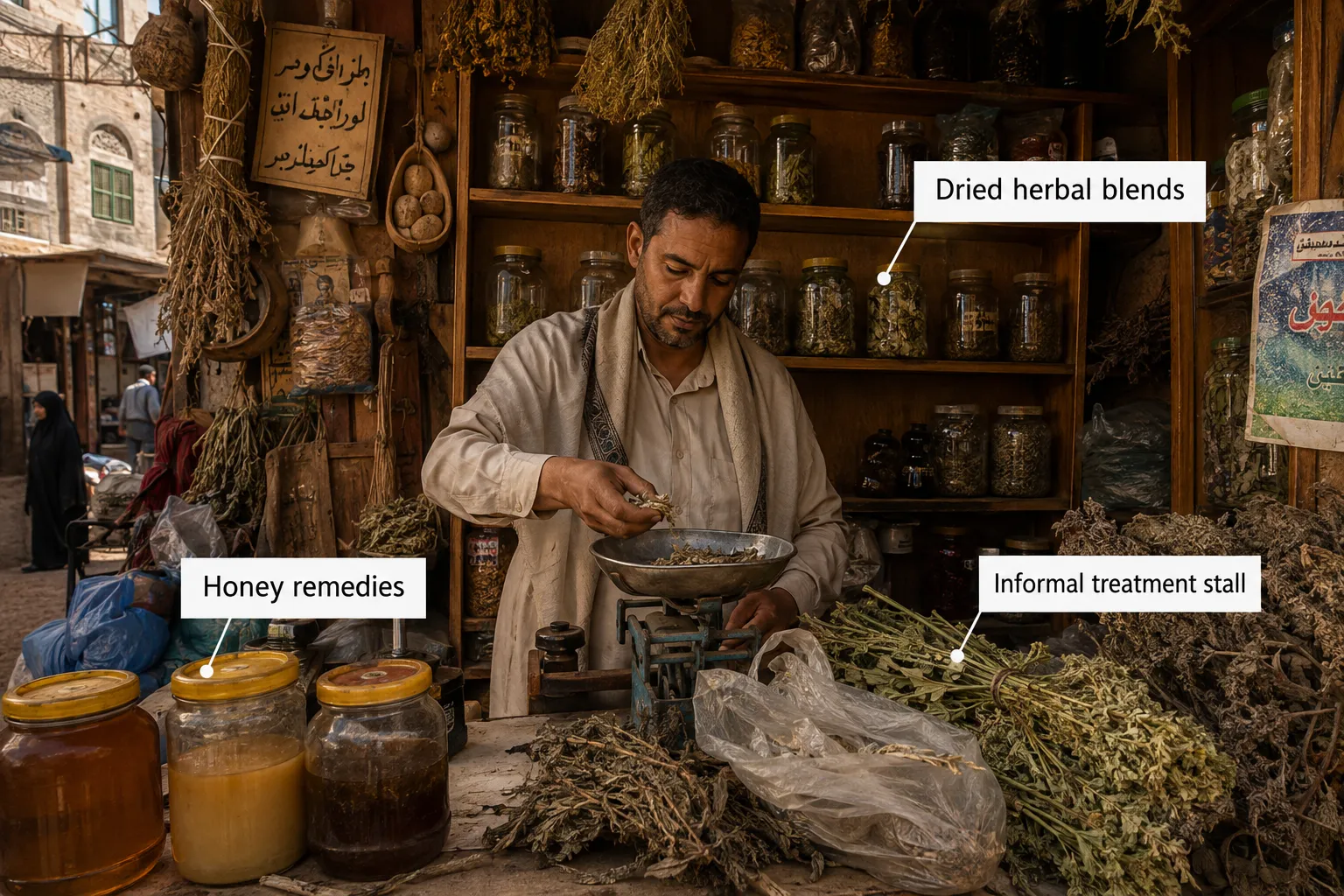
This collapse has a direct, measurable consequence: outbreaks that would normally be contained spread further and faster. Cholera and diphtheria, both preventable and treatable under normal conditions, continue to resurface because there are too few working facilities to respond quickly [1][4][7]. When formal medicine fails to show up, people look elsewhere.
That “elsewhere” increasingly means informal shops and stalls selling herbal remedies, honey-based treatments, and other traditional cures. Sellers report demand for their products covering an enormous range of ailments, from ordinary headaches to chronic diseases and even cancer [1][4][15]. These are not boutique wellness choices. For many Yemeni families, they are the only treatment within reach, priced far below what remains of the formal medical system and available without the wait times, referrals, or transportation that a functioning hospital would require.
Doctors and aid organizations have repeatedly warned that this shift carries real risk. Herbal products are not regulated, dosages are inconsistent, and serious conditions such as cancer or diphtheria cannot be managed with honey or dried herbs alone. Yet the warning changes little when the alternative is no treatment at all.
Fighting, Funding Cuts, and Wounded Priorities Deepen the Crisis
Pull quote: “Nearly half of Yemen’s health system is either partially functioning or completely out of service.”
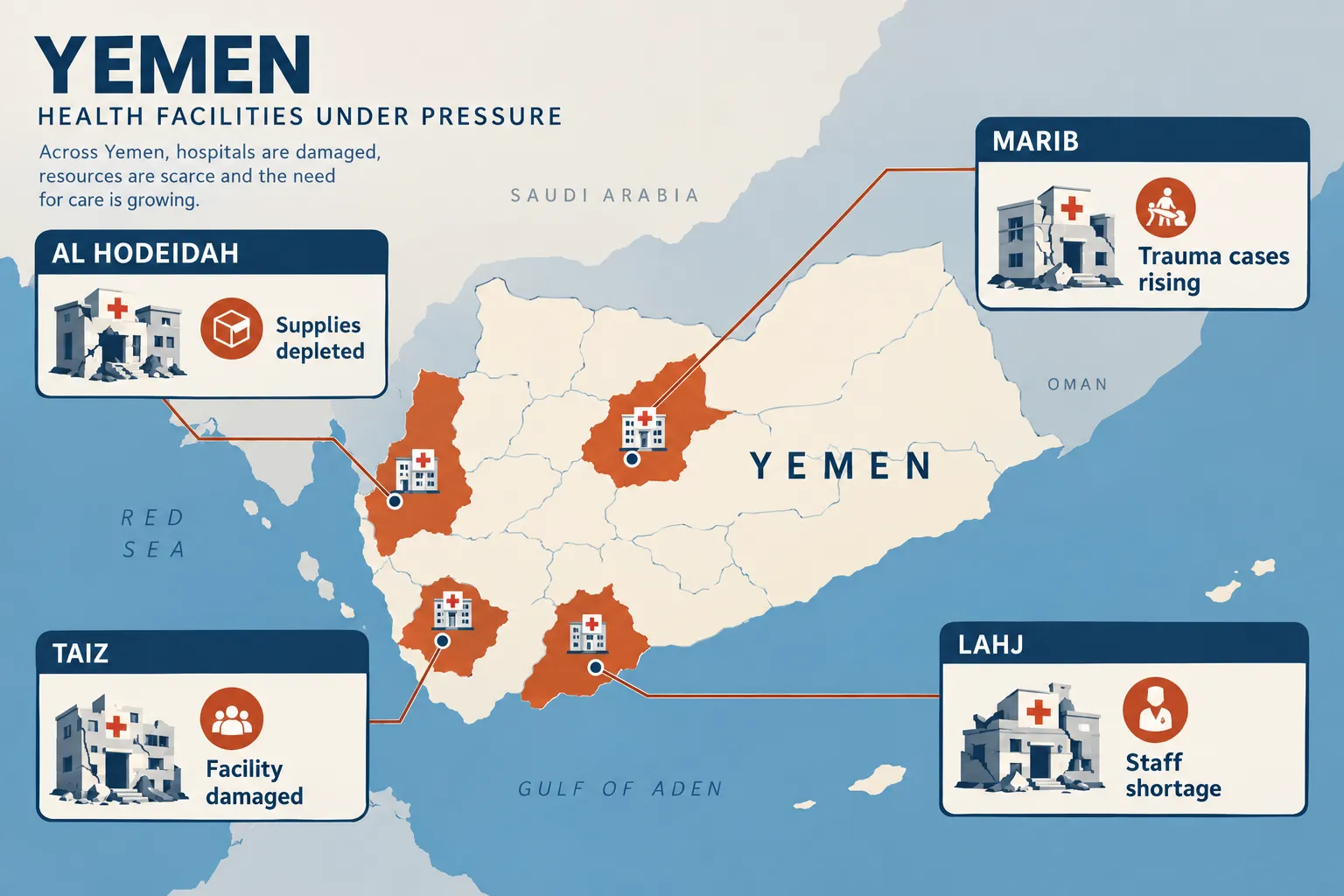
The situation has worsened sharply in recent months. Between September 1 and September 15, 2026, intensified fighting in Taiz, Marib, Lahj, and Al Hodeidah damaged at least seven health facilities and sent trauma caseloads soaring in the hospitals still standing [2]. Each new front line adds pressure to a system that had almost no spare capacity to begin with.
By mid-September 2026, WHO and United Nations sources reported that only around 60 percent of Yemen’s health facilities were fully operational, meaning close to half the system was either limping along on partial capacity or shut down entirely [2][5]. Hospital staff describe overflowing wards, shortages of basic supplies, and beds that turn over faster than they can be properly cleaned and restocked.
In Sanaa, the crisis has taken an even darker turn. Multiple reports from September 2026 indicate that public hospitals under Houthi control have restricted admission of critically ill civilians in order to reserve intensive care units and emergency wards for wounded fighters [3][8]. Major facilities named in these reports include Al-Thawra, Al-Jumhuri, Police, Military, Al-Quds, 48th, and Kuwait hospitals, institutions that once served the general public but have reportedly been ordered to prioritize combat casualties [3][8].
The practical effect is that ordinary civilians with heart conditions, cancer, kidney failure, or severe injuries from accidents unrelated to the conflict find themselves turned away or placed far down the queue. For many, the next stop is not another hospital, it is a folk healer or an herbal seller, because there is nowhere else left to go [3][8].
Underneath both the fighting and the wartime rationing sits a slower, quieter collapse: funding. Between January 2025 and April 2026, 453 health facilities across 22 governorates closed, at least in part, because the money to keep them running disappeared. That total includes 76 hospitals, 177 primary health centers, 200 primary health units, and 18 mobile clinics [10]. Each closure removes a piece of the safety net that rural and low-income communities depended on most.
The Compounding Effect
These three forces, active conflict damage, hospital triage decisions favoring fighters, and mass facility closures from lost funding, do not operate in isolation. They stack on top of each other, and the result is a system where formal medicine becomes harder to reach every month.
| Pressure on the System | Reported Impact |
|---|---|
| Conflict damage (Sept 2026) | At least 7 facilities damaged in Taiz, Marib, Lahj, Al Hodeidah [2] |
| Facility operability | Only ~60% fully functional as of mid-Sept 2026 [2][5] |
| Triage in Sanaa | Civilian ICU access restricted at major hospitals [3][8] |
| Funding-driven closures | 453 facilities closed, Jan 2025, Apr 2026 [10] |
Conclusion: What Comes Next for Yemen’s Health System
Yemen’s collapsing healthcare forces the sick to seek alternative medicines not by choice, but by necessity. When half the hospitals are non-functional, when fighters are prioritized over civilians in the wards that remain, and when hundreds of clinics have shut their doors for lack of money, herbal sellers and folk healers fill a vacuum that the formal system can no longer cover.
The path forward requires action on several fronts at once: renewed international funding to reopen closed facilities, protections to keep hospitals functioning during active fighting, and equitable admission policies that do not sideline civilian patients. Aid organizations and health authorities also need to expand outreach so that families turning to herbal remedies at least understand the risks involved, particularly for serious conditions that require regulated treatment.
Until those steps happen, the informal economy of honey, herbs, and traditional cures will keep growing, not as a cultural preference, but as the last available option for a population that has run out of alternatives.
References
[1] Yemens Collapsing Healthcare Forces The Sick To Seek Alternative Medicines – https://www.aljazeera.com/features/2026/8/8/yemens-collapsing-healthcare-forces-the-sick-to-seek-alternative-medicines [2] Yemen – https://www.acaps.org/en/countries/yemen [3] Poraneni Khusiti Perevantazhili Likarni Sani Asharq Al Awsat – https://ua.news/en/world/poraneni-khusiti-perevantazhili-likarni-sani-asharq-al-awsat [4] U Emeni Patsiienti Zvertaiutsia Do Trav Cherez Zanepad Sistemi Okhoroni Zdorovia – https://ua.news/en/world/u-emeni-patsiienti-zvertaiutsia-do-trav-cherez-zanepad-sistemi-okhoroni-zdorovia [5] news.un – https://news.un.org/en/story/2026/09/1168314 [6] Yemens Crumbling Health System Leaves Patients Without Treatment Options – https://www.aljazeera.com/features/2026/2/6/yemens-crumbling-health-system-leaves-patients-without-treatment-options [7] Brain Drain Leaves Yemens Health Sector In Tatters And Millions Helpless – https://www.aljazeera.com/features/2026/7/4/brain-drain-leaves-yemens-health-sector-in-tatters-and-millions-helpless [8] 5317336 Houthi Casualties Strain Sanaa Hospitals’ Capacity – https://english.aawsat.com/arab-world/5317336-houthi-casualties-strain-sanaa-hospitals%E2%80%99-capacity [9] Fighting Yemen Pushes Health Care Brink – https://www.doctorswithoutborders.org/latest/fighting-yemen-pushes-health-care-brink [10] In Yemen 453 Health Facilities Across 22 Governorates Closed Between January 2025 – https://www.theaidreport.us/in-yemen-453-health-facilities-across-22-governorates-closed-between-january-2025


