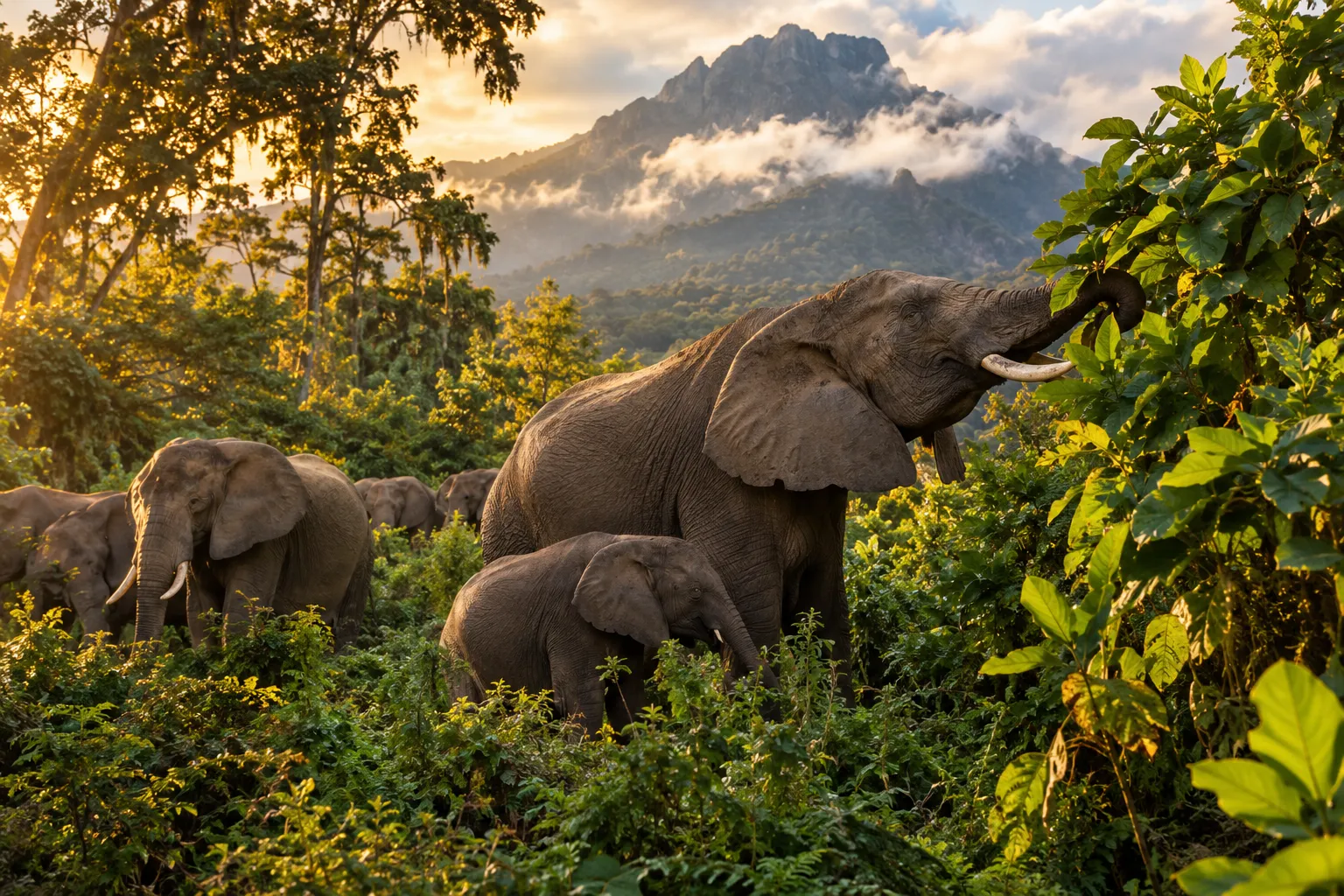
Eight people who have watched the same elephant herds for more than two decades each just handed scientists something rare: a multi-year, ground-level account of wild animals apparently practicing medicine on themselves. A new study out of Mount Elgon National Park in western Kenya reports that elephants treat themselves with medicinal plants, witnesses say, drawing on decades of firsthand observation from local Sabaot community members who know these forests better than almost anyone else alive today [4][6].
The findings, published in the journal Scientific Reports, describe elephants seeking out roughly three dozen plant species with a level of purpose that researchers say goes beyond ordinary grazing [9][12]. This is not a fringe theory. It is backed by structured, long-term interviews and fits a growing body of evidence that large mammals may self-medicate far more often than science has previously documented.
Key Takeaways
- Researchers documented elephants in Mount Elgon National Park using about 35 plant species, of which 25 are recognized locally as medicinal [1][4][8][9].
- Eight species show the strongest evidence of being consumed specifically when elephants appear sick, weak, or in digestive distress [1][4][8][9].
- Findings come from interviews with eight Sabaot community members, each with over 20 years of elephant-watching experience, conducted between October 2023 and September 2024 [4][6][9].
- Witnesses describe mothers chewing roots and leaves into a mash and mixing it with breast milk before feeding calves, a behavior some compared to informal immunization [2][3][5][6][13].
- Scientists caution the evidence supports “putative self-medication,” not proven pharmacological treatment, since no controlled tests yet confirm the mixtures cure disease [4][9][12].
How Elephants Treat Themselves With Medicinal Plants, Witnesses Say
The research team, working with Brown University, the Mount Elgon Foundation, and the National Museums of Kenya, built its case on something simple but powerful: sustained human observation [4][6][9]. Postdoctoral researcher Elodie Freymann is named as one of the study’s lead authors, and scientists from the Bernard Nocht Institute for Tropical Medicine in Hamburg, including Dr. Fabien Schultz, also contributed to documenting the plant use [2][5][12].
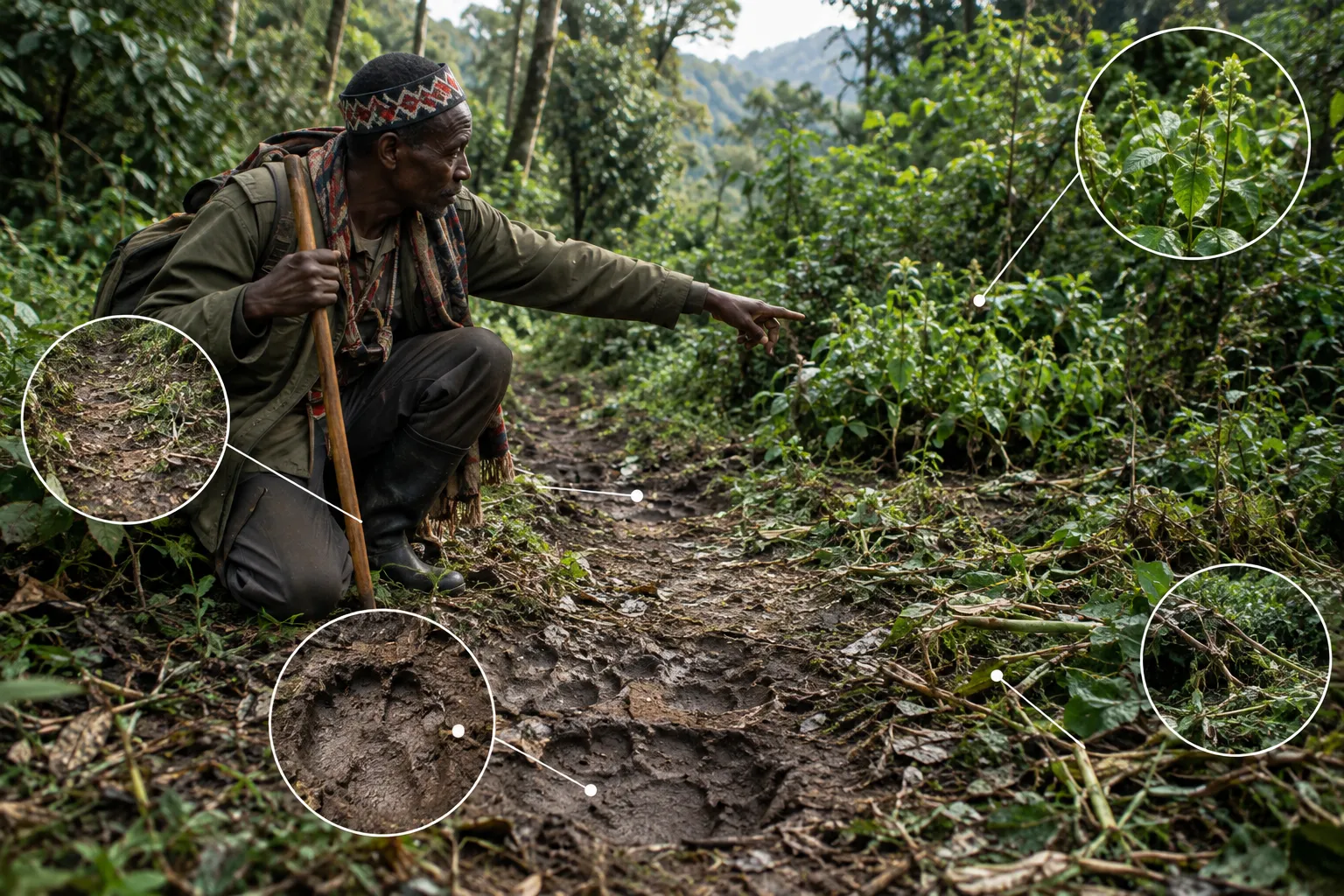
What makes the pattern compelling is the elephants’ apparent selectiveness. Witnesses describe animals walking past abundant, easy-to-reach vegetation to reach specific plant patches, then eating only the targeted species [4][6][7]. Sabaot observers link these visits to elephants showing signs of illness, including loss of appetite, trouble passing waste, and general weakness [4][6][9]. When healthy elephants ignore certain plants that sick elephants deliberately travel toward, random foraging becomes a harder explanation to accept.
Local experts consistently described the same plants as remedies for digestive trouble and poor appetite, echoing how Sabaot communities themselves use these species in traditional medicine [4][6][8]. That overlap between human and elephant plant choices is one of the study’s more striking threads.
The Evidence That Elephants Treat Themselves With Medicinal Plants, Witnesses Say, In Calf Care
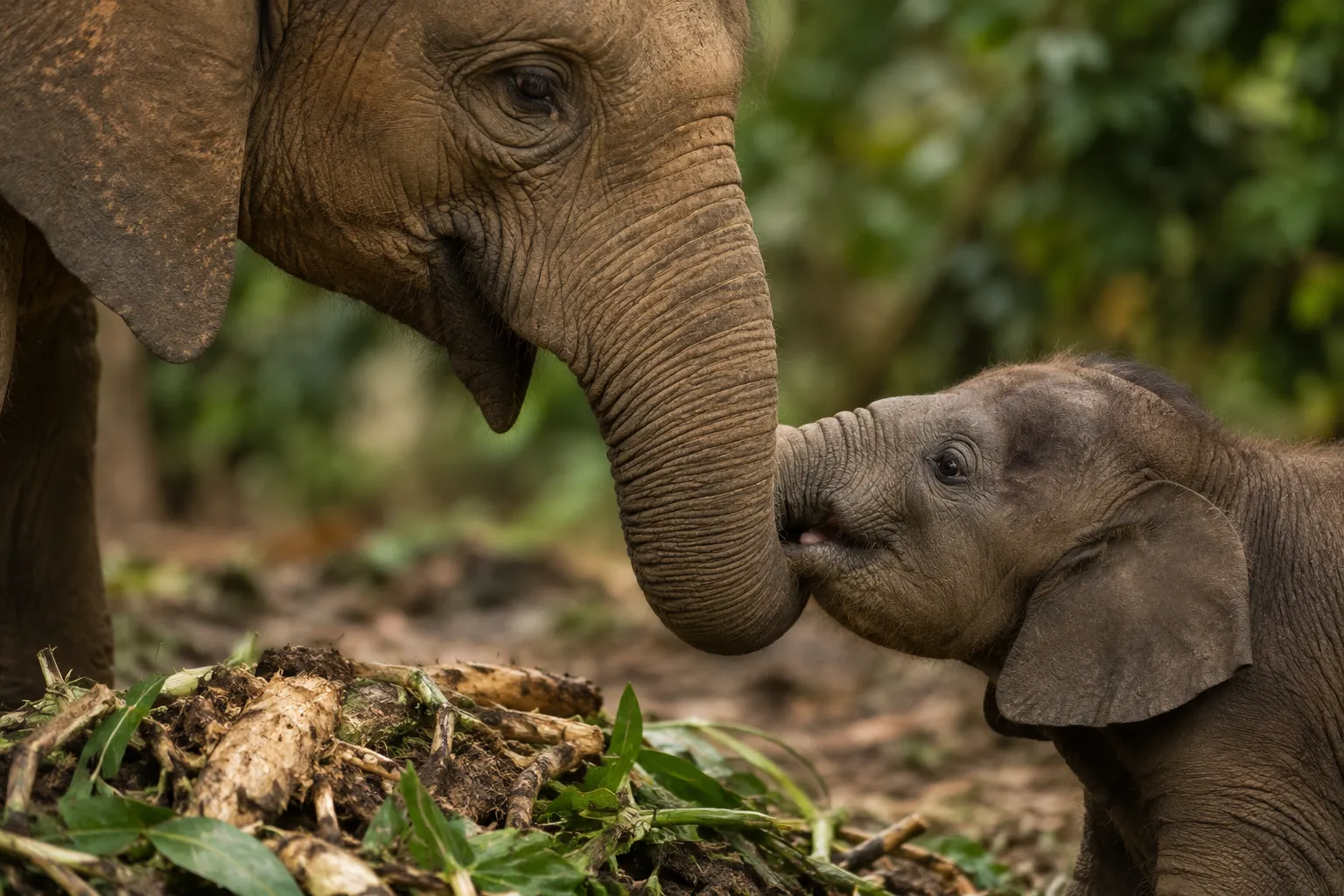
Perhaps the most vivid accounts involve mothers and calves. Multiple reports describe female elephants chewing carefully selected roots and leaves into a mash, then blending that plant material with breast milk before feeding it to their young [2][3][5][6][13]. Observers describe the mixtures as consistent and “precisely measured,” using the same plant combinations repeatedly rather than whatever happens to be nearby [2][3][5].
That level of consistency matters. Casual feeding tends to look scattered and opportunistic. What witnesses describe instead sounds closer to a routine, passed down and repeated with the same ingredients each time.
Researchers are careful, however, to frame this as putative self-medication rather than confirmed treatment [4][9][12]. No controlled experiment has yet shown that these plant mixtures measurably reduce illness or speed recovery in elephants. The behavioral pattern is strong; the biochemical proof is still missing.
Wider Patterns Behind the Claim That Elephants Treat Themselves With Medicinal Plants
The Mount Elgon findings do not stand alone. A separate study published in Ecological Solutions and Evidence found that African forest elephants raid farms for papaya and banana plants more often when carrying gut parasites, hinting at targeted feeding for relief [10]. Earlier research also documented pregnant elephants in Kenya eating specific tree leaves believed to induce labor, and free-ranging Asian elephants in Thailand selecting forest herbs for stomach upset, a practice local communities later adopted themselves [10][11].
This pattern extends beyond elephants entirely. Wild chimpanzees have been observed applying plant-based first aid to wounds, and a wounded orangutan was documented rubbing a chewed plant onto an injury like a salve [1][7]. Elephants now join an expanding list of large mammals suspected of practicing some form of pharmacological foraging.
Key comparisons worth noting:
- Mount Elgon elephants: roughly 35 plant species used, 25 locally classified as medicinal, 8 tied to sickness behavior [1][4][8][9]
- Forest elephants elsewhere: increased papaya and banana consumption linked to parasite load [10]
- Asian elephants in Thailand: forest herb selection for stomach upset, later adopted by mahouts [11]
- Great apes: chimpanzees and orangutans using plants for wound care [1][7]
What Comes Next
Researchers expect follow-up work to move beyond interviews toward direct measurement. That likely means GPS tracking of elephant movement, camera traps positioned at known plant patches, and lab analysis of feces or blood to connect plant consumption with actual health outcomes [4][9][12]. Chemical analysis of the identified species could also open doors to veterinary applications or even human drug discovery, since many of these plants already carry a reputation in traditional medicine [4][9].
None of that work has happened yet. What exists today is a detailed, credible behavioral record built from people who have spent their lives watching these animals up close.
Conclusion
The claim that elephants treat themselves with medicinal plants, witnesses say, rests on solid ground: decades of firsthand observation, a consistent list of targeted plant species, and behavior patterns that echo traditional human medicine in the same region. It is not yet proven science in the laboratory sense, but it is far more than speculation. For readers following animal cognition and conservation science, the practical next step is simple: watch for the peer-reviewed follow-up studies on plant chemistry and health outcomes, since those results will determine whether “putative” self-medication becomes confirmed self-medication. Until then, this Mount Elgon research stands as one of the strongest documented cases yet of a wild mammal appearing to practice its own form of medicine.
References
[1] Cv1j4yr6j2p0o – https://www.bbc.co.uk/news/articles/cv1j4yr6j2p0o [2] Elephants Mix Own Medicines Kenya – https://www.gbnews.com/science/elephants-mix-own-medicines-kenya [3] 6ab4c2e2f715790e48f9194e – https://www.crbcnews.com/articles/6ab4c2e2f715790e48f9194e [4] Mount Elgon Elephants May Be Using Medicinal Plants To Treat Themselves When Sick Study Finds – https://eastleighvoice.co.ke/news/404310/mount-elgon-elephants-may-be-using-medicinal-plants-to-treat-themselves-when-sick-study-finds [5] Elephants Forage Mix Own Medicines 050000136 – https://www.yahoo.com/news/science/articles/elephants-forage-mix-own-medicines-050000136.html [6] Mount Elgon Elephants May Be Using Medicinal Plants To Treat Themselves When Sick Study Finds – https://eastleighvoice.co.ke/headlines/404310/mount-elgon-elephants-may-be-using-medicinal-plants-to-treat-themselves-when-sick-study-finds [7] Elephants Treat Themselves With Medicinal Plants Witnesses Say – https://ground.news/article/elephants-treat-themselves-with-medicinal-plants-witnesses-say [8] Study Finds African Elephants Use Medicinal Plants To Treat Illness – https://swedenherald.com/article/study-finds-african-elephants-use-medicinal-plants-to-treat-illness [9] 2026 09 24 Mount Elgon Elephants May Be Using Plants As Medicine – https://www.the-star.co.ke/health/2026-09-24-mount-elgon-elephants-may-be-using-plants-as-medicine [10] When Some Elephants Raid Farms They Might Not Be After A Snack They Could Be Looking For Medicinal Plants 180987986 – https://www.smithsonianmag.com/science-nature/when-some-elephants-raid-farms-they-might-not-be-after-a-snack-they-could-be-looking-for-medicinal-plants-180987986/


