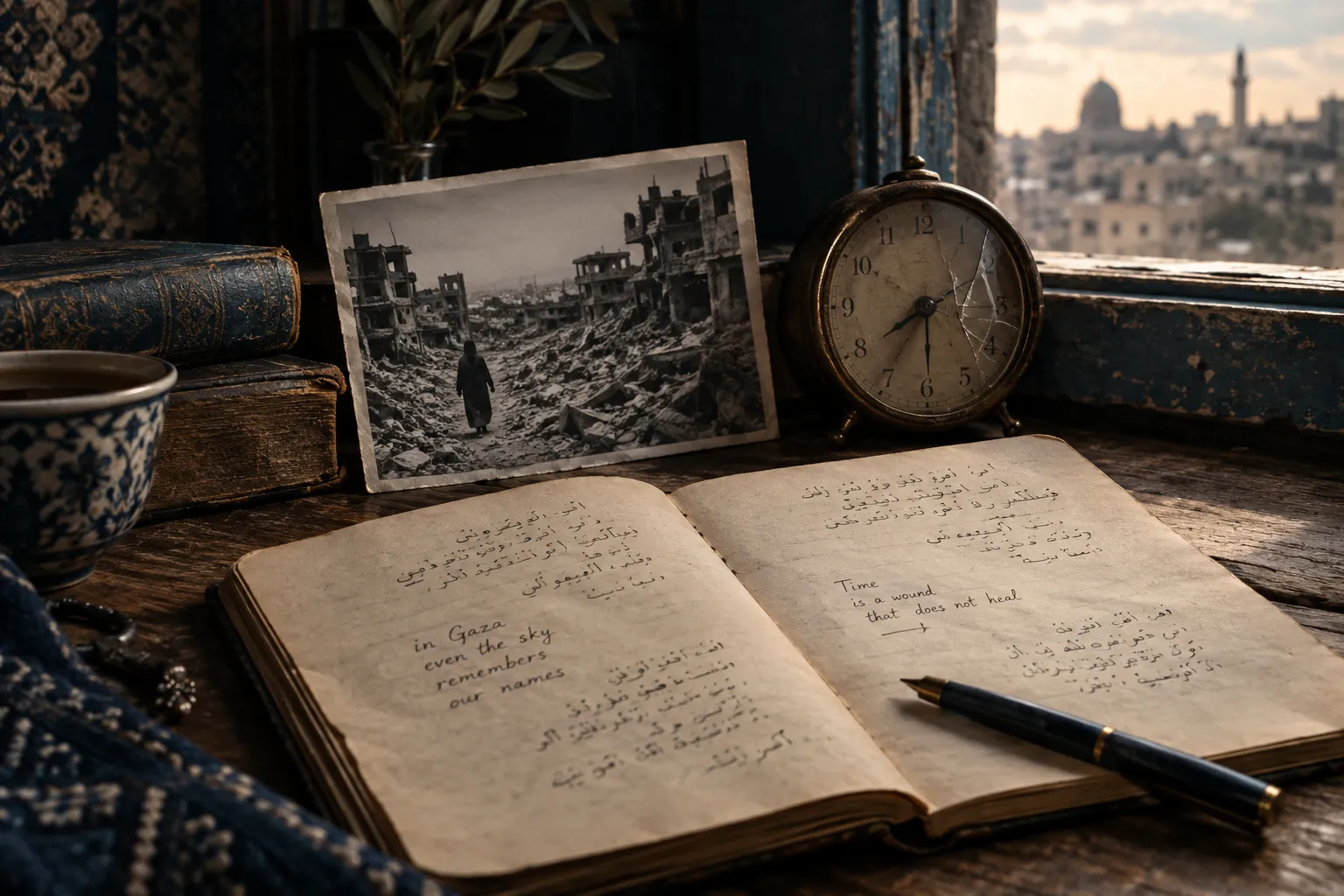
A poet who has spent years writing through loss just released a book that critics say may be “among the first of its kind.” Exhibit G, published by Milkweed Editions, arrived in September 2026 as a multimedia collection built from poems, essays, photographs, and drawings, and it has quickly become the clearest expression yet of Fady Joudah’s Meditation on Language and Time Under Genocide, according to coverage from Literary Hub [1] and a detailed Chinese-language critical overview published the same week [4].
Key Takeaways
- Exhibit G is a multimedia poetry collection released in September 2026 that documents Palestinian life under genocide, combining verse with photographs, drawings, and essays [1][7].
- The book extends Fady Joudah’s Meditation on Language and Time Under Genocide by treating language and time as basic structures of life that genocide destroys [1][2].
- It follows a 2024 collection described as “sinking into silence,” positioning Exhibit G as what language looks like after speech has been refused [1][4].
- Critics link the collection to Joudah’s earlier work, including lines questioning whether the “language of his killers” has become part of Palestinian life [1].
- Joudah’s recent honors, including a 2025 Lenore Marshall Poetry Prize, reinforce the critical weight behind this ongoing meditation [10].
What Exhibit G Reveals About Fady Joudah’s Meditation on Language and Time Under Genocide
Exhibit G is described by Milkweed’s own catalog as a work that insists individual and collective Palestinian experience cannot be separated, even as the reality of genocide resists being fully rendered on the page [7]. The collection gathers what one September 2026 feature calls “the many hands, faces, and odes of a people feeding, burying, and naming itself,” stretching its historical frame from the 1948 Nakba to the present ongoing violence [1].
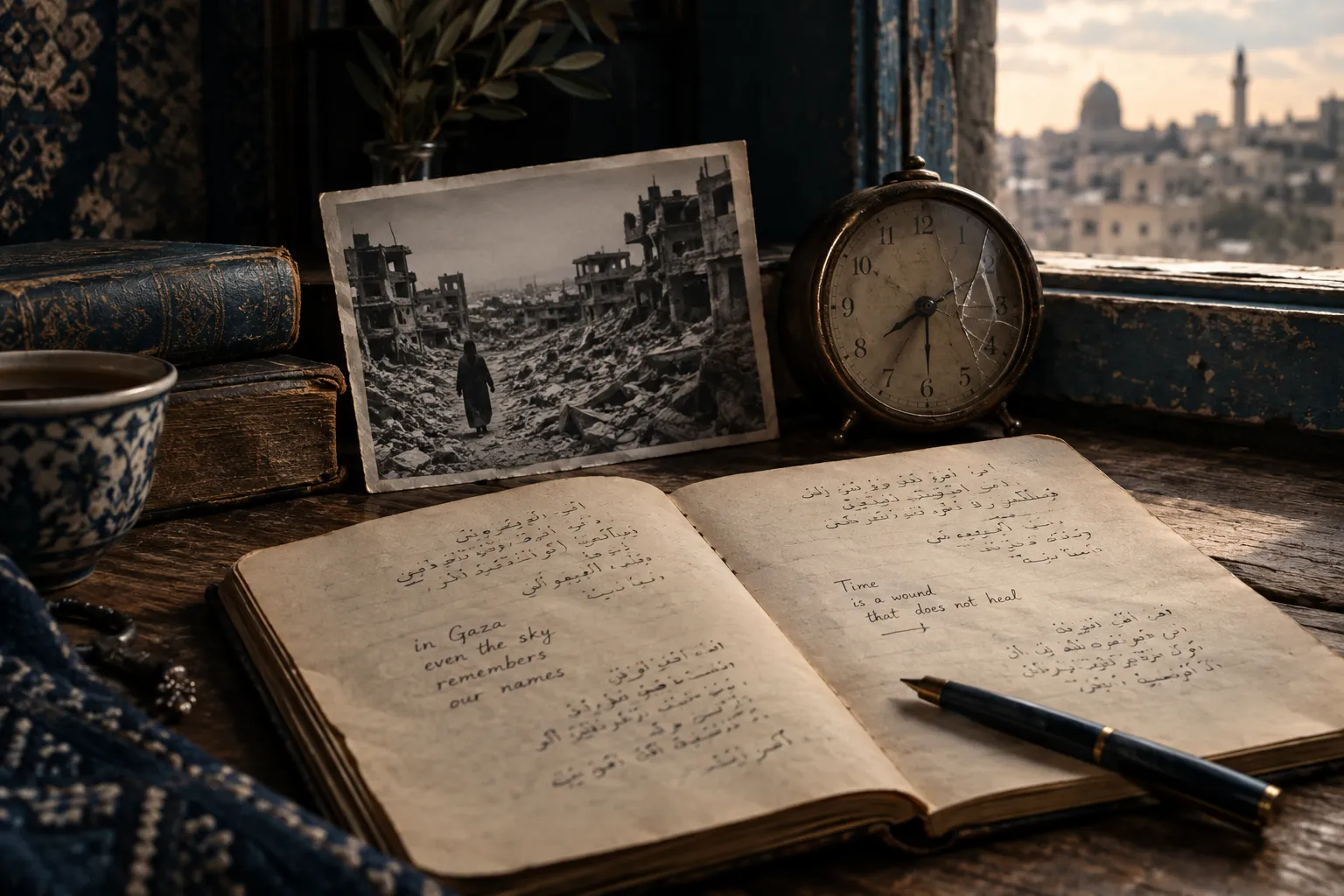
What sets this book apart, according to Literary Hub, is its refusal to separate the poem from the image. Photographs from Gaza sit beside verse and drawing, forcing readers to hold documentary fact and lyric grief at once [1][7]. This structure is central to understanding Fady Joudah’s Meditation on Language and Time Under Genocide, because it treats the archive itself as a form of testimony rather than illustration.
Why Language Breaks Down Under Genocide
A recurring argument across the September 2026 coverage is that Exhibit G emerges directly from silence. The collection follows a 2024 book that, in the words of one feature, “sank into silence and its remnants,” meaning Exhibit G represents language returning only after being refused entirely [1][4]. Fragmented syntax, ellipses, and interrupted lines are not stylistic flourishes; they mark where speech failed.

This concern is not new to Joudah’s writing. Gulf Coast’s earlier critical analysis of his work during the late 2023 bombardment of Gaza framed his poetry as documenting “the loss of language during an ongoing genocide,” arguing that his lines attempt to name the very failure of language itself [10]. Literary Hub’s author page similarly highlights questions that recur across his poems, including whether the language of dominant power has already infiltrated Palestinian speech [1].
Key elements of this linguistic breakdown include:
- Sentences that stop mid-thought rather than resolve
- Photographs standing in where words cannot reach
- Multiple voices layered together instead of one clear narrator
- Silence treated as a structural feature, not an absence
Time, Waiting, and the Unlivable Present
Language is only half of the meditation. The Scottish Left Review’s 2024 essay on Joudah’s poetry describes an “anti-colonial” reading of time, arguing his work exposes a present tense that becomes “unlivable” under occupation, where waiting itself becomes a condition of colonial life [8]. Exhibit G expands this idea, according to the 2026 Chinese-language overview, which frames the book as confronting “the ceaseless demands of stable time, lineage, and language, now destroyed” by war [4].
“From time to time, language dies. It is dying now. Who is alive to speak it?”
This line, cited in earlier profiles of Joudah’s work, anticipates the exact framing critics now apply to Exhibit G in 2026: genocide does not simply kill people, it kills the shared sense of time and speech that a community depends on [1][10].
Critical Recognition and Literary Context
Joudah’s standing gives this meditation added weight. One of his recent collections was shortlisted for the Forward Prize for Best Collection, named a finalist for the National Book Award for Poetry, and won the Lenore Marshall Poetry Prize, with judges praising its ability to bear witness to genocide alongside an expansive sense of humanity [10]. That recognition situates Exhibit G not as an isolated project but as the continuation of a body of work already recognized for confronting these exact themes.
Conclusion
Exhibit G stands as the fullest articulation yet of Fady Joudah’s Meditation on Language and Time Under Genocide, using photographs, drawings, and fractured verse to show how genocide dismantles the basic structures of speech and time. Readers interested in contemporary Palestinian literature, or in how poetry responds to atrocity, should seek out Exhibit G directly and read the surrounding critical response from Literary Hub and Milkweed Editions to understand its full context [1][7].
References
[1] Fady Joudahs Meditation On Language And Time Under Genocide – https://lithub.com/fady-joudahs-meditation-on-language-and-time-under-genocide/ [2] Culture – https://manyangles.news/culture [3] Fady Joudah – https://arablit.org/tag/fady-joudah/ [4] L7hftj0s05561fx7 – https://www.163.com/dy/article/L7HFTJ0S05561FX7.html [6] Fady Joudah Interview – https://yalereview.org/article/fady-joudah-interview [7] Exhibit G – https://milkweed.org/book/exhibit-g [8] Anti Colonial Time In Fady Joudahs – https://scottishleftreview.scot/anti-colonial-time-in-fady-joudahs/ [10] Ellipses And The Unspeakable In Fady Joudah – https://gulfcoastmag.org/online/36.2-winter/spring-2024/ellipses-and-the-unspeakable-in-fady-joudah/
Fady Joudah, Exhibit G, Palestinian poetry, Gaza literature, Milkweed Editions, poetry and genocide, language and time, Literary Hub, contemporary poetry collections, Lenore Marshall Poetry Prize, anti-colonial literature, multimedia poetry


