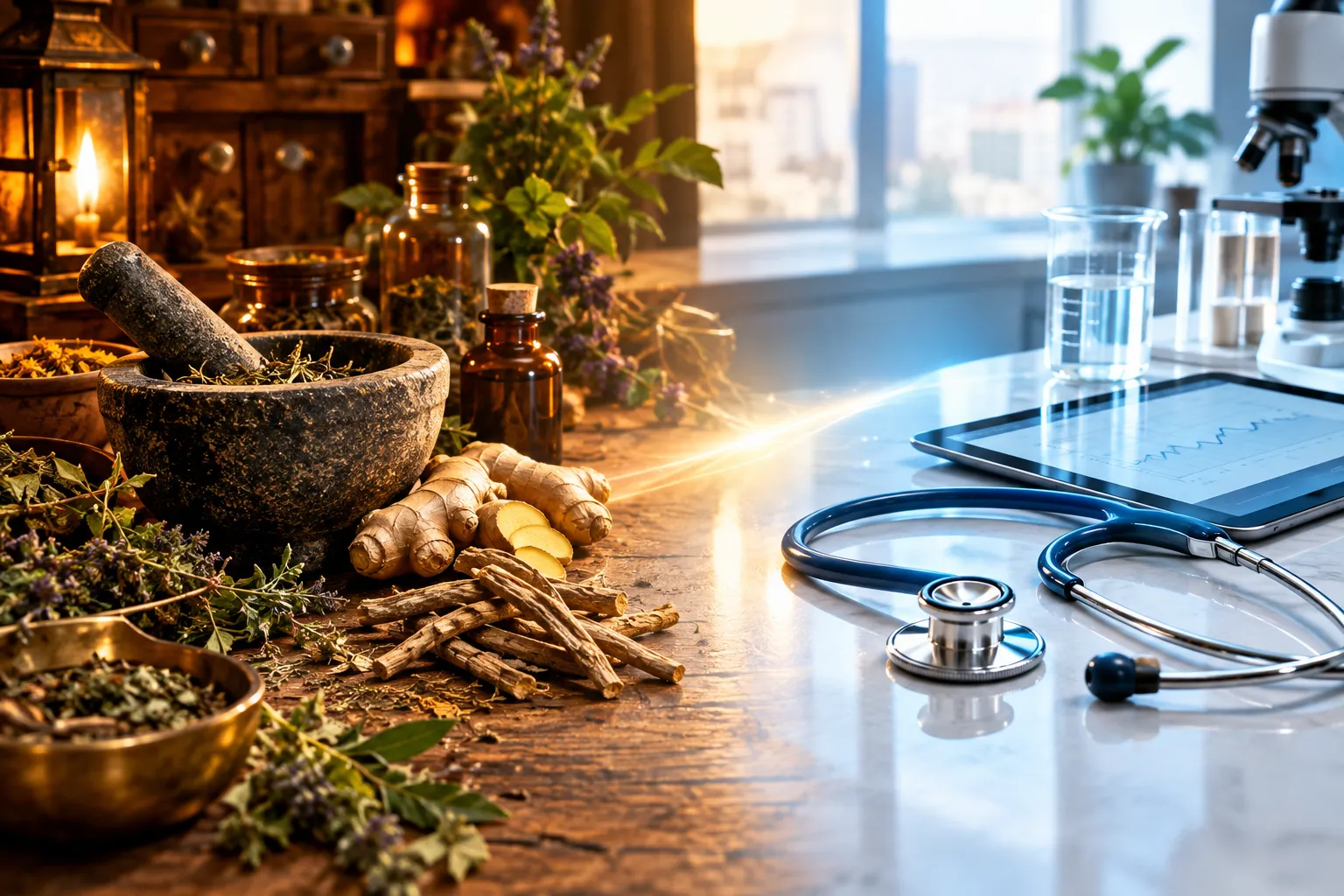
Less than 1 percent of global health research funding goes toward traditional and complementary medicine, even though 40 to 90 percent of people in most World Health Organization member states use some form of it.[13][4] That gap between everyday practice and scientific investment is now closing fast. How natural remedies connect tradition with modern wellness has become one of the defining health stories of 2026, as global health authorities push to bring centuries-old healing practices into evidence-based, regulated care.
This shift is not about replacing modern medicine. It is about building bridges between ancestral knowledge and clinical science, so that both can strengthen public health systems together.
Key Takeaways
- The World Health Organization launched a 10-year research agenda (2025-2034) to formally integrate traditional and natural remedies into evidence-based healthcare.[6][4]
- Priority conditions for integration include stroke, mental health, pain, musculoskeletal disorders, cancer support, metabolic disease, and reproductive health.[6][11]
- New international cooperation on herbal medicine standards is improving safety, quality, and manufacturing consistency worldwide.[1][8]
- A newly designated WHO Collaborating Centre in Berlin will help strengthen research and training in integrative medicine through 2030.[2]
- Analysts expect natural remedies to appear more often in national clinical guidelines and workplace wellness programs over the next decade.[5][8]
Why Tradition and Modern Wellness Are Finally Aligning
For decades, traditional remedies and modern medicine operated in separate lanes. Herbal treatments, acupuncture, and other inherited healing practices were often dismissed as folk remedies, while biomedical research focused almost entirely on pharmaceuticals. That separation is now being questioned at the highest levels of global health policy.
In September 2026, the World Health Organization called for expanded research into traditional medicine, warning that health systems cannot meet growing global needs without it.[6] The agency’s Global Traditional Medicine Centre has emphasized that traditional, complementary, and integrative medicine, or TCIM, is used by billions of people but remains chronically underfunded and understudied.[4]
This is where the question of how natural remedies connect tradition with modern wellness becomes practical rather than philosophical. WHO’s thematic guidance now defines integrative medicine as an interdisciplinary approach that deliberately combines biomedical treatment with traditional and complementary practices, rather than treating them as competitors.[8] Public health leaders meeting in September 2026 specifically discussed how traditional medicine could support broader health system transformation, especially in primary care and community-based services where access to specialists is limited.[3]
“Integration, not isolation, is the direction of travel,” multiple WHO officials have signaled through recent policy actions.
The Global Strategy Turning Tradition Into Evidence
The current momentum did not happen overnight. It builds on the Global Traditional Medicine Strategy 2025-2034, endorsed at the Seventy-eighth World Health Assembly in 2025, which set a long-term framework for integrating traditional and complementary practices into national health systems with a focus on safety, regulation, equity, and evidence.[9][10]
The newest piece of that framework is the WHO research priorities agenda for TCIM, spanning 2025 to 2034. It names specific priority conditions where traditional remedies show potential to support modern treatment pathways, including:
- Stroke recovery and rehabilitation
- Mental health, including anxiety and depression
- Chronic pain and musculoskeletal disorders
- Cancer supportive care
- Metabolic and endocrine diseases such as diabetes
- Reproductive health and childbirth support
This list matters because it moves the conversation from general interest in “natural remedies” toward targeted clinical research questions.[6][11] According to a UN News feature on the 2025 WHO traditional medicine summit, real examples are already emerging in practice, including ginger used for nausea relief and Withania somnifera, known as ashwagandha, studied as a complementary option alongside standard treatment for anxiety and depression.[15]
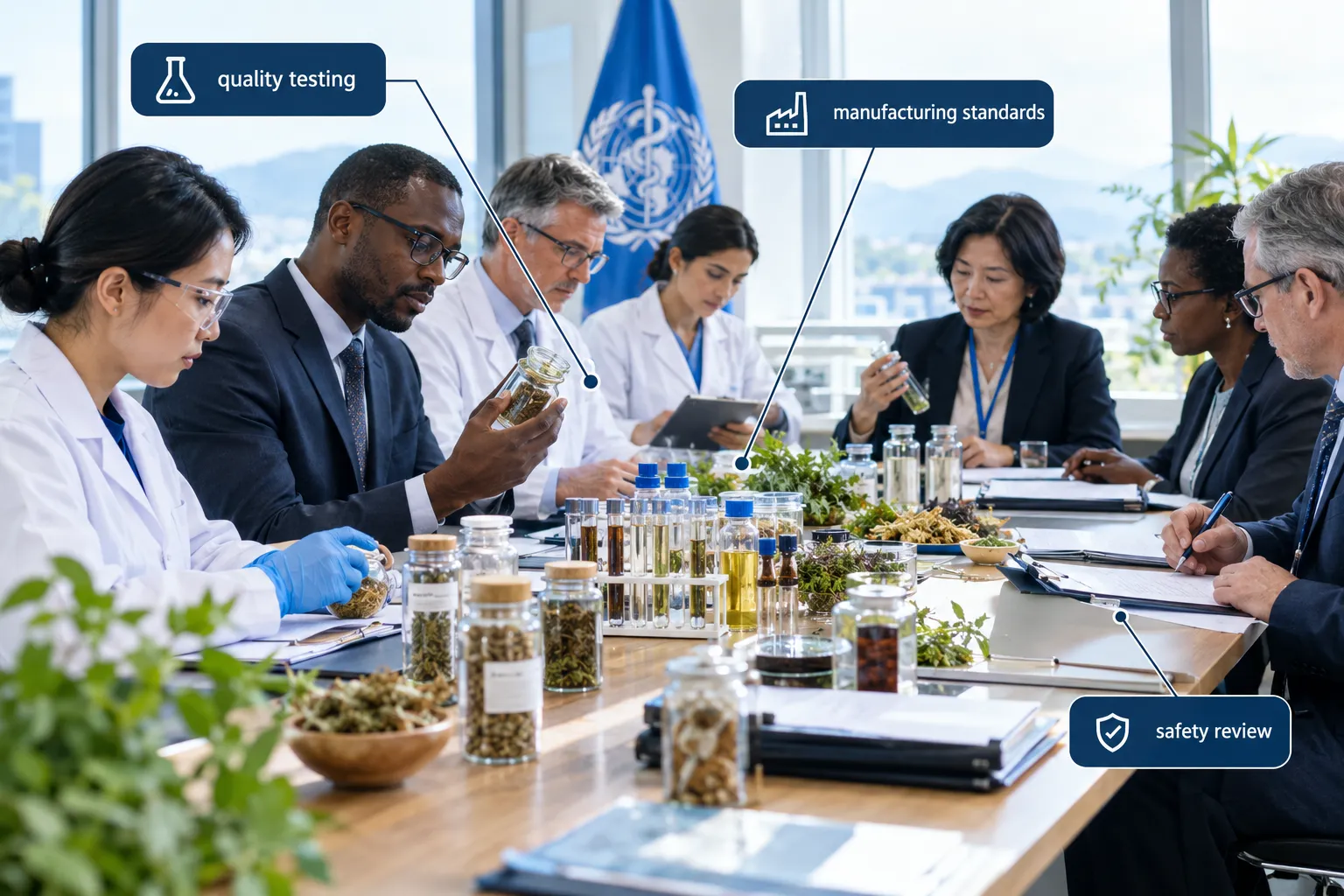
Quality control is advancing alongside research. On 24 September 2026, WHO’s International Regulatory Cooperation for Herbal Medicines Working Group met to strengthen cooperation on herbal medicine quality and safety standards, focusing on consistent manufacturing and regulatory alignment across countries.[1][8] This matters for consumers because inconsistent quality has historically been one of the biggest risks associated with herbal products.
Institutions Are Building the Infrastructure for Integration
Policy statements only go so far without institutions to carry them out. In February 2026, WHO designated the Charité Competence Center for Traditional and Integrative Medicine in Berlin as a WHO Collaborating Centre for Traditional, Integrative and Preventive Medicine for a four-year term.[2] Centres like this are expected to support training, research, and technical guidance across regions.
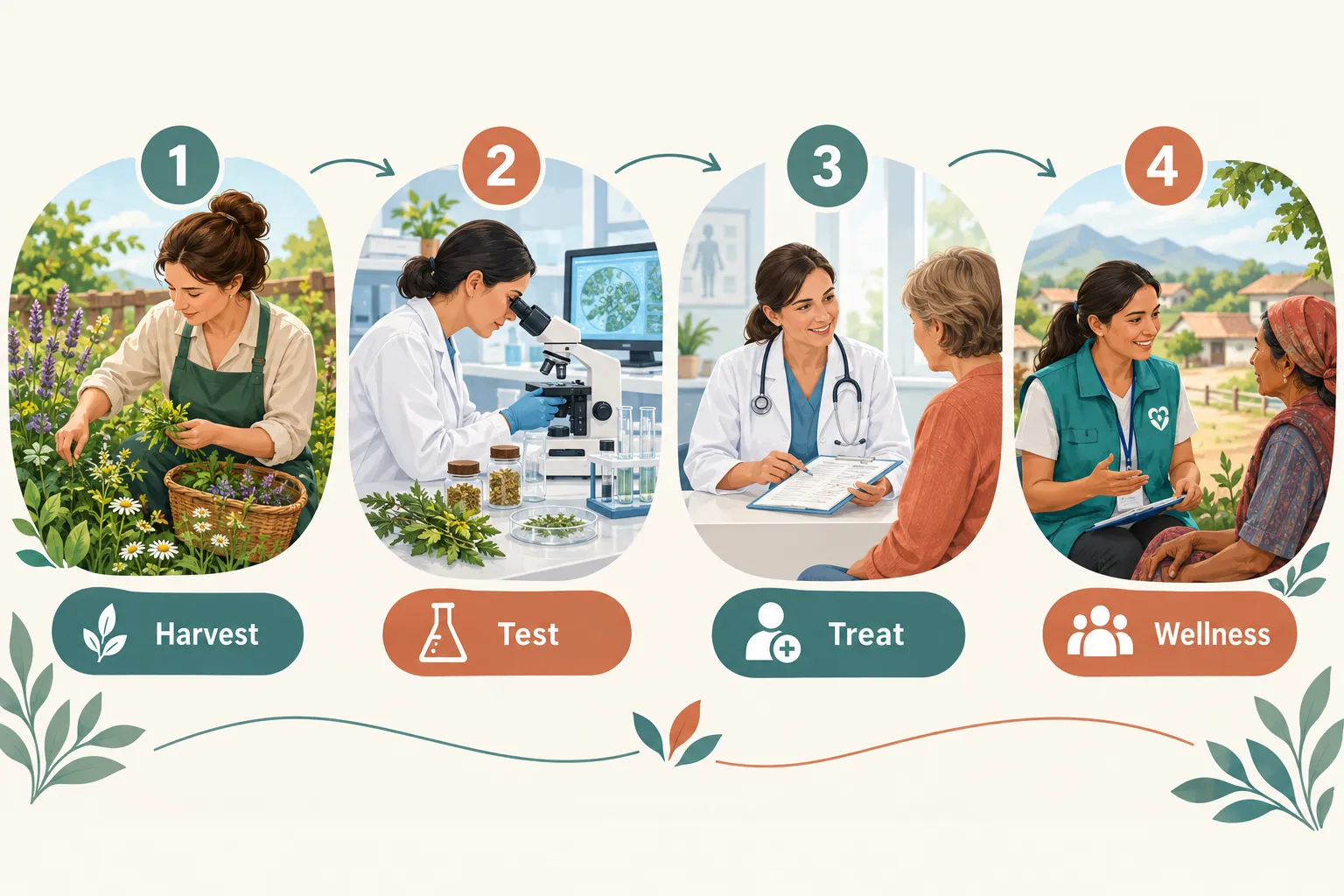
The WHO Global Traditional Medicine Centre’s Annual Report 2025, published in July 2026, documents growing international momentum behind this work, including new digital knowledge platforms and data networks designed to track evidence on traditional remedies more systematically.[5] This digital infrastructure is arguably the missing piece that previous generations of integrative medicine lacked: a way to collect, compare, and validate outcomes at scale.
What This Means for the Next Decade
Given the scale of the 2025-2034 strategy, the 2026 research agenda, and expanding quality standards, natural remedies are likely to show up more often in national clinical guidelines, primary care packages, and employer wellness programs over the next five to ten years.[4][5][8] That does not mean every traditional remedy will be validated. It means the process for testing, regulating, and safely integrating the ones that work is finally catching up to demand.
Conclusion
How natural remedies connect tradition with modern wellness is no longer an abstract debate about East versus West or old versus new. It is an active global health policy effort, backed by WHO strategy documents, new research agendas, international quality standards, and dedicated research centres. For readers, the practical next step is simple: treat natural remedies as a serious health topic worth discussing with a qualified healthcare provider, look for products backed by recognized quality standards, and stay alert to updates from WHO and national health authorities as this decade-long integration strategy unfolds.
References
[1] Overview – https://www.who.int/teams/who-global-traditional-medicine-centre/overview [2] 26 02 2026 Who Designates New Collaborating Centre To Strengthen Evidence And Integration Of Traditional Medicine – https://www.who.int/news/item/26-02-2026-who-designates-new-collaborating-centre-to-strengthen-evidence-and-integration-of-traditional-medicine [3] 09 09 2026 Public Health Leaders Explore How Traditional Medicine Can Support Health System Transformation – https://www.who.int/news/item/09-09-2026-public-health-leaders-explore-how-traditional-medicine-can-support-health-system-transformation [4] Research And Evidence – https://www.who.int/teams/who-global-traditional-medicine-centre/research-and-evidence [5] who.int – https://www.who.int/publications/i/item/9789240123656 [6] 17 09 2026 Who Calls For More Research Into Traditional Medicine To Meet Growing Health Needs – https://www.who.int/news/item/17-09-2026-who-calls-for-more-research-into-traditional-medicine-to-meet-growing-health-needs [8] Traditional Complementary And Integrative Medicine – https://www.who.int/health-topics/traditional-complementary-and-integrative-medicine [9] 30 05 2025 Experts And Officials Show Strong Support For Who S Traditional Medicine Strategy – https://www.who.int/news/item/30-05-2025-experts-and-officials-show-strong-support-for-who-s-traditional-medicine-strategy [10] Traditional Medicine Strategy 2025 2034 – https://www.who.int/teams/who-global-traditional-medicine-centre/traditional-medicine-strategy-2025-2034


