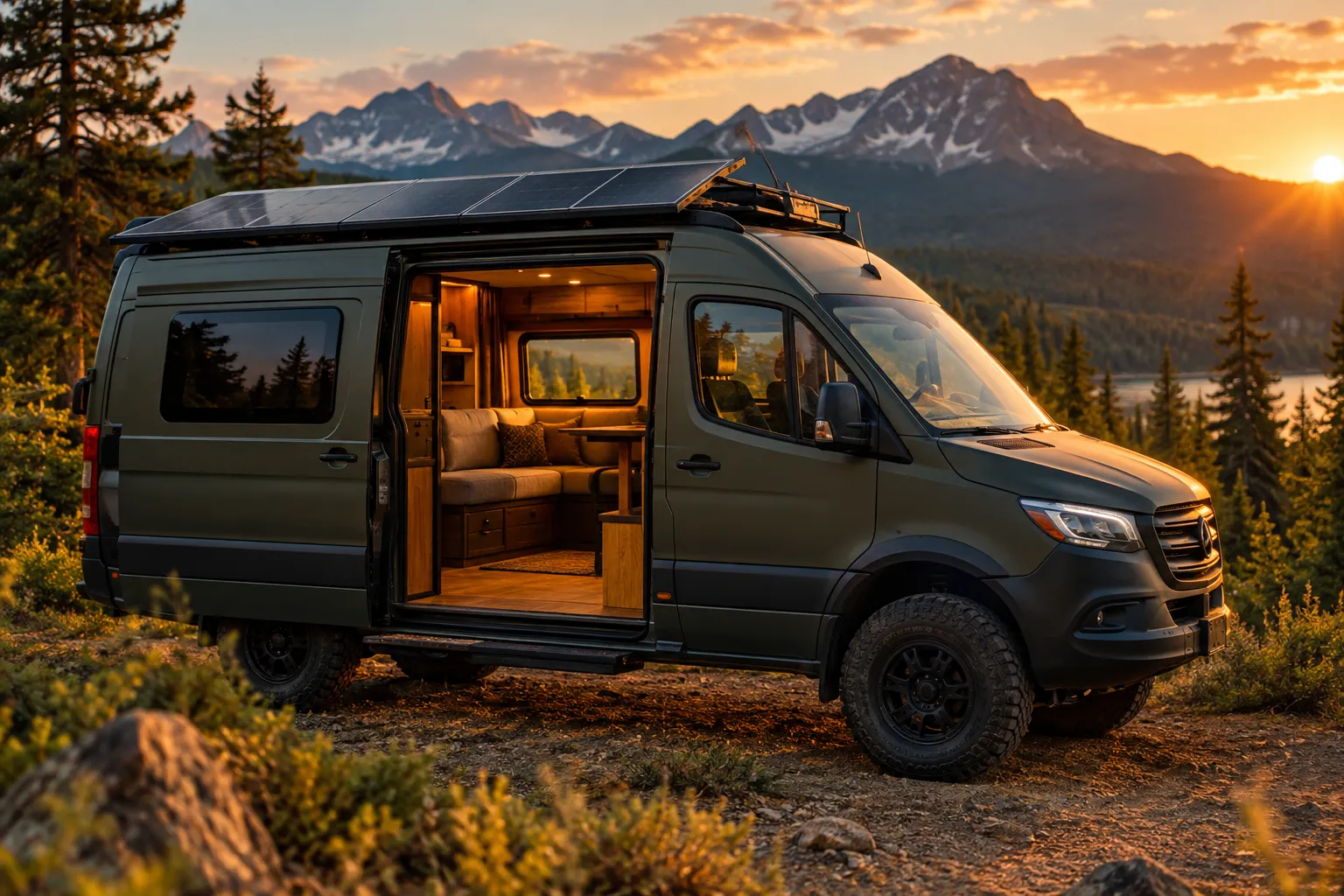
For years, choosing van life meant picking between robust off-grid systems and a living space that actually felt comfortable to lounge in. The new Super Lounger build proves you no longer have to compromise on either. According to a report from autoevolution, this custom camper van conversion trades cramped fixed-bed layouts for an open, sofa-style interior without cutting corners on solar power, battery capacity, or water storage [1]. Inside the Super Lounger: A Custom Camper Van Built for Off-Grid Luxury, the design team behind the build made comfort the starting point, then engineered the off-grid systems to match.
Key Takeaways
- The Super Lounger uses a lounge-first floor plan with two seating zones instead of a single fixed bed, giving occupants flexible daytime and nighttime configurations.
- A custom gas-strut Murphy bed folds away to preserve open floor space, a detail highlighted in coverage of the build [1].
- The electrical architecture centers on lithium iron phosphate (LiFePO4) battery banks paired with roof-mounted solar arrays for sustained off-grid power.
- Extended freshwater storage and all-season insulation support long boondocking stretches, aligning with wider trends in the off-grid luxury van segment [3][4].
- The build remains a one-off custom project, with no indication of a production run based on currently available reporting [1].
Inside the Super Lounger: A Custom Camper Van Built for Off-Grid Luxury Interior Philosophy
Most camper vans still organize their interiors around a single question: where does the bed go. The Super Lounger flips that priority. Its builders designed the cabin around seating first, treating the bed as a secondary function that appears only when needed [1]. This lounge-first approach mirrors a broader shift documented across the custom van industry, where builders increasingly favor multi-use furniture over static bunks [6][9].
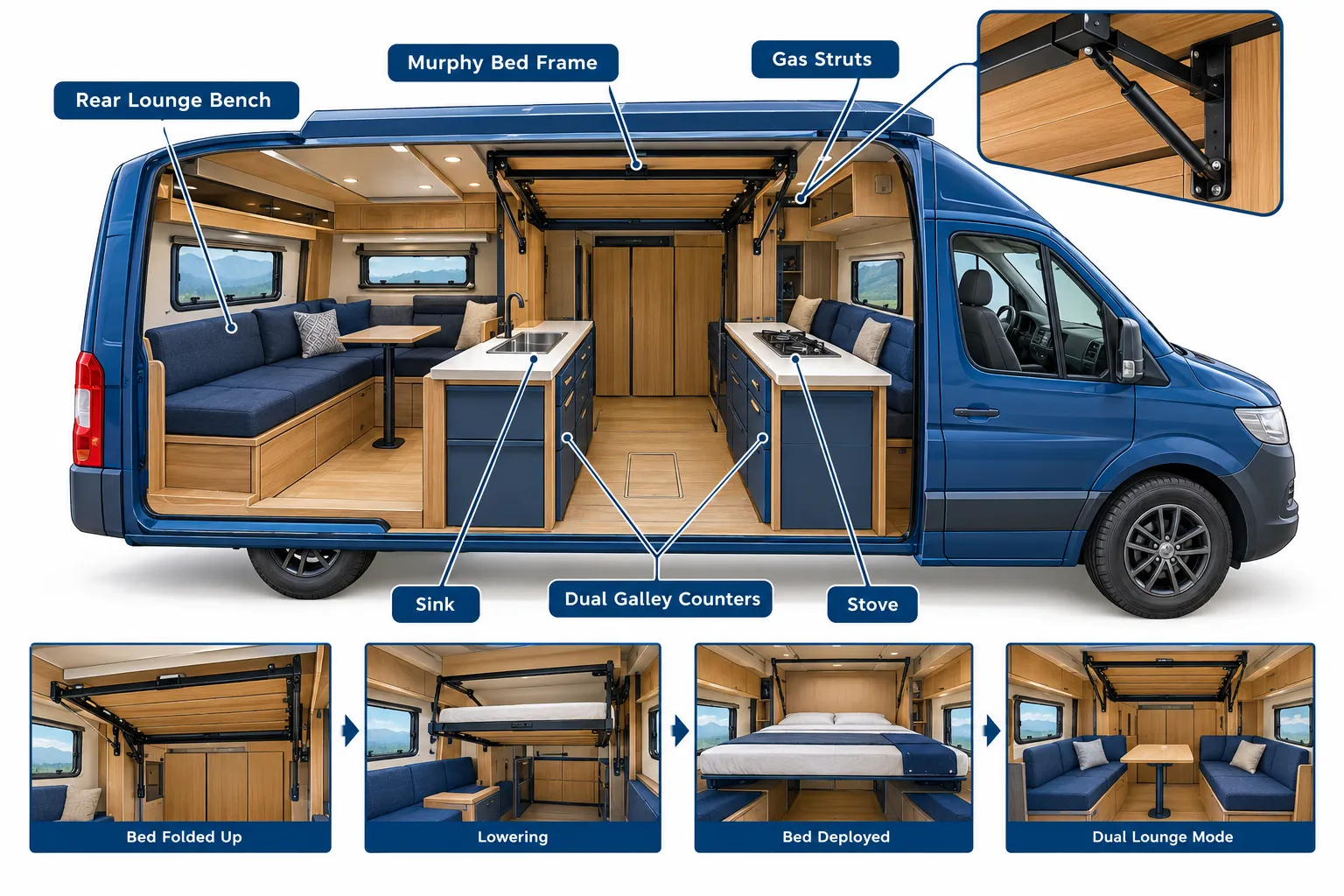
The interior includes two distinct lounge areas rather than one cramped bench. This dual-zone setup lets one section serve as a daytime work or dining space while the other stays configured for relaxing or sleeping, a flexibility increasingly demanded by remote workers and long-term travelers [1][8]. At the center of this transformation sits a custom-engineered Murphy bed, supported by gas struts that allow it to fold flat against the wall in seconds. This mechanism reclaims significant floor space during the day, a feature that echoes similar lounge-to-bed conversions gaining traction across simplified van kit systems in Europe [2][10].
The kitchen setup reinforces the comfort-driven brief. Rather than a single narrow galley strip, the build reportedly includes dual galley stations, giving occupants more counter space and the ability to prepare meals without disrupting the lounge areas [1]. That kind of dual-function kitchen layout is becoming a defining trait of higher-end custom builds, according to builder directories tracking the off-grid conversion market [5][7].
Off-Grid Power and Water Systems Inside the Super Lounger
Comfort alone does not define off-grid capability. The Super Lounger pairs its interior with a dedicated electrical architecture built around high-capacity lithium iron phosphate battery banks. LiFePO4 chemistry is now the industry standard for camper conversions because it delivers deep-cycle durability, stable performance in cold weather, and a longer lifespan than older lead-acid setups.
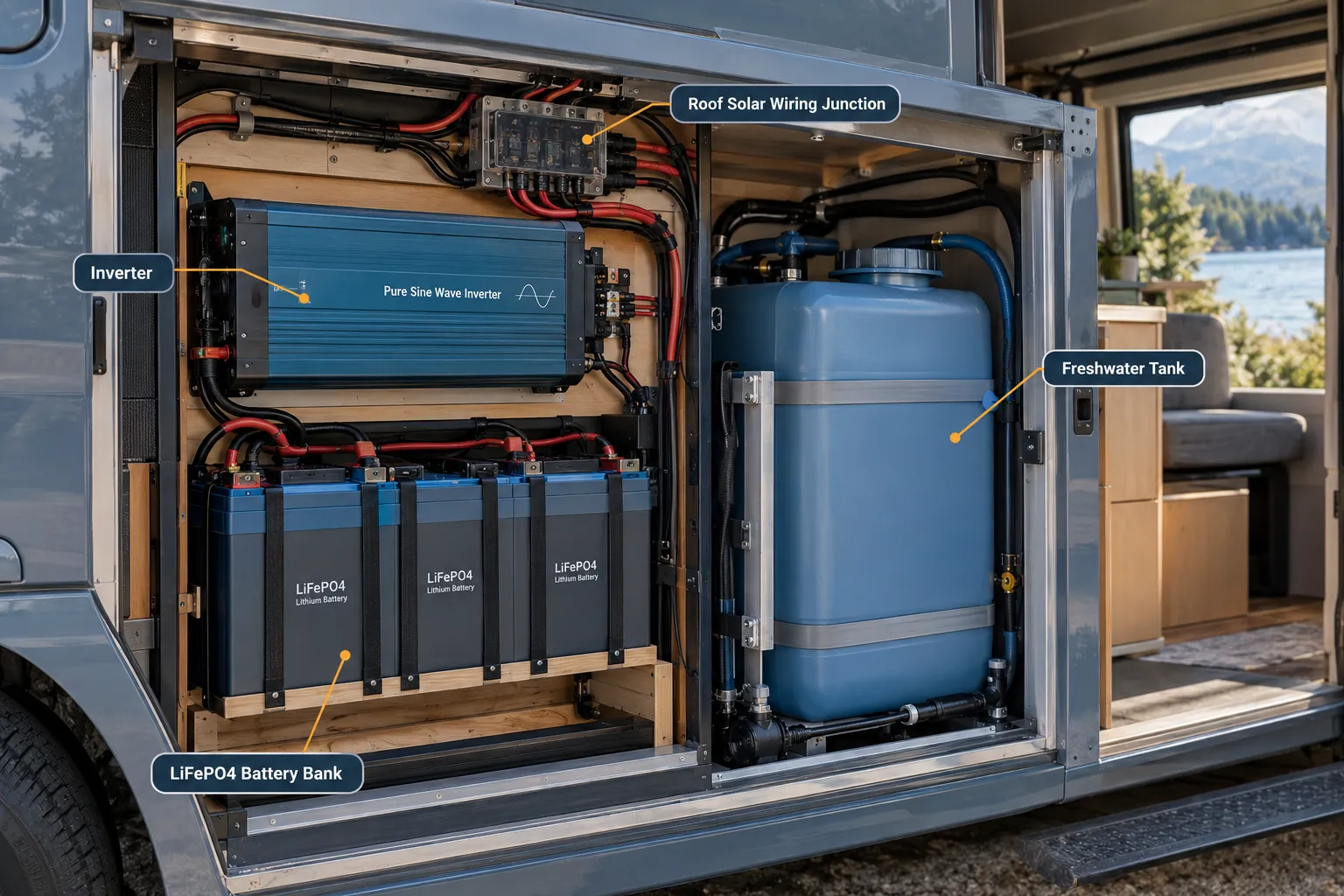
Power generation comes from roof-mounted solar arrays feeding into an inverter system, allowing occupants to run lights, refrigeration, laptops, and small appliances without relying on shore power or a generator. This setup positions the Super Lounger within a growing category of vans built specifically for boondocking, where solar wattage and battery amp-hours determine how long a traveler can stay parked in a remote location [3][4].
Water management follows the same extended-stay logic. The build includes expanded freshwater storage designed to support longer off-grid stretches, reducing how often occupants need to resupply. Combined with all-season insulation and a dedicated heating system, the van is built to function in cold climates as well as warm ones, a consideration particularly relevant for British and European van lifers who often camp through unpredictable weather [4][6].
“Comfort plus capability” is how outlets covering the build have framed its overall value proposition [1].
How the Super Lounger Off-Grid Luxury Build Compares to Fixed-Bed Campers
Conventional camper van layouts typically dedicate a large, immovable section of the floor plan to a single bed platform. That approach simplifies construction but sacrifices usable daytime space, especially in shorter wheelbase vans.
The Super Lounger’s approach offers a few practical advantages worth outlining:
- More usable floor space during the day, since the bed folds away instead of occupying a fixed footprint.
- Two lounge zones instead of one, supporting work, dining, and relaxing simultaneously.
- A layout better suited to multi-person occupancy, since seating does not need to double awkwardly as sleeping space.
- Kitchen access that does not require folding down a bed first.
This kind of open, convertible design is increasingly common among builders targeting long-term travelers rather than weekend campers [9][10].
Who the Super Lounger Off-Grid Luxury Camper Targets
The build appears aimed at travelers who plan to live in the van for extended periods rather than take short recreational trips. Remote workers, couples, and small families seeking genuine off-grid autonomy represent the likely target audience, given the emphasis on dual lounge zones, expanded water capacity, and all-season durability [1][8].
The Super Lounger represents a broader shift in custom van building: comfort and off-grid independence no longer sit at opposite ends of the design spectrum. By prioritizing a lounge-first layout, engineering a space-saving Murphy bed, and pairing it with serious LiFePO4 battery and solar capacity, the build shows what a fully livable off-grid vehicle can look like [1]. As of current reporting, the Super Lounger remains a custom, one-off project with no confirmed production plans [1]. Travelers interested in similar builds should research reputable custom builders, compare battery and solar specifications carefully, and prioritize water storage capacity based on their typical trip length before commissioning a comparable conversion.
References
[1] Super Lounger Is A Custom Camper Van Built Around Interior Comfort And Off Grid Capability 276242 – https://www.autoevolution.com/news/super-lounger-is-a-custom-camper-van-built-around-interior-comfort-and-off-grid-capability-276242.html [2] 156 Super Sleeper L2 – https://simplevans.eu/en/simple-plus-kits/156-super-sleeper-l2.html [3] offgridcampervans – https://offgridcampervans.com/ [4] Campervans – https://newatlas.com/campervans/ [5] Builders – https://offgridcampervans.com/builders [6] Camper Van Interior – https://www.mortonsonthemove.com/camper-van-interior/ [7] moonlitcampers.ca – https://www.moonlitcampers.ca/ [8] Inside Luxury Camper Van – https://www.ozkcustoms.com/recreational-vans/inside-luxury-camper-van [9] rockymountainbuilds – https://www.rockymountainbuilds.com/ [10] simplevans.eu – https://simplevans.eu/en/


