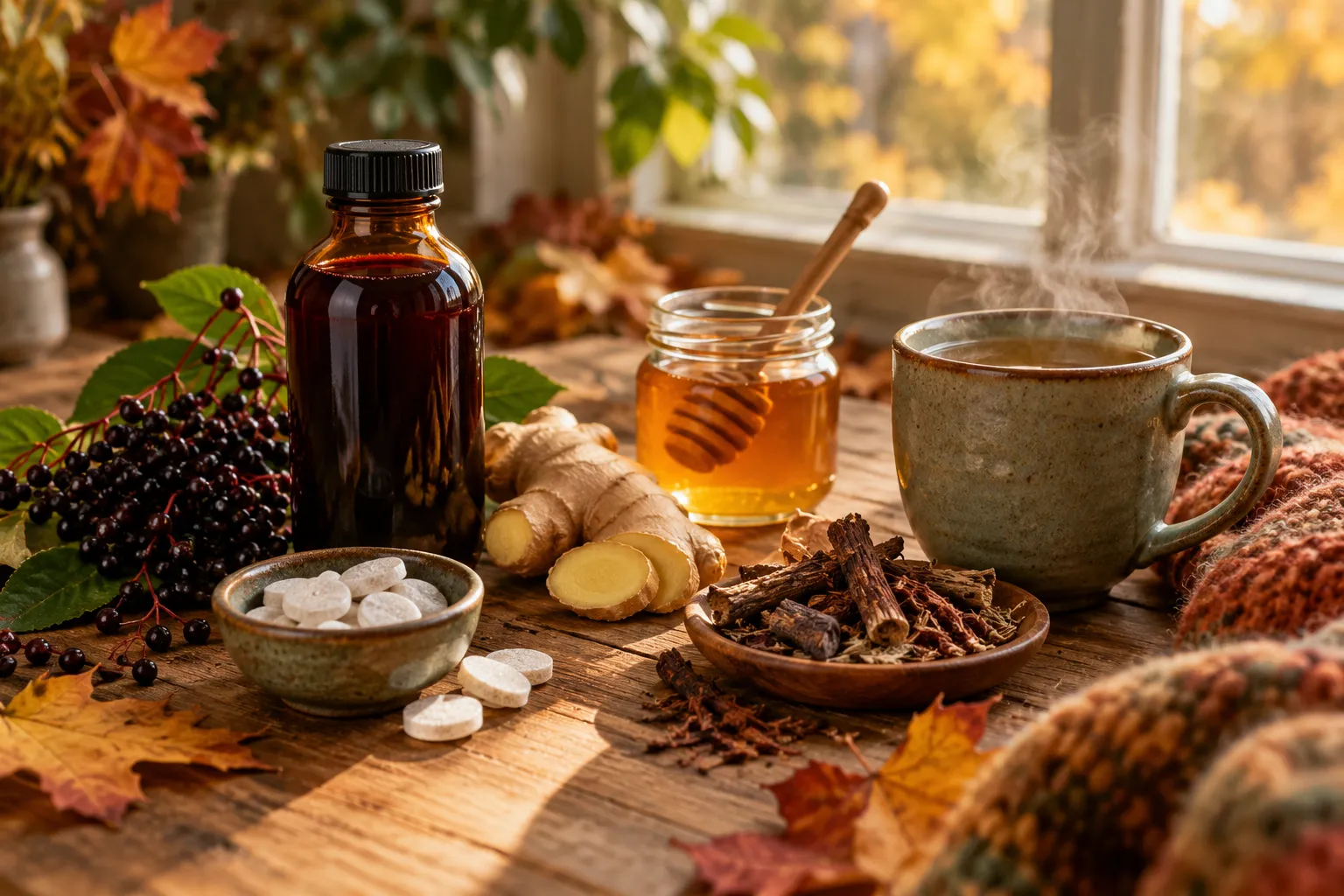
As autumn chill sets in across the UK this late September, seasonal sniffles and viral bugs are already making their annual comeback. Before clearing out the pharmacy shelves, here is what science really says about soothing cold and flu symptoms with natural remedies. This Natural Cold and Flu Remedies That Actually Work: Autumn 2026 Guide separates the botanicals with real clinical backing from the ones that mostly ride on tradition and marketing.
Key Takeaways
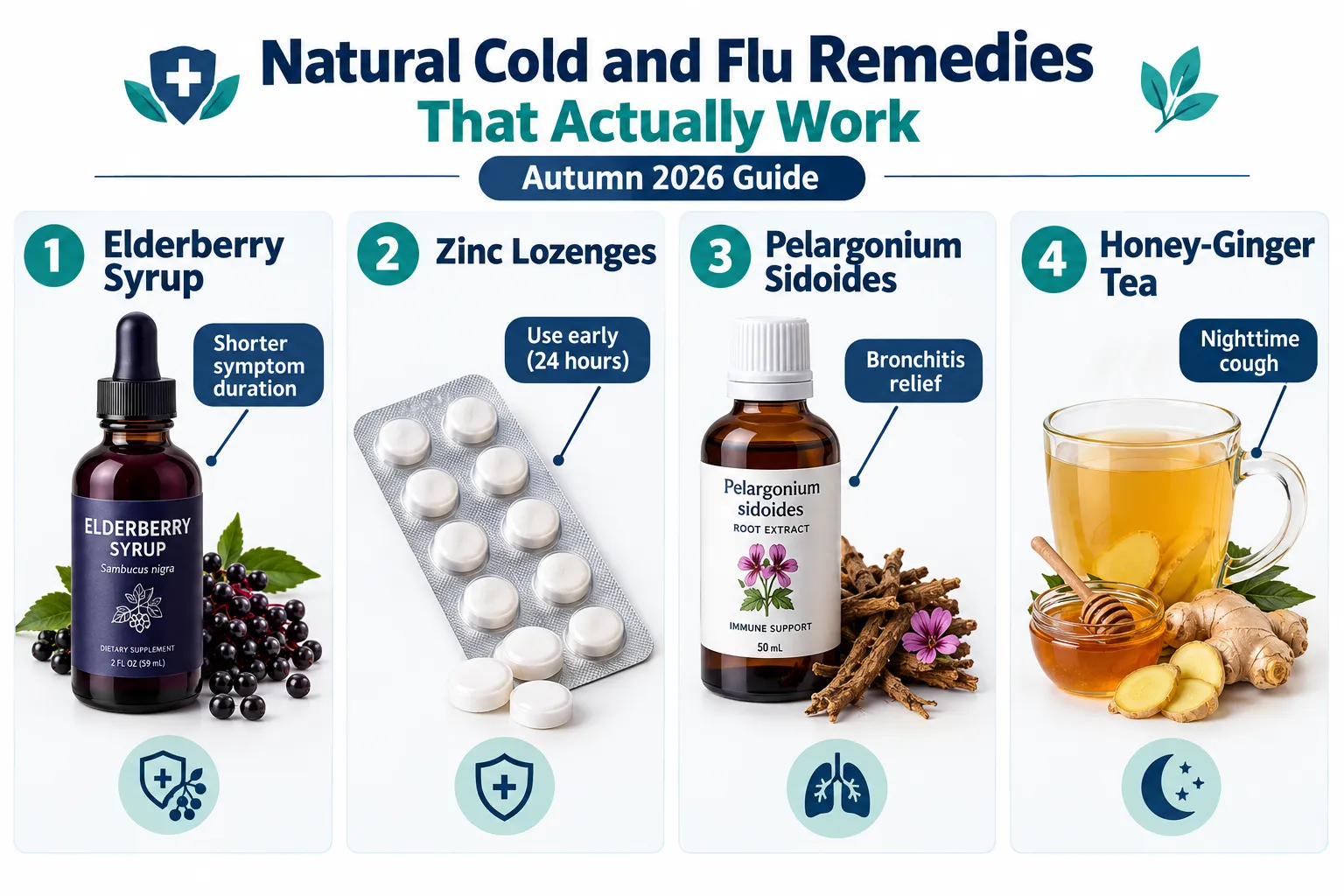
- Elderberry extract has been shown in clinical trials to shorten cold and flu symptom duration by up to two to four days when taken early.
- Zinc lozenges offer a modest but real benefit if started within 24 hours of symptom onset [5].
- Pelargonium sidoides shows genuine efficacy against acute bronchitis and upper respiratory viral infections.
- Honey and ginger combinations have outperformed standard over-the-counter cough suppressants for nighttime cough relief in several studies.
- Rest, hydration, and basic hygiene remain the single most reliable natural defenses against both colds and flu [1][6].
Colds vs Flu: Why the Distinction Matters
Not every autumn sniffle is the same illness, and treating them the same way can backfire. The National Institutes of Health notes a clear clinical line between the common cold and influenza: colds build gradually and rarely cause high fever, while flu tends to hit hard and fast with fever, body aches, and exhaustion. This distinction matters because natural remedies that ease a cold’s mild congestion may not be enough for flu’s systemic assault, and flu carries higher risks for older adults, young children, and people with chronic conditions [5][2].
Natural Cold and Flu Remedies That Actually Work: The Evidence-Based Shortlist
Most herbal shelves are crowded with unproven promises. A handful of options, however, have real data behind them.
Elderberry (Sambucus nigra) extract stands out. Clinical trials cited in complementary-medicine research have found that elderberry supplementation, taken at the first sign of illness, can cut symptom duration by roughly two to four days compared with placebo. The effect appears strongest when dosing starts within the first 48 hours.
Zinc lozenges are another standout, but timing is everything. Reviews from NIH and Baylor College of Medicine researchers, along with Healthline’s 2026 roundup, agree that zinc only helps meaningfully when started within a day of the first sneeze or sore throat. Waiting too long largely erases the benefit, and high doses can cause nausea or a metallic taste.
Pelargonium sidoides, sometimes called African geranium, has accumulated solid clinical support for treating acute bronchitis and upper respiratory viral infections. Extracts appear to reduce cough severity and shorten illness compared with no treatment, making it one of the better-studied herbal options for chest-related cold symptoms.
Honey and ginger protocols have repeatedly outperformed standard cough suppressants for nighttime cough, according to multiple comparative studies. A warm mixture of honey, ginger, and lemon soothes the throat and appears to calm the cough reflex more effectively than many over-the-counter syrups. One important caveat: honey should never be given to infants under one year due to botulism risk.
Home Care Basics That Every Natural Cold and Flu Remedies Autumn 2026 Guide Should Include
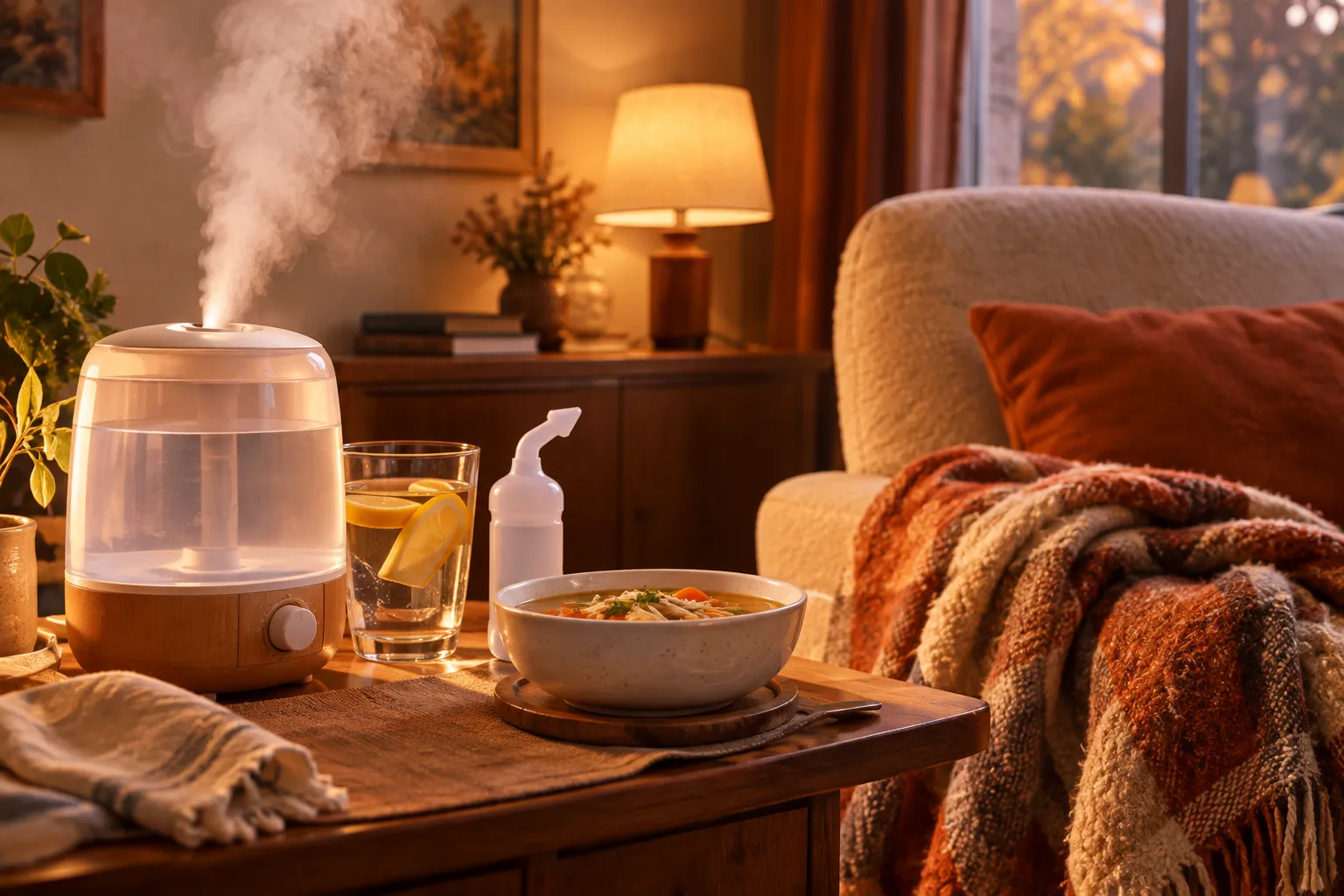
Beyond specific supplements, the boring basics still matter most. Mayo Clinic, WebMD, and Baylor all converge on the same core advice: rest and hydration outrank every supplement on the shelf [3][10]. Fluids thin mucus, ease sore throats, and prevent the fatigue that drags out recovery.
Other low-risk, widely endorsed comfort measures include:
- Warm liquids and chicken soup, which soothe the throat and may have mild anti-inflammatory effects
- Steam inhalation and humidifiers to loosen congestion and ease dry, irritated airways
- Saline nasal rinses and warm saltwater gargles, both backed by strong consensus for relieving stuffiness and throat pain
- Probiotics and mind-body practices like guided relaxation, which show promising but not yet definitive results for cold prevention
Supplements With Weak or Conflicting Evidence
Not every popular remedy earns its reputation. Vitamin C, echinacea, garlic, and ginseng continue to show weak or inconsistent results across studies. Echinacea in particular suffers from a quality problem: many commercial preparations use low-potency extracts that fall well short of the doses used in trials showing any benefit. Buyers relying on these should not expect dramatic results.
Prevention Beats Cure: Vaccines and Natural Habits
The CDC’s guidance for the 2025-2026 flu season emphasizes vaccination and hygiene over any natural cure, noting documented vaccine effectiveness data that supports annual immunization for most people six months and older [2][7][9]. Simple, genuinely “natural” behaviors, frequent handwashing, avoiding close contact when sick, and covering coughs, remain strongly endorsed as non-pharmaceutical prevention tools [1][6].
Conclusion
The evidence in 2026 points to a short, honest list of natural remedies worth trying: elderberry, zinc lozenges started early, Pelargonium sidoides for bronchitis-type symptoms, and honey-ginger blends for cough. Everything else, from rest and fluids to saline rinses and steam, supports recovery without much risk. For actual flu prevention, vaccination and basic hygiene still do the heaviest lifting. Anyone with high fever, breathing difficulty, or symptoms lasting more than ten days should see a doctor rather than rely on home remedies alone.
References
[1] Index – https://www.cdc.gov/flu/prevention/index.html [2] 2025 2026 – https://www.cdc.gov/flu/season/2025-2026.html [3] Art 20046403 – https://www.mayoclinic.org/diseases-conditions/common-cold/in-depth/cold-remedies/art-20046403 [4] Index – https://www.cdc.gov/flu/hcp/acip/index.html [5] Colds Flu And Complementary Health Approaches – https://www.nccih.nih.gov/health/colds-flu-and-complementary-health-approaches [6] Actions Prevent Flu – https://www.cdc.gov/flu/prevention/actions-prevent-flu.html [7] Seasonal Influenza Vaccines – https://www.cdc.gov/flu/hcp/vax-summary/seasonal-influenza-vaccines.html [8] Cdc Vaccine Guidance Gap – https://www.cnn.com/2026/09/02/health/cdc-vaccine-guidance-gap [9] Mm7509a2 – https://www.cdc.gov/mmwr/volumes/75/wr/mm7509a2.htm [10] 14 Tips Prevent Colds Flu 1 – https://www.webmd.com/cold-and-flu/14-tips-prevent-colds-flu-1


