The days of booking a hotel massage and calling it a wellness holiday are over.
In 2026, travellers want more than fluffy robes, cucumber water and a two-hour spa treatment.
They want better sleep. Less stress. More energy. And a body that actually feels recovered when they get home.
From futuristic sleep suites and cold-plunge circuits to nervous-system retreats and high-tech recovery treatments, the wellness travel boom is transforming luxury hospitality.
And the message from travellers is becoming impossible for hotels to ignore:
Don’t just pamper me. Fix me.
Wellness Travel Has Become Big Business
Wellness tourism is no longer a niche corner of the travel industry.
According to the Global Wellness Institute, wellness tourism spending reached around $894 billion in 2024, significantly above pre-pandemic levels.
Even more strikingly, wellness trips represented a much larger share of tourism spending than their share of total trips — suggesting wellness travellers are prepared to spend heavily on experiences they believe will improve their health and wellbeing.
And now the industry is moving into its next phase.
The new luxury isn’t simply relaxation.
It’s recovery.
The 6 Wellness Travel Trends Taking Over
1. Sleep Tourism Is Becoming the New Luxury
Forget the minibar.
The hottest feature in some wellness hotels is increasingly what’s happening after the lights go out.
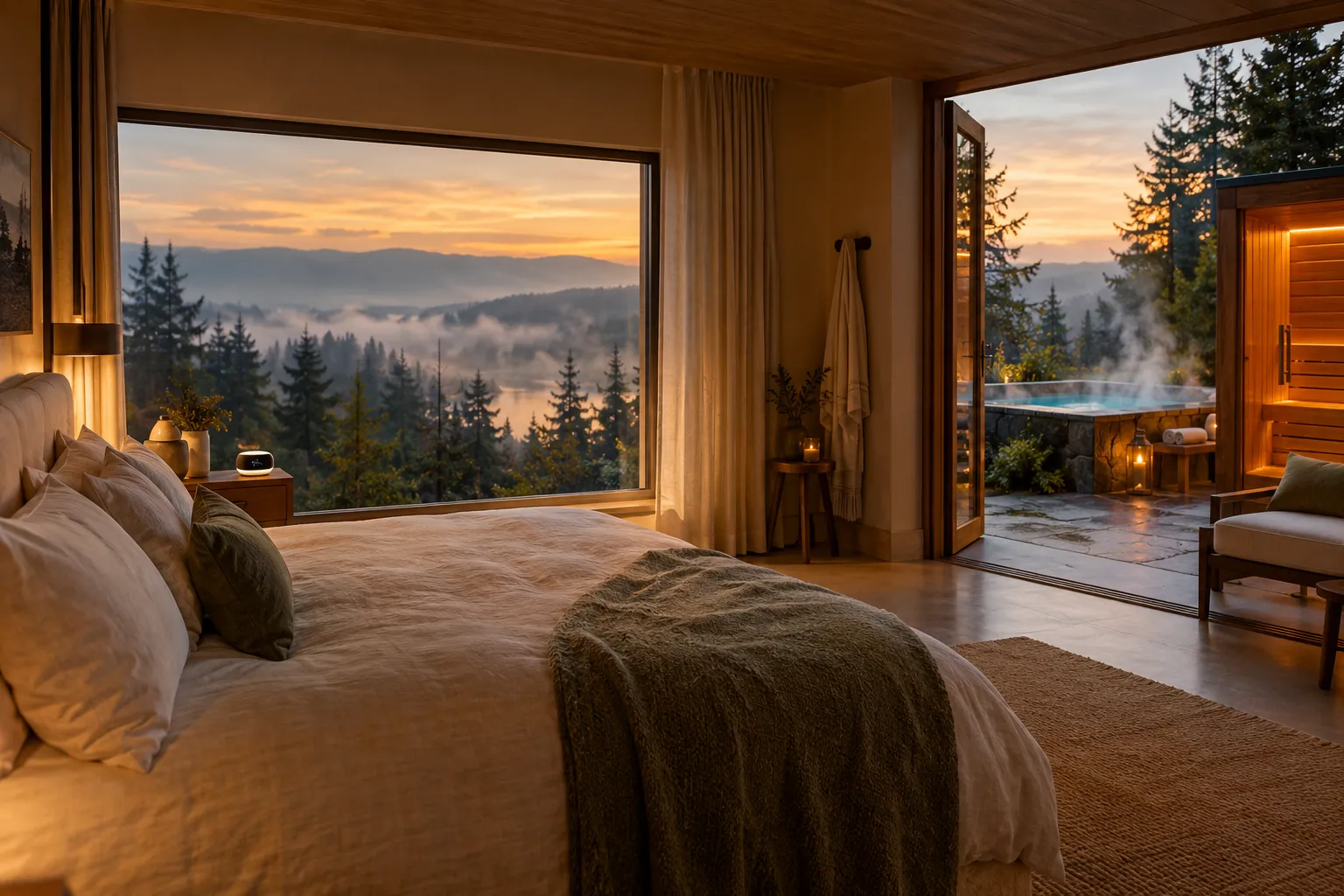
Hotels and specialist retreats are experimenting with circadian-friendly lighting, soundproofed sleeping environments and technology designed to monitor and improve guests’ sleep.
Some properties are treating the bedroom almost like a laboratory — using lighting, temperature, acoustics and sleep tracking to create the perfect conditions for recovery.
The idea is simple:
You don’t travel halfway around the world to come home exhausted.
2. Cold Plunges and High-Tech Recovery Are Going Mainstream
Cold plunges were once associated with elite athletes and hardcore fitness enthusiasts.
Now they’re becoming luxury-hotel amenities.
Boutique and high-end wellness properties are increasingly embracing contrast therapy, infrared saunas and other recovery technologies as part of the guest experience.
For travellers, that means the traditional spa menu is getting a serious upgrade.
Instead of simply lying down for a massage, guests can cycle through heat, cold and recovery treatments designed to leave them feeling revitalised.
The spa is starting to look more like a performance centre.
3. The Nervous System Is the New Wellness Obsession
One of the biggest shifts is happening inside the head.
Wellness retreats are increasingly focusing on stress regulation and nervous-system recovery, rather than simply making guests feel pampered for an afternoon.
Breathwork, meditation, sound therapy and digital detox programmes are taking centre stage.
The goal isn’t necessarily to become fitter.
It’s to finally switch off.
After years of constant notifications, emails and social media, the ability to spend several days without digital noise has become a luxury in itself.
4. Burned-Out Professionals Are Booking Recovery Holidays
Wellness travel is also moving beyond the traditional image of yoga retreats and spa weekends.
Increasingly, programmes are being designed for people who are simply exhausted.
The target customer isn’t necessarily an athlete chasing peak performance.
It’s the executive who hasn’t slept properly in months.
The entrepreneur running on caffeine.
The parent desperate for uninterrupted rest.
The professional who arrives at a hotel already dreaming about their first day back at work.
These newer retreats aim to tackle issues such as stress, sleep deprivation and burnout through concentrated, short-term programmes.
The new holiday isn’t about doing more. It’s about finally recovering.
5. Travellers Are Staying Closer to Home
Long-haul luxury travel isn’t disappearing — but some wellness travellers are beginning to rethink the traditional jet-setting model.
Why spend 12 hours on a plane chasing relaxation when a peaceful retreat a couple of hours away can offer the same thing?
Climate concerns, extreme temperatures and travel fatigue are helping push some holidaymakers towards shorter journeys, cooler destinations and regional escapes.
For wellness travellers, the logic is obvious.
If the journey leaves you exhausted, it isn’t exactly a restorative holiday.
6. The ‘Slow Travel’ Revolution Is Here
The days of squeezing five cities into seven days are looking increasingly exhausting.
Wellness travellers are embracing longer stays in fewer places, giving themselves time to actually settle into their surroundings.
Instead of:
Paris → Rome → Florence → Milan → airport → collapse
the new approach is:
One beautiful destination. One good hotel. Several uninterrupted days.
The philosophy is simple: stop rushing.
A wellness holiday shouldn’t feel like another item on your to-do list.
The Wellness Hotel of the Future Won’t Look Like a Traditional Spa
The biggest change may be happening behind the scenes.
Hotels are increasingly being pushed to think about measurable wellbeing, not simply attractive surroundings.
That could mean better sleep technology, recovery facilities, stress-management programmes and carefully designed environments that encourage guests to slow down.
The six trends reshaping wellness travel in 2026 all point in the same direction.
Travellers don’t simply want to escape anymore.
They want to come back better.


