A bottle of castor oil now sells out within hours after certain videos go viral, according to reporting cited by ophthalmology groups tracking the trend. That single detail says everything about how fast unproven eye advice spreads online, and why this Business Spotlight: Before you put that in your eye, the truth about viral “natural” remedies matters right now. Millions of viewers are watching influencers drip oils, honey, and homemade solutions directly onto their eyeballs, chasing promises of sharper vision or a cure for dryness. Eye doctors say the trend is outpacing the science, and in some cases, outpacing basic safety.
Key Takeaways
- No clinical evidence supports eye exercises, “eye yoga,” or natural vision correction for fixing refractive errors or disease-related vision loss.[4][1]
- Castor oil is not sterile and has no proven safety record as an eye drop, despite its popularity in viral videos.[7][15]
- Honey cannot lighten eye color and may introduce bacteria that cause infection.[6]
- Homemade saline or DIY eye solutions risk contamination, corneal damage, or worsened dry eye compared with sterile commercial drops.[9]
- Herbal supplements marketed for eye health, including ginkgo, can increase bleeding risk and are not proven to treat eye disease.[10][14]
What’s Fueling the Viral “Natural” Eye Remedy Trend
Short-form video platforms reward dramatic before-and-after claims, and eye health has become an easy target. The American Academy of Ophthalmology has directly addressed this shift, warning consumers to use only products specifically designed and approved for ophthalmic use.[8] Cosmetics, skin oils, and household liquids were never tested for the eye’s uniquely sensitive tissue, yet they keep showing up in viral demonstrations.
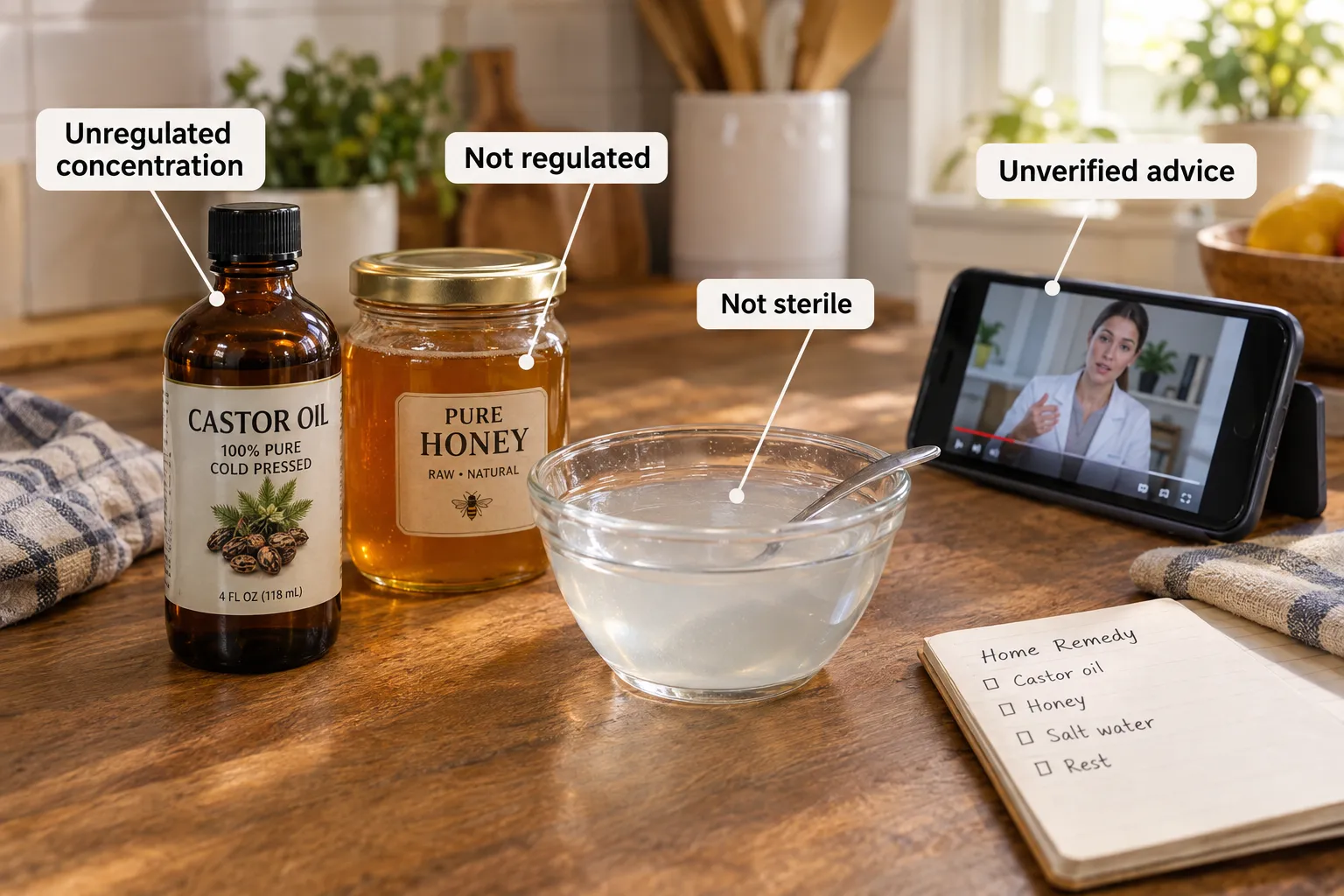
Older home-remedy traditions, like using milk drops, lemon juice, or herbal washes for irritation, have resurfaced online dressed up as new discoveries.[11] The gap between nostalgic advice and modern medical standards is significant. What grandmothers once tried out of necessity, doctors now flag as unregulated and potentially unsafe, especially since none of these mixtures are sterile or dosage-controlled.[2][11]
Business Spotlight: Before You Put That in Your Eye, Castor Oil, Honey, and Other Risky Hacks
Castor oil is the most visible example. Dermatologist-turned-viral-topic Dr. Nishika Reddy has stated there is no current evidence it is safe when placed in the eye, even though it may moisturize skin elsewhere on the body.[7] AAO spokesperson Dr. Ashley Brissette has added that castor oil will not dissolve cataracts or treat glaucoma, and that existing studies on castor-oil-based dry eye drops are small, low-quality, and lack proper control groups.[15]
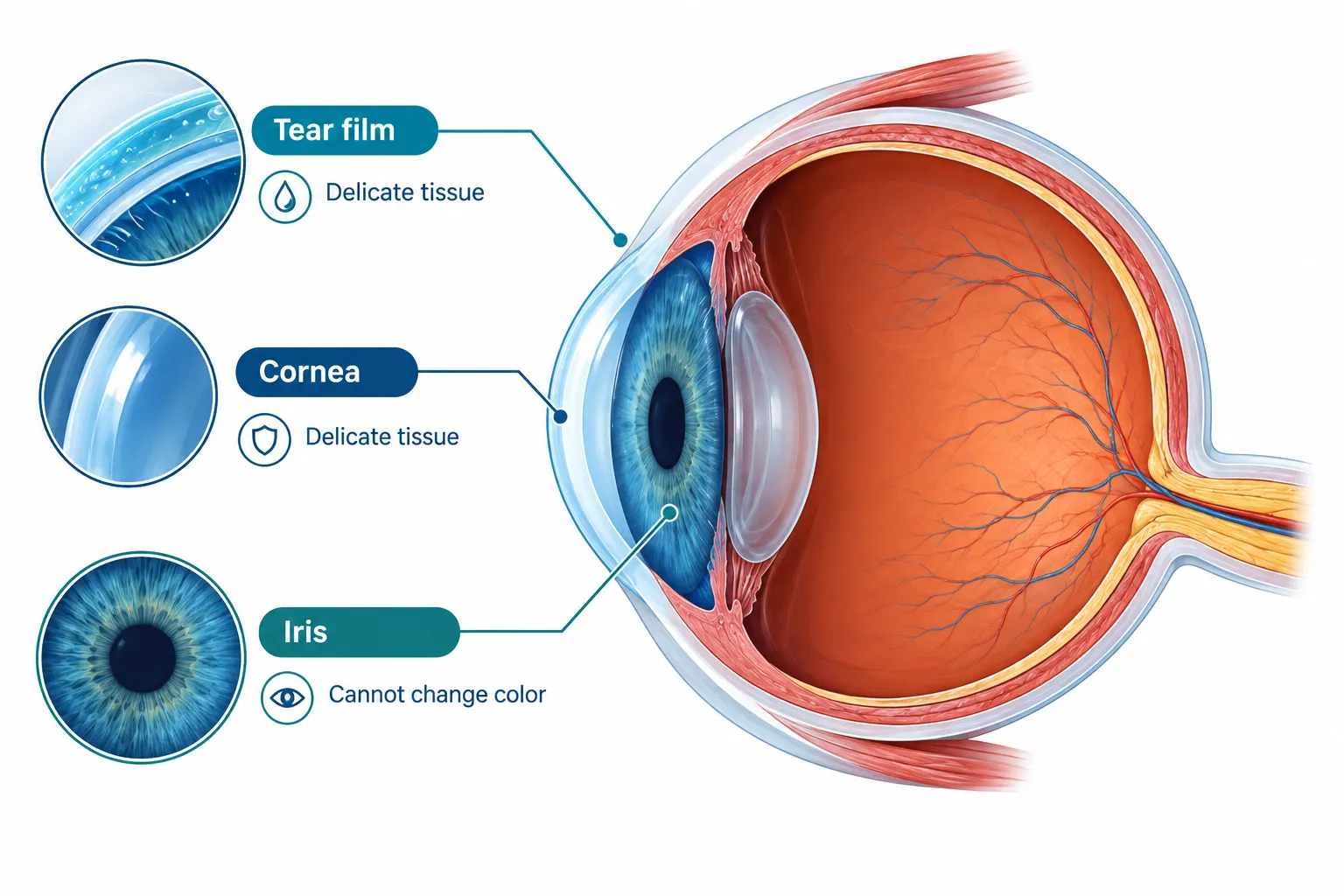
Reporting from The Scotsman found opticians raising similar alarms about honey and castor oil hacks trending on TikTok, noting that neither corrects refractive errors, cataracts, floaters, or glaucoma, and both carry allergy and irritation risks.[12] Honey specifically cannot change eye color, since pigmentation is determined by the iris rather than any surface substance.[6] Other viral “cures,” including breast milk for pink eye and frozen meat pressed against the eye, have been cataloged by AAO as unsafe due to bacterial contamination risks.[2][3]
Business Spotlight: Before You Put That in Your Eye, What Actually Works Instead
Legitimate options exist, but they look far less exciting than a viral video. WebMD’s ophthalmology coverage confirms there is no clinical proof that eye exercises correct nearsightedness, farsightedness, or presbyopia, and relying on them can delay necessary treatment.[4] For dryness or irritation, Healthline recommends commercially prepared sterile lubricating drops rather than DIY saline mixtures, which can be improperly balanced or contaminated.[9]
Supplements deserve caution too. A 2026 Review of Ophthalmology update notes patients increasingly reach for herbal products, but ingredients like ginkgo can act as blood thinners and pose risks around surgery.[10] Separately, large studies referenced by AAO’s nutrition guidance show antioxidant supplements do not prevent cataracts and may cause harm.[14] AAO spokesperson Dr. Marcus Thorne has warned that self-treating serious conditions like glaucoma or retinal detachment with over-the-counter herbs can cause irreversible damage.[13]
How to Protect Your Vision From Bad Advice
Before trying any online eye trend, consider these steps:
- Check whether a remedy is backed by peer-reviewed research, not just testimonials.
- Avoid placing any non-sterile liquid, oil, or food item directly in the eye.
- Ask an eye doctor before starting supplements, especially before scheduled surgery.
- Treat sudden vision changes, pain, or redness as reasons to seek care immediately rather than searching for a home fix.
As one ophthalmology resource put it plainly: eye-care professionals, not viral trends, should guide treatment decisions.
Conclusion
The Business Spotlight: Before you put that in your eye, the truth about viral “natural” remedies trend reveals a real tension between curiosity-driven content and medical safety. Castor oil, honey, and homemade drops may seem harmless, but ophthalmologists consistently find no solid evidence behind their benefits and real evidence of potential harm. Anyone tempted by a viral eye hack should pause, consult a licensed eye-care provider, and rely on FDA-approved products instead of kitchen ingredients. Protecting eyesight is worth more than chasing a trend.
References
[1] Scariest Eye Cures Viral Tiktok Influencer – https://www.aao.org/eye-health/tips-prevention/scariest-eye-cures-viral-tiktok-influencer [2] Quack Medical Eye Devices Unproven Artifacts – https://www.aao.org/eye-health/tips-prevention/quack-medical-eye-devices-unproven-artifacts [3] 20 Worst Things Your Eyes – https://www.aao.org/eye-health/tips-prevention/20-worst-things-your-eyes [4] Natural Vision Correction Does It Work – https://www.webmd.com/eye-health/features/natural-vision-correction-does-it-work [6] Honey In Eyes To Lighten Them – https://www.aao.org/eye-health/ask-ophthalmologist-q/honey-in-eyes-to-lighten-them [7] Eye Problems Treated Castor Oil Beware Viral Tiktok Trend Doctors Not Treatment – https://www.foxnews.com/health/eye-problems-treated-castor-oil-beware-viral-tiktok-trend-doctors-not-treatment [8] Academy Warns About Improper Use Of Products In – https://www.aao.org/newsroom/news-releases/detail/academy-warns-about-improper-use-of-products-in [9] Homemade Eye Drops – https://www.healthline.com/health/homemade-eye-drops [10] Why Patients Are Going Back To Nature – https://www.reviewofophthalmology.com/article/why-patients-are-going-back-to-nature


