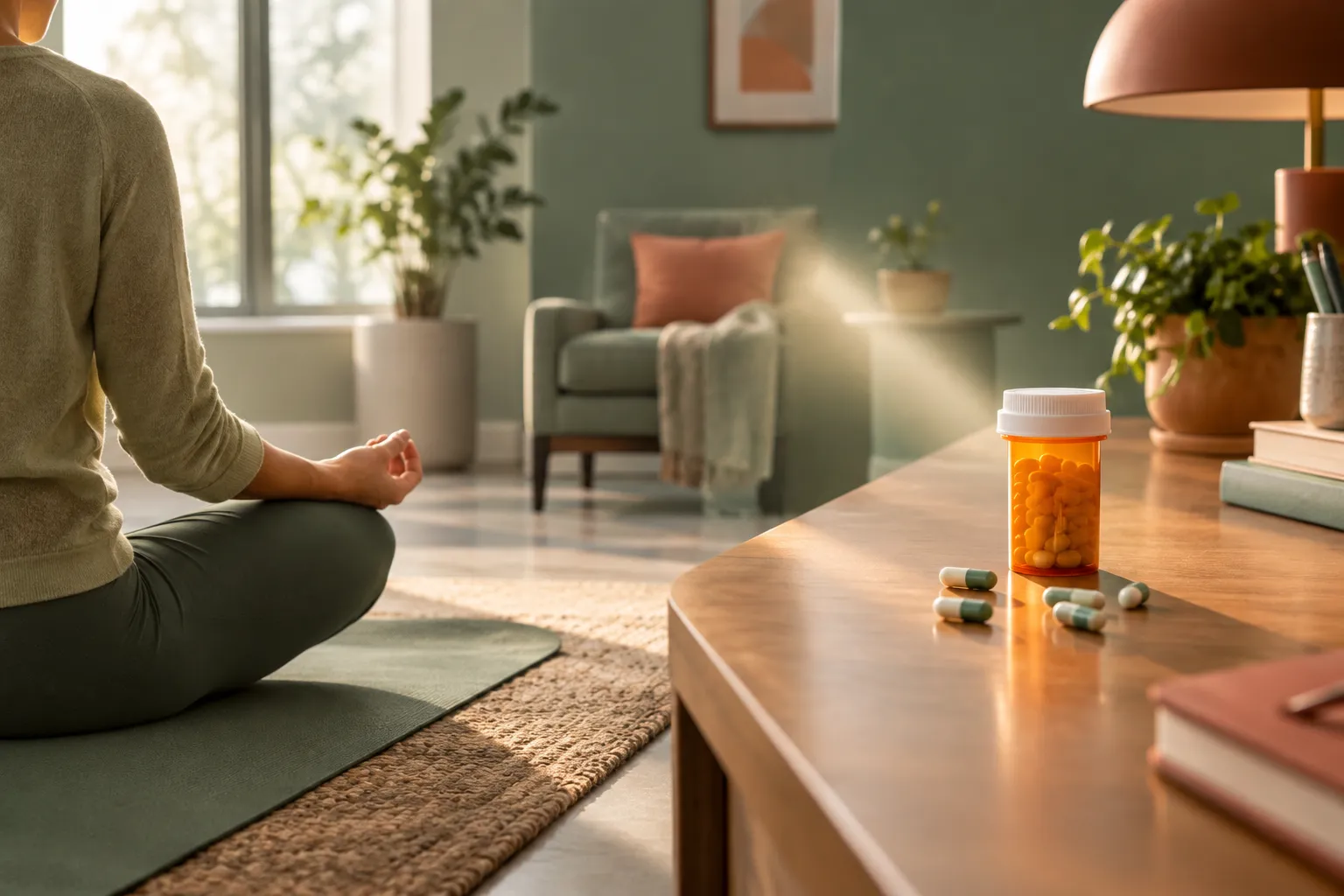
For decades, mindfulness was treated as an optional companion to psychiatric medication, something a therapist might mention after the prescription pad came out. New clinical evidence from Georgetown University Medical Center psychiatry professor Dr. Elizabeth Hoge is changing that hierarchy. Her research asks a question millions of anxious patients quietly wonder: can mindfulness replace anxiety meds? What psychiatry’s latest research proves is more nuanced than a simple yes, but the data is far stronger than most people expect.
Key Takeaways
- Dr. Elizabeth Hoge’s randomized trial found an 8-week Mindfulness-Based Stress Reduction (MBSR) program was statistically non-inferior to daily escitalopram (Lexapro) for anxiety severity.
- A 2025 meta-analysis confirmed mindfulness-based cognitive therapy (MBCT) meaningfully reduces anxiety symptoms, though the effect size is modest.[9]
- Mindfulness avoids common drug side effects like insomnia, nausea, and sexual dysfunction, which improves patient adherence.
- No major psychiatric guideline currently recommends stopping effective medication solely to switch to mindfulness for most patients.
- Current research supports mindfulness as a first-line option for mild cases or medication-averse patients, and as a powerful add-on for treatment-resistant anxiety.[7]
The Study That Changed the Conversation: MBSR vs. Escitalopram
Dr. Hoge, director of the Anxiety Disorders Research Program at Georgetown, led a landmark randomized clinical trial comparing MBSR head-to-head against escitalopram, one of the most commonly prescribed SSRIs for anxiety. Participants were randomly assigned to either eight weeks of structured mindfulness training or a standard daily pharmaceutical regimen. The published findings showed statistically equivalent reductions in anxiety severity between the two groups, a result that surprised many in psychiatry who assumed medication would clearly outperform meditation.
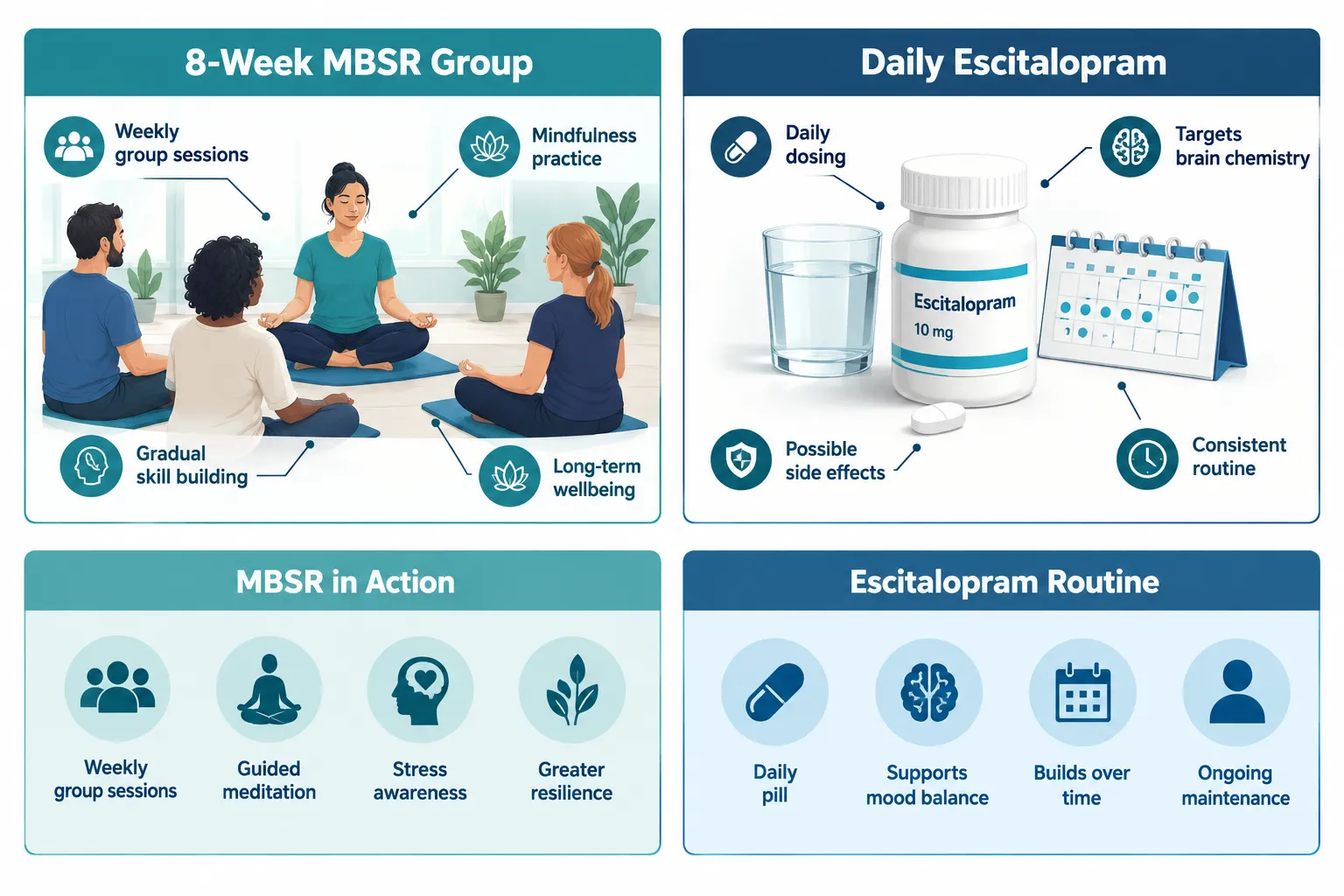
This is precisely the kind of trial that reframes the question of whether mindfulness can replace anxiety meds. What psychiatry’s latest research proves is that a well-structured mindfulness protocol, taught over eight weeks in a group setting, can produce clinical outcomes on par with a prescription drug taken every single day. That is a meaningful shift from viewing meditation as a lifestyle add-on to considering it primary mental healthcare.
Broader Trials Support Mindfulness, With Caveats
Hoge’s findings are not isolated. A 2022 noninferiority trial in BMC Psychiatry found MBCT adapted for anxiety performed as well as standard group cognitive-behavioral therapy for generalized anxiety disorder, with no severe adverse events.[1] A 2025 randomized trial in the Journal of Affective Disorders found MBCT reduced worry severity more than psychoeducation, particularly among people with a history of emotional abuse.[3][4]
Meanwhile, a 2025 meta-analysis across anxiety disorders reported a standardized mean difference of −0.37 for MBCT, a modest but clinically real effect.[9] A broader systematic review of 23 randomized trials found mindfulness-based interventions produced short-term reductions in anxiety when added to usual care.[8][10] None of these trials, however, tested whether patients could safely stop their medications, so the question of full replacement remains scientifically open.
Why Mindfulness Works Differently Than Pills
Medications like SSRIs work by chemically adjusting neurotransmitter levels. Mindfulness takes a different route entirely. Rather than suppressing anxiety symptoms pharmacologically, structured practice trains the brain’s response mechanisms, teaching patients to notice anxious thoughts without being hijacked by them.

This mechanism explains several practical advantages:
- No chemical side effects such as insomnia, nausea, weight changes, or sexual dysfunction
- Skills that persist after the formal training ends, unlike medication effects that fade once dosing stops
- Group-based delivery, which makes it more scalable and accessible than one-on-one therapy[1]
- High safety profile, with no severe adverse events reported in major randomized studies[1][3][4]
A 2020 trial in secondary-care patients whose anxiety had resisted medication found that “augmented MBCT” produced significantly greater reductions in anxiety than control conditions, suggesting mindfulness can help even when drugs alone fall short.[7]
What Psychiatry’s Latest Research Proves About Combining, Not Replacing
Despite the encouraging equivalence data from Dr. Hoge’s trial, mainstream psychiatry has not shifted to recommending mindfulness as a universal medication substitute. Most current evidence-based frameworks still list SSRIs and SNRIs as first-line pharmacologic treatment, with mindfulness training positioned as a strong complementary or alternative option for specific patient groups, such as those who decline medication or experience persistent symptoms despite drug treatment.
The honest answer to whether mindfulness can replace anxiety meds is: sometimes, for some people, under clinical supervision. What psychiatry’s latest research proves is that mindfulness deserves a seat at the table as a primary treatment option, not merely a wellness add-on, but individualized medical guidance still matters before anyone tapers off prescribed medication.
Conclusion
The evidence is shifting. Dr. Elizabeth Hoge’s trial and a growing body of research show that structured mindfulness training can match pharmaceutical treatment for many anxiety patients, without the side effects that cause so many people to quit their medication early. Still, the science does not yet support blanket replacement of anxiety medication with meditation for everyone. Anyone considering this shift should talk with a psychiatrist or physician before changing a medication plan, look for an evidence-based 8-week MBSR or MBCT program taught by a trained instructor, and treat mindfulness as a serious clinical tool rather than a casual self-help habit.
References
[1] S12888 022 04127 3 – https://bmcpsychiatry.biomedcentral.com/articles/10.1186/s12888-022-04127-3 [3] S0165032725003192 – https://www.sciencedirect.com/science/article/abs/pii/S0165032725003192 [4] pubmed.ncbi.nlm.nih.gov – https://pubmed.ncbi.nlm.nih.gov/40037493/ [7] onlinelibrary.wiley – https://onlinelibrary.wiley.com/doi/full/10.1111/pcn.12960 [8] S41598 021 99882 W – https://www.nature.com/articles/s41598-021-99882-w [9] Pmc12382274 – https://pmc.ncbi.nlm.nih.gov/articles/PMC12382274/ [10] Pmc8516851 – https://pmc.ncbi.nlm.nih.gov/articles/PMC8516851/


