
Nearly 80 experts from 18 countries spent a single day in September 2026 tackling a problem that affects billions of consumers worldwide: how do regulators know that an herbal supplement actually contains what the label claims, and nothing harmful besides? That question sat at the center of a workshop where WHO-IRCH Working Group 2 advances cooperation on herbal medicine quality and standards, marking one of the most substantive technical exchanges on botanical medicine oversight this year [1][2].
The session, convened online on 23 September 2026 and announced the following day, brought together regulators, scientists, and public health officials to compare notes on testing methods, sourcing practices, and manufacturing oversight for herbal products [1][2][10].
Key Takeaways
- WHO-IRCH Working Group 2 advances cooperation on herbal medicine quality and standards through a September 2026 workshop involving 80 experts from 18 Member States [1][2].
- China’s National Medical Products Administration and National Institutes for Drug Control helped organize the technical sessions [1][2][6].
- Discussions centered on botanical identification, laboratory test validation, and regulatory oversight of finished herbal products [1][2][6][10].
- The workshop directly supports the WHO Global Traditional Medicine Strategy 2025-2034 and feeds into the ongoing International Herbal Pharmacopoeia project [1][2][12][13].
- Outcomes will shape discussions at the 17th WHO-IRCH Annual Meeting in December 2026, alongside working groups on safety and efficacy [2][4][7].
Why This Workshop Matters for Global Herbal Medicine Oversight
Herbal medicines occupy a strange regulatory space. In some countries they are treated like pharmaceuticals; in others, like dietary supplements with minimal oversight. This patchwork creates real risks, contamination, mislabeling, and inconsistent potency, that cross borders easily when products are traded internationally.
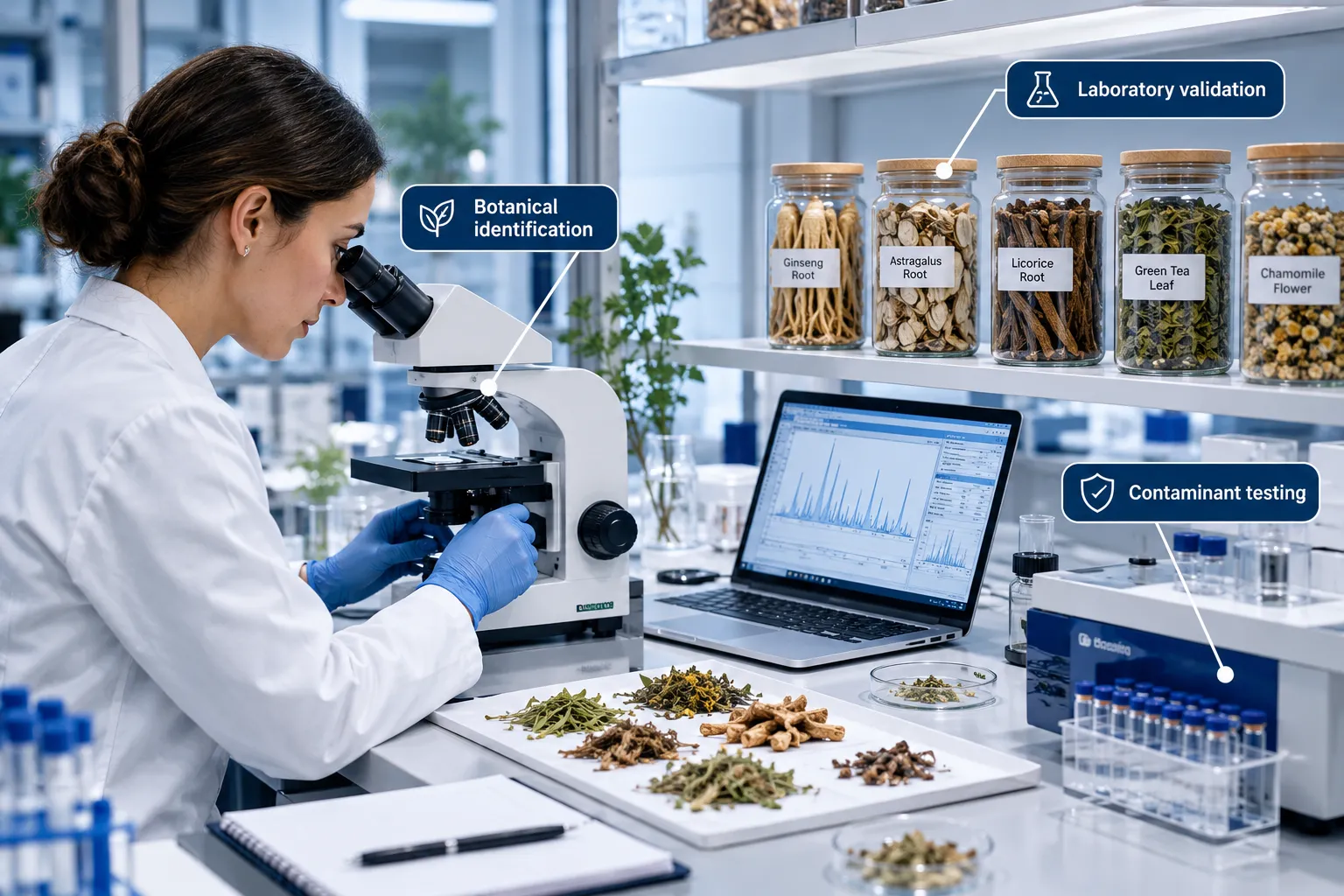
That is precisely why WHO-IRCH Working Group 2 advances cooperation on herbal medicine quality and standards matters beyond any single country’s borders. The group operates within the broader International Regulatory Cooperation for Herbal Medicines network, whose core mission is helping national authorities share best practices rather than reinvent regulatory frameworks from scratch [3][4][5][14].
The September 2026 session focused on three practical areas that regulators repeatedly flag as challenges:
- Botanical identification, confirming that raw plant materials match their claimed species, since look-alike plants can be toxic substitutes.
- Laboratory test development and validation, building reliable, repeatable methods for detecting contaminants, heavy metals, and pesticide residues.
- Regulatory oversight of finished products, ensuring manufacturing controls carry quality assurance from raw material through to the store shelf [1][2][6][10].
These themes are not new to WHO’s work. They build on existing technical guidance covering the selection of herbal substances for quality control, methods for testing herbal materials, and good manufacturing and agricultural practices for medicinal plants [10][15]. The workshop essentially stress-tested how well those existing guidelines translate into everyday regulatory practice across very different health systems.
How WHO-IRCH Working Group 2 Advances Cooperation on Herbal Medicine Quality and Standards Globally
Context matters here. This was not a standalone event. It fits into a larger sequence of WHO activity on traditional medicine that has been building momentum since late 2025.
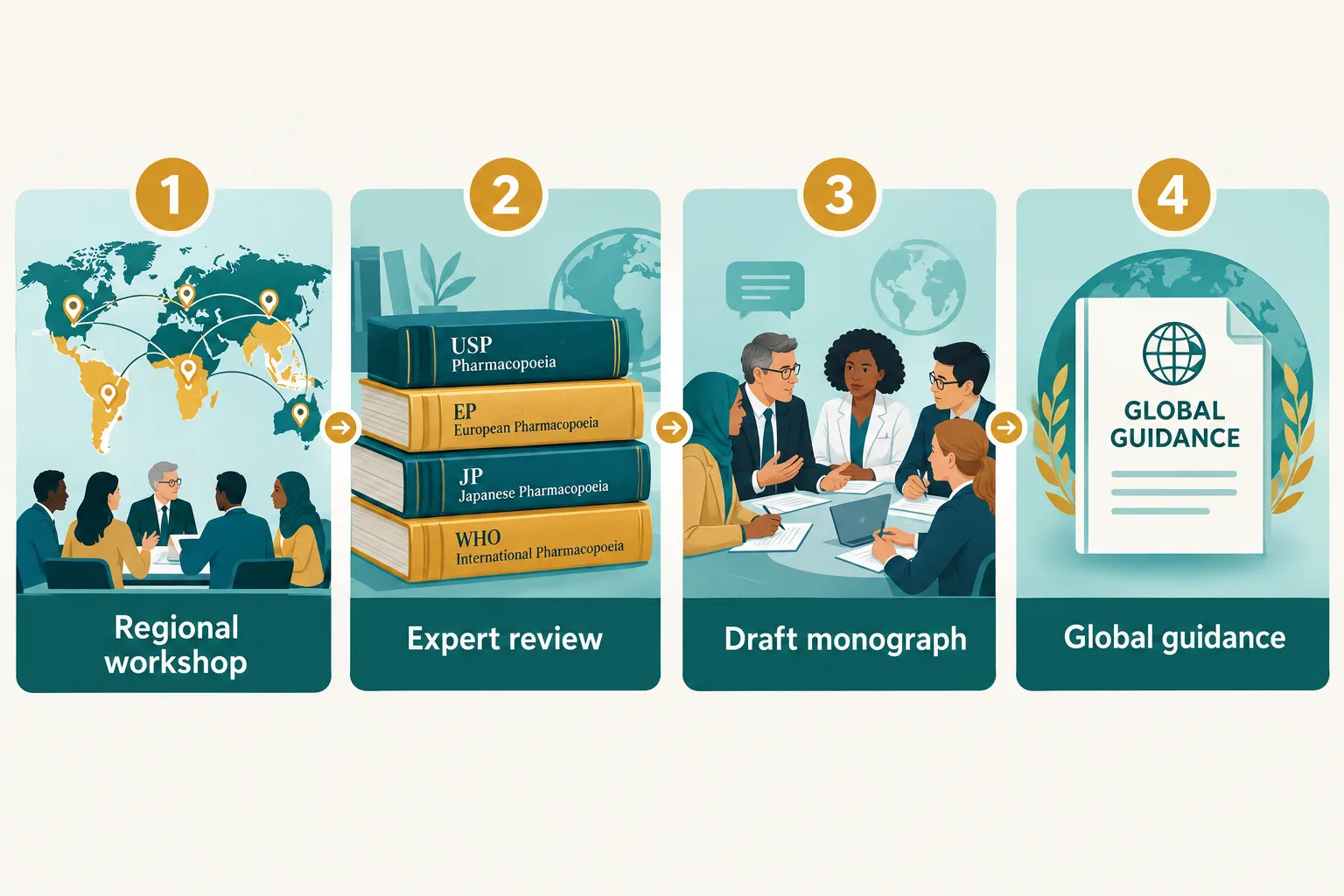
At the 16th WHO-IRCH Annual Meeting in October 2025, work was already organized around three thematic pillars: Working Group 1 on safety and regulation, Working Group 2 on quality, standardization, and sustainability, and Working Group 3 on efficacy and intended use. That meeting featured capacity-building workshops hosted by India and China, setting a precedent the 2026 session continued [4][7].
Just months before the September workshop, WHO convened its 5th Expert Meeting on the International Herbal Pharmacopoeia in Hong Kong SAR, China, from 16 to 18 June 2026. Experts there reviewed draft monographs and chapters covering quality, safety, standardization, biodiversity, and sustainable use of medicinal plants [12][13]. The September Working Group 2 session complements that pharmacopoeia work directly, feeding practical regulatory experience back into the standard-setting process.
“Internationally harmonized pharmacopoeial standards and shared regulatory experience are essential to ensure safe, quality-assured herbal medicines,” according to WHO experts cited in the organization’s reporting on traditional medicine integration [10][12][13].
Regional regulators are paying attention too. The European Medicines Agency’s Committee on Herbal Medicinal Products listed the WHO-IRCH Working Group 2 workshop on its own late-September 2026 meeting agenda, a sign that European standard-setters are tracking WHO’s cooperative process closely and looking for alignment opportunities [8][9].
Looking ahead, findings from this workshop will inform the 17th WHO-IRCH Annual Meeting, scheduled for 16-17 December 2026, where Working Group 2’s conclusions will sit alongside parallel sessions from the safety-focused Working Group 1 and the efficacy-focused Working Group 3 [2][4][7]. Given this trajectory, it is reasonable to expect additional monograph publications and updated technical guidance on herbal medicine quality within the next one to two years, drawing on the regulatory case studies discussed during 2026 [1][2][12][13].
Conclusion
The September 2026 workshop demonstrates something regulators worldwide have long needed: a structured forum where practical testing challenges get discussed openly rather than solved in isolation. As WHO-IRCH Working Group 2 advances cooperation on herbal medicine quality and standards, the ripple effects extend from pharmacopoeia monographs to national inspection protocols.
For manufacturers, regulators, and health system planners, the practical next step is straightforward: watch for outcomes from the December 2026 Annual Meeting and track upcoming International Herbal Pharmacopoeia publications, since both will likely reflect the technical consensus built during this year’s Working Group 2 discussions. Organizations sourcing or regulating herbal products should also review current WHO guidance on botanical identification and contaminant testing now, ahead of anticipated updates.
References
[1] 24 09 2026 Who Irch Working Group 2 Advances Cooperation On Herbal Medicine Quality And Standards – https://www.who.int/news/item/24-09-2026-who-irch-working-group-2-advances-cooperation-on-herbal-medicine-quality-and-standards [2] 24 09 2026 Who Irch Working Group 2 Advances Cooperation On Herbal Medicine Quality And Standards – https://www.who.int/philippines/news/detail-global/24-09-2026-who-irch-working-group-2-advances-cooperation-on-herbal-medicine-quality-and-standards [3] International Regulatory Cooperation For Herbal Medicines – https://www.who.int/initiatives/international-regulatory-cooperation-for-herbal-medicines [4] 29 10 2025 16th Annual Meeting Of The Who International Regulatory Cooperation For Herbal Medicines (irch) – https://www.who.int/news/item/29-10-2025-16th-annual-meeting-of-the-who-international-regulatory-cooperation-for-herbal-medicines-(irch) [5] Traditional Complementary And Integrative Medicine – https://www.who.int/health-topics/traditional-complementary-and-integrative-medicine [6] Menzomat Al Sahat Al Alamiya Tatawwur Ma’ayir Al Adwiya Al Ashabiya – https://www.annahar.com/health-science/350985/%D9%85%D9%86%D8%B8%D9%85%D8%A9-%D8%A7%D9%84%D8%B5%D8%AD%D8%A9-%D8%A7%D9%84%D8%B9%D8%A7%D9%84%D9%85%D9%8A%D8%A9-%D8%AA%D8%B7%D9%88%D8%B1-%D9%85%D8%B9%D8%A7%D9%8A%D9%8A%D8%B1-%D8%A7%D9%84%D8%A3%D8%AF%D9%88%D9%8A%D8%A9-%D8%A7%D9%84%D8%B9%D8%B4%D8%A8%D9%8A%D8%A9 [7] 29 10 2025 16th Annual Meeting Of The Who International Regulatory Cooperation For Herbal Medicines (irch) – https://www.who.int/pitcairnislands/news/detail-global/29-10-2025-16th-annual-meeting-of-the-who-international-regulatory-cooperation-for-herbal-medicines-(irch) [8] ema.europa.eu – https://www.ema.europa.eu/fi/media/75346 [9] Agenda Hmpc Meeting 22 24 September 2026 En – https://www.ema.europa.eu/en/documents/agenda/agenda-hmpc-meeting-22-24-september-2026_en.pdf [10] Traditional Medicine – https://www.who.int/news-room/questions-and-answers/item/traditional-medicine


