More than a third of consumers now research ingredient labels before buying a supplement, and the global wellness economy is on track to nearly double from 6.8 trillion dollars in 2024 to 9.8 trillion dollars by 2029.[8] That kind of growth means new trends appear faster than most people can evaluate them. This guide breaks down 10 wellness trends everyone’s trying right now, and separates the ones with real scientific support from the ones that are mostly hype.
Key Takeaways
- Functional nutrition, creatine supplementation, and consistent low-impact movement have the strongest evidence behind them.[5][14]
- Cold plunges and contrast therapy may aid recovery and mood but carry cardiovascular risks and lack long-term data.[2][5]
- Wearables and voluntary lab testing are gaining traction as preventive health tools, not diagnostic replacements.[13]
- Women’s health and mental/brain wellness (“neurowellness”) are becoming mainstream priorities backed by clinical research.[3][4]
- Sensory trends like light therapy and scent layering are popular but still more experiential than clinically proven.[9][3]
What the 10 Wellness Trends Everyone’s Trying Right Now Actually Include
Hartford HealthCare’s August 2026 review of popular practices, ranging from protein coffee to cold plunges, found that trends rooted in established exercise, nutrition, and sleep science consistently outperform quick-fix hacks.[2] The ten trends generating the most buzz in 2026 include functional nutrition, creatine and evidence-backed supplements, cold plunges and contrast therapy, interval walking and “cardio comeback” workouts, self-directed health consumerism, wearables and voluntary lab testing, neurowellness and mental health support, women’s longevity strategies, sensory environmental design, and speculative concepts like wellness festivals and disaster-preparedness routines.[3][7][11]
Nutrition and Supplements: The Most Evidence-Backed Category
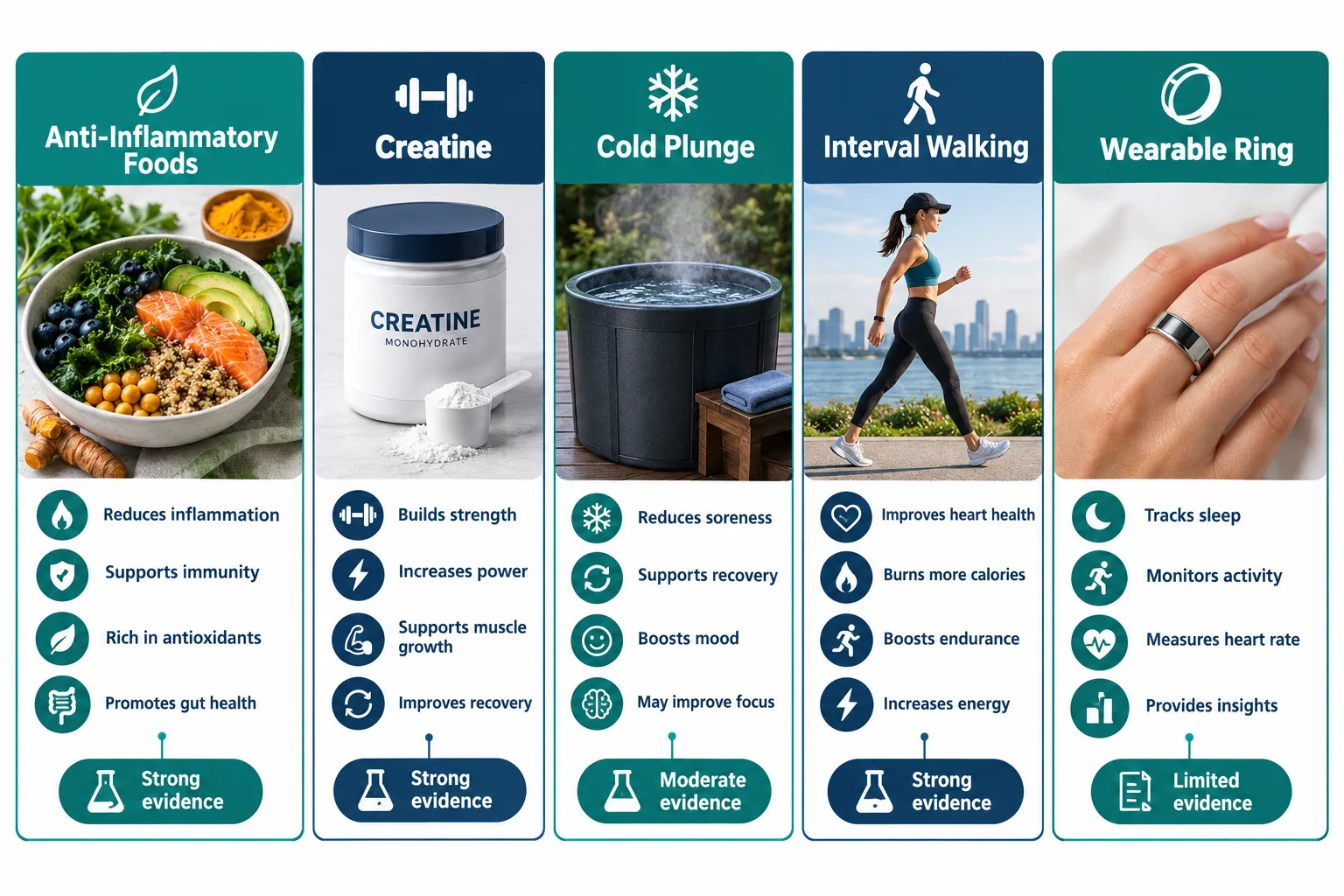
Functional nutrition, often called “food as medicine,” ranks among the most strongly supported trends. McKinsey’s 2025 global wellness survey identifies functional nutrition, healthy aging, and mindfulness as key growth areas retaining relevance into 2026.[11] Harper’s Bazaar’s expert roundup points to prebiotic fiber and anti-inflammatory eating as top picks, citing established links to gut health and reduced chronic inflammation.[5]
On the supplement side, NPR’s January 2026 analysis of major wellness trends singles out creatine as “everywhere,” noting robust evidence for muscle performance and emerging cognitive benefits.[14] However, the same analysis warns that many other viral powders and pills lack comparable research, a caution Hartford HealthCare echoes when reviewing which supplements align with clinical data versus marketing claims.[2][14]
10 Wellness Trends Everyone’s Trying Right Now: Movement, Monitoring, and Mental Health
Not every trend requires a lab study to prove its worth, some simply encourage people to move more consistently. Cosmopolitan’s coverage of 2026 fitness trends reports that interval walking, sometimes called “Japanese walking,” is the fastest-growing fitness trend according to PureGym’s 2026 Fitness Report.[7] Low-impact, accessible movement drives real gains without the injury risk of extreme workouts. “Bio-syncing,” or aligning workouts with circadian or menstrual rhythms, is gaining attention mainly because it helps people stay consistent, not because the science is dramatically new.[7]
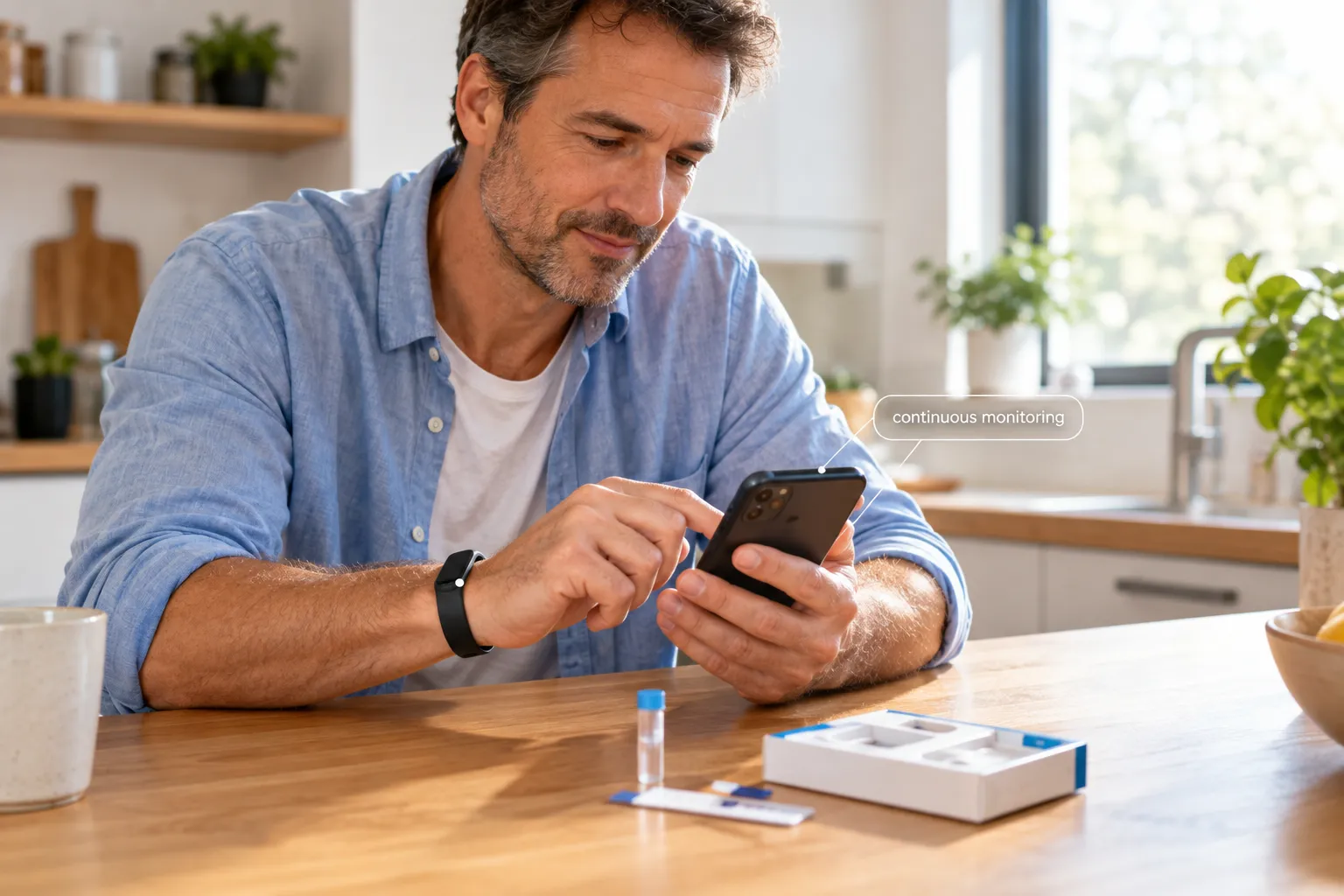
Preventive care technology is another area with strong upside. A May 2026 Morgan Stanley insight notes growing consumer use of wearables and voluntary lab tests to catch health risks earlier and guide lifestyle decisions, with potential to reduce spending on preventable disease.[13] NielsenIQ’s June 2026 report describes a “self-directed health consumer” who prioritizes transparency and personalized outcomes over brand loyalty, a shift pushing companies toward clearer evidence and away from vague claims.[8]
Mental and brain health round out the evidence-based tier. The Global Wellness Summit’s 2026 trend report names the “rise of neurowellness” as a defining theme, emphasizing nervous system health and stress resilience as core wellness goals.[3][4] Marie Claire’s late-2025 preview similarly forecasts brain health becoming a central wellbeing marker, with mindfulness, therapy, and community exercise as practical tools.[11]
Women’s health is following the same trajectory. The Global Wellness Summit highlights “women get their own lane in longevity” and continued investment in female-specific sports science, reflecting growing clinical support for tailored reproductive, hormonal, and mental health care.[3][4]
Which Trends Are Still More Hype Than Evidence
Cold plunges and contrast therapy remain popular but require caution. Harper’s Bazaar frames contrast therapy as useful for soreness, not a substitute for exercise or medical care, while cardiovascular risks and thin long-term data mean it should stay optional.[5][2] Sensory wellness, circadian light panels, fragrance layering, and “festivalization” of wellness events, is trending too, according to Women’s Health UK and the Global Wellness Summit, but these remain more experiential than clinically validated.[9][3] Forbes’ late-2025 preview also flags tech-free diets and metaverse wellness experiences as experimental ideas worth watching, not proven health strategies.[6]
Market data backs up this selective growth pattern. Precedence Research estimates the global health and wellness market at 5.02 trillion dollars in 2026, projected to reach 7.76 trillion dollars by 2035, with growth increasingly concentrated in categories offering clear, measurable outcomes.[12]
Conclusion
Among the 10 wellness trends everyone’s trying right now, the ones grounded in decades of nutrition, exercise, and sleep research consistently deliver the most reliable benefits. Functional nutrition, creatine supplementation, interval walking, wearables paired with preventive testing, and mental health support all have solid evidence behind them. Cold plunges, sensory design, and festival-style wellness experiences can be enjoyable additions, but they work best as extras layered on top of proven basics, not replacements for them. Before adopting any new trend, check whether it’s supported by clinical research, consult a healthcare provider for anything involving supplements or extreme temperature exposure, and prioritize consistency over novelty.
References
[1] Biggest Wellness Trends 2026 – https://www.theguardian.com/wellness/2026/aug/07/biggest-wellness-trends-2026 [2] News Detail – https://hartfordhealthcare.org/about-us/news-press/news-detail?articleId=74682 [3] 2026trends – https://www.globalwellnesssummit.com/2026trends/ [4] Global Wellness Summit Releases 10 Wellness Trends For 2026 – https://globalwellnessinstitute.org/press-room/press-releases/global-wellness-summit-releases-10-wellness-trends-for-2026/ [5] Top Wellness Trends For 2026 – https://www.harpersbazaar.com/beauty/health/a70161613/top-wellness-trends-for-2026/ [6] These Are The 5 Wellness Trends To Watch In 2026 – https://www.forbes.com/sites/alyssajaffer/2025/12/23/these-are-the-5-wellness-trends-to-watch-in-2026/ [7] Health Fitness Wellness Trends 2026 – https://www.cosmopolitan.com/uk/body/health/a69878186/health-fitness-wellness-trends-2026/ [8] Health And Wellness Consumer Trends The Rise Of The Self Directed Health Consumer – https://nielseniq.com/global/en/insights/analysis/2026/health-and-wellness-consumer-trends-the-rise-of-the-self-directed-health-consumer/ [9] Womens Wellness Trends 2026 – https://www.womenshealthmag.com/uk/health/a69903730/womens-wellness-trends-2026/ [10] Tailored Just For You Health Wellness Trends For 2026 – https://www.loeb.com/en/insights/passle/2025/12/tailored-just-for-you-health–wellness-trends-for-2026


